**Why does everything need to be wrapped so carefully?**
Many visitors notice the amount of packaging almost every time they go shopping.
Boxed sweets are individually wrapped, delicate fruits are protected with soft foam nets, department store gifts are beautifully packaged, and even convenience stores sometimes separate purchases into different bags depending on the type of product.
For Japanese people, these are simply part of everyday life. To many visitors, however, they can seem a little surprising.
There are practical reasons behind Japan’s packaging culture. It helps protect products and keep them in good condition. But that’s only part of the story.
Packaging also reflects Japanese values, including the culture of gift-giving, attention to presentation, and consideration for others.
At the same time, more packaging means more materials are used and more waste is created. How to balance careful packaging with environmental responsibility remains an ongoing discussion in Japan.
In this article, we’ll explore why so many products in Japan are carefully wrapped and what this tells us about everyday Japanese culture.
- Why Is Everything Wrapped So Carefully in Japan?
- Packaging Protects Products and Makes Them Easier to Use
- Packaging Is Part of the Product
- Japan’s Gift-Giving Culture and the Art of Wrapping
- Why Are Japanese Souvenirs So Often Individually Wrapped?
- The Service Culture Behind Careful Packaging
- Where Does Careful Packaging Become Too Much?
- Wrapping More Than Just Products
Why Is Everything Wrapped So Carefully in Japan?
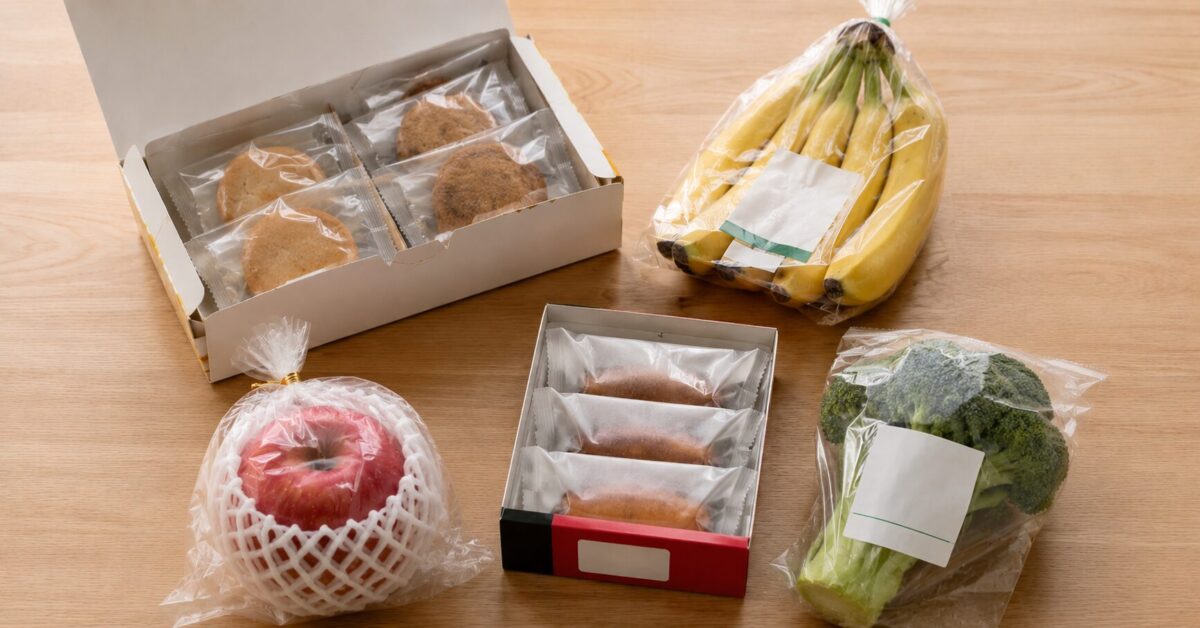
One of the easiest places to notice Japan’s packaging culture is the snack aisle.
Open a box of cookies, rice crackers, chocolates, or traditional sweets, and you’ll often find that every single piece is individually wrapped.
The same attention to detail can be seen in the produce section. Premium peaches and pears are often protected with soft foam nets and carefully secured inside their boxes to prevent bruising.
Department stores take packaging even further. Beautiful wrapping paper, gift bags, and decorative gift labels are often prepared as part of the service, especially when an item is intended as a present.
And this isn’t limited to luxury products.
Convenience store rice balls and sandwiches are individually sealed. Chopsticks and straws are usually wrapped separately, and clothing or household goods are often protected with paper or plastic bags before being placed into a shopping bag.
Of course, not every layer of packaging has a cultural meaning. Some packaging is designed to make products stand out on store shelves, while some simply reflects consumers’ expectations for clean, undamaged products.
Even so, one idea is deeply rooted in Japanese society: products should reach the customer in the best possible condition.
In that sense, packaging is more than decoration. It reflects the Japanese approach to how products should be presented and delivered.
Packaging Protects Products and Makes Them Easier to Use
The most basic purpose of packaging is to protect the product.
For food, packaging helps keep out moisture, air, dirt, and contaminants, preserving freshness and quality. In Japan’s humid climate, sealed and individually wrapped packaging is especially effective at maintaining flavor and texture.
Individual packaging also makes products more convenient to use.
You can open only what you need, making the rest easier to store for later. It’s also convenient to carry, whether you’re bringing a snack to work, school, or on a trip. And because each portion is separate, it’s easy to share with family, friends, or coworkers.
Protective packaging also helps prevent damage.
Delicate fruits such as peaches and pears are often covered with soft foam nets to protect them from bruising during transport. Glassware and other fragile items are carefully wrapped for the same reason.
Packaging also creates a sense of cleanliness and reassurance.
When food is sealed, or chopsticks and straws are individually wrapped, many people naturally feel that the products have been kept clean and handled properly. While packaging itself doesn’t guarantee quality, it gives customers confidence that the product has been well cared for.
Of course, some packaging can seem excessive.
Even so, Japan has long placed importance on delivering products in the best possible condition. As a result, packaging serves not only a practical purpose but also helps build trust in the quality of the product.
Packaging Is Part of the Product
In Japan, packaging is often considered part of the product itself.
This is especially true for traditional Japanese sweets (*wagashi*), premium fruit, cosmetics, and stationery. The texture of the paper, the shape of the box, and even the choice of colors are carefully designed. Packaging doesn’t just protect what’s inside—it also communicates the product’s quality and character.
In Japan, the act of opening a package is often part of the experience.
Removing the wrapping paper, lifting the lid, and gradually revealing the contents creates a sense of anticipation. The packaging is designed not only to protect the item but also to make receiving it more enjoyable.
Seasonal design is another distinctive feature of Japanese packaging.
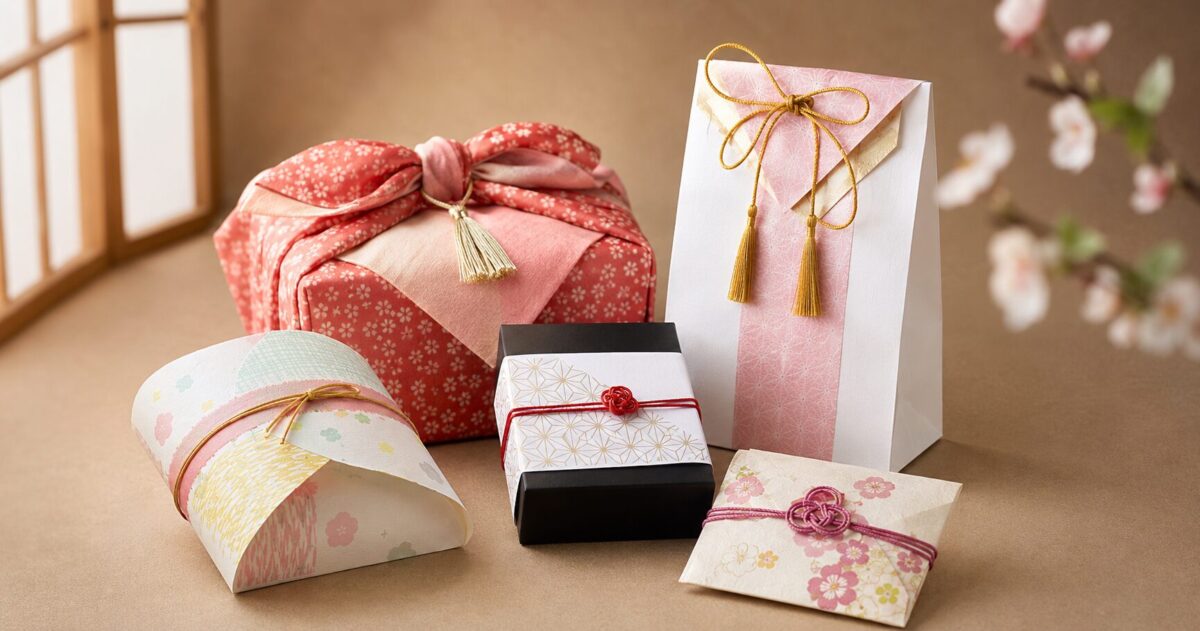
In spring, packages may feature cherry blossoms. Summer brings fireworks and goldfish. Autumn is represented by colorful maple leaves, while winter often features snowy landscapes or plum blossoms. Even when the product itself stays the same, the packaging changes with the seasons.
In this way, packaging becomes a small canvas that reflects Japan’s four seasons.
Of course, beautiful packaging often ends up being discarded soon after it is opened.
Even so, in Japan, value is placed not only on the product itself but also on how it is presented.
That’s why packaging is seen as more than just a box—it’s an important part of the overall experience.
Japan’s Gift-Giving Culture and the Art of Wrapping
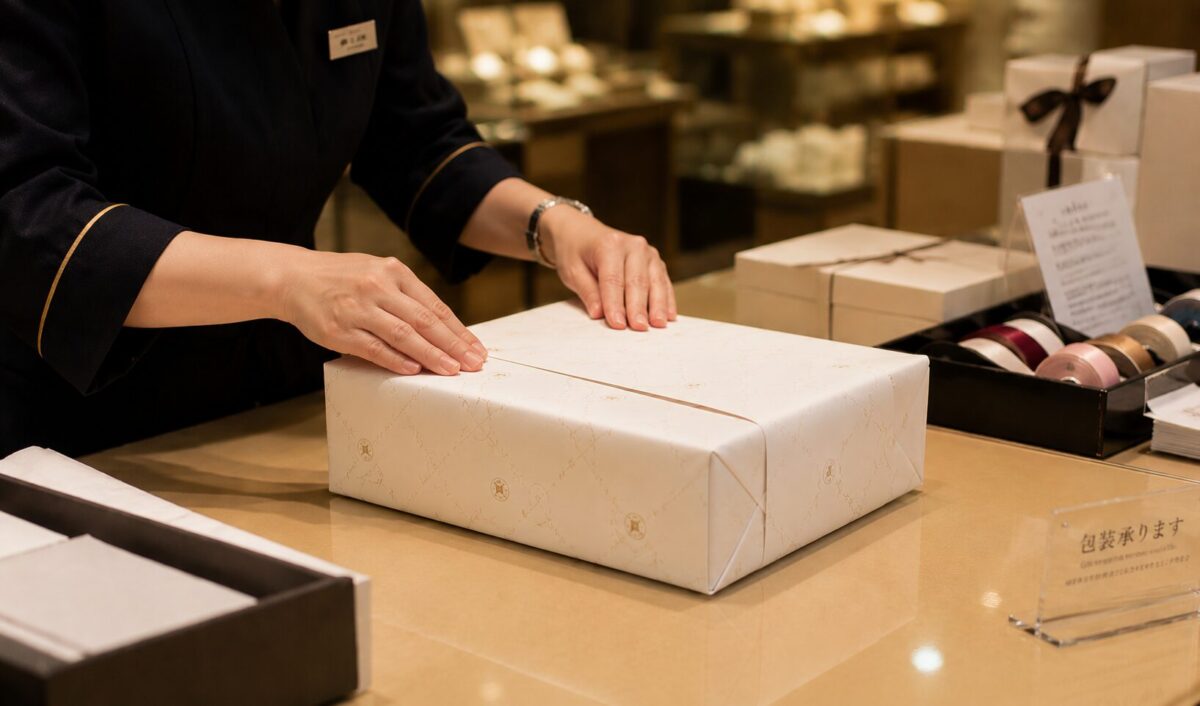
In Japan, how a gift is presented can be just as important as the gift itself.
When you buy a present at a department store, it is usually wrapped carefully in decorative paper. Depending on the occasion, ribbons, gift bags, or *noshi*—traditional decorative gift paper used for formal gifts—may also be added.
This careful presentation quietly communicates a message:
*”This gift was prepared especially for you.”*
The same idea can be seen in many aspects of Japanese life.
Whether it’s a seasonal gift (*ochugen* or *oseibo*), a souvenir from a trip, or a wedding present, attractive packaging helps express respect and appreciation for the recipient.
Gift-giving in Japan also extends beyond family and close friends.
People often bring gifts to coworkers, business partners, neighbors, or teachers. Because gifts are exchanged in many different situations, careful presentation has become an important part of good manners.
Japan also has a long tradition of wrapping itself.
Items have historically been wrapped in *furoshiki* cloth, while decorative *mizuhiki* cords are still used for celebrations and special occasions. These customs reflect the idea that wrapping is more than simply covering an object—it is a way of showing care and respect.
Today, more people choose simple or eco-friendly packaging than in the past.
Even so, beautifully wrapped gifts continue to play an important role in many important occasions.
Why Are Japanese Souvenirs So Often Individually Wrapped?
In Japan, souvenirs are known as omiyage.
Unlike Western souvenirs bought for oneself, omiyage are typically boxes of sweets meant to be shared with coworkers, classmates, and friends.
The popularity of individually wrapped souvenirs in Japan is closely connected to the country’s gift-giving culture.
In Japan, souvenirs are often bought not only for family members but also for coworkers, classmates, and friends. As a result, individually wrapped snacks are much easier to share.
Each person can take one without anyone touching the others, making the process both convenient and hygienic.
Individual packaging also allows people to enjoy the snack whenever they like. They can eat it immediately or take it home for later.
Even everyday snacks are often individually wrapped because they’re easier to store and can be enjoyed a little at a time.
In other words, individual packaging isn’t just about protecting the product. It has also evolved to fit a culture where food is frequently shared with others.
The Service Culture Behind Careful Packaging
In Japan, the condition in which a product is handed to the customer is considered part of the service.
At convenience stores and supermarkets, staff often pack groceries thoughtfully—placing heavier items at the bottom, separating hot food from cold items, and arranging products to prevent damage during the trip home.
Department stores take this even further.
Staff will ask whether an item is a gift or for personal use, then choose appropriate wrapping paper, gift bags, and other finishing touches to match the occasion.
This level of service requires both time and skill.
Packaging materials cost money, and employees are expected to wrap items neatly and efficiently, even during busy hours.
Most customers rarely think about the work involved.
Yet Japan’s packaging culture is supported by countless small efforts that often go unnoticed.
Where Does Careful Packaging Become Too Much?
Japanese packaging helps protect products, improve presentation, and express consideration for the recipient.
At the same time, many people question whether some products are wrapped more than necessary.
In recent years, environmental concerns have encouraged many businesses to reduce packaging. Plastic shopping bags are no longer free in most stores, simple packaging has become more common, and many companies are switching to paper-based materials.
However, less packaging does not automatically mean a smaller environmental impact.
Packaging also helps reduce food waste by extending shelf life and protects products from damage during transportation. If products spoil more easily or break before reaching customers, even more resources may be wasted.
Finding the right balance between convenience, presentation, and sustainability remains an ongoing challenge.
Japan’s packaging culture is gradually evolving as society searches for that balance.
Wrapping More Than Just Products
In Japan, packaging is about more than simply covering an item.
It protects products, reflects the seasons, enhances the experience of receiving a gift, and expresses consideration for the person on the other end.
Of course, this attention to detail also requires materials, time, and labor, making environmental sustainability an important issue.
Even so, when you shop in Japan, you’re receiving more than just the product itself.
Hidden inside the careful wrapping is a quiet message—a desire to deliver something in the best possible condition and to make the recipient feel valued.
Perhaps that’s why, in Japan, packaging often feels like it’s wrapping not only the product, but also the thoughtfulness behind it.