
For many first-time visitors to Japan, one thing stands out almost immediately: the trains are remarkably punctual.
Even during the busiest rush hours, trains arrive almost exactly when the timetable says they will. Hundreds of passengers get on and off within moments, another train pulls into the platform, and the process repeats with surprisingly little confusion.
Of course, delays do happen. Heavy rain, earthquakes, accidents involving passengers, and other unexpected events can all disrupt railway services.
What surprises many visitors, however, isn’t that delays are rare. It’s the way even the smallest disruption is treated. Railway companies announce minor delays, apologize to passengers, and work quickly to restore the timetable.
One widely reported example involved a train that departed just 30 seconds earlier than scheduled. The railway company issued an official apology, and the incident even made national news. In many countries, a difference of a few minutes would barely be noticed. In Japan, even a matter of seconds can be considered significant.
So why are Japanese trains so punctual?
The answer goes far beyond the idea that “Japanese people value punctuality.”
Behind every on-time departure is a carefully coordinated system—one of the world’s busiest railway networks, decades of operational experience, rigorous safety management, and the combined efforts of railway staff and millions of passengers.
One of the World’s Busiest Railway Networks
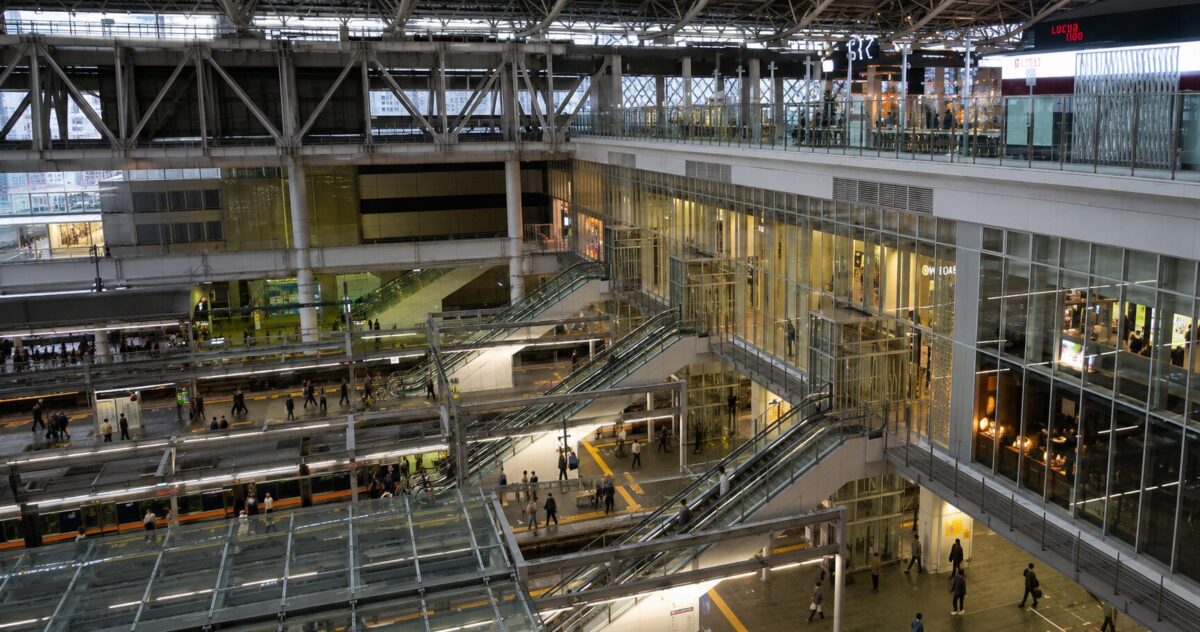
The remarkable thing about Japan’s railways isn’t simply that they’re punctual.
It’s that they achieve this level of precision while carrying an extraordinary number of passengers every day.
In major cities such as Tokyo and Osaka, trains often depart every two or three minutes during rush hour. JR lines connect seamlessly with private railways and subway systems, allowing millions of people to transfer between services each day.
I regularly travel through JR Osaka Station, which serves around 750,000 passengers daily. When nearby stations—including Osaka Metro Umeda, Hankyu Osaka-Umeda, and Hanshin Osaka-Umeda—are included, the wider Umeda district handles an estimated 2.5 million passenger journeys every day.
In a network this busy, even a delay of just a few minutes can quickly ripple across multiple lines. Connections are missed, following trains fall behind schedule, and platforms become more crowded.
In other words, Japan’s trains are not punctual because the network is simple or lightly used. They’re punctual because, in a system this complex, keeping every train as close to its schedule as possible is essential to keeping the entire network moving.
Punctuality Doesn’t Happen by Accident
Keeping thousands of trains on time every day isn’t simply a matter of hardworking employees. Japan’s railway system is designed so that punctuality is built into every stage of the operation.
It starts with the timetable.
Railway companies carefully plan schedules based on passenger demand, train frequency, and connections with other lines. In busy cities, trains often arrive every two or three minutes, leaving very little room for delays. Even a small disruption can quickly affect other services across the network.
Behind the scenes, operation control centers monitor trains in real time. If a problem occurs, controllers work with drivers and station staff to adjust services, helping to prevent a minor delay from spreading across multiple lines.
Safety is just as important as punctuality.
Japanese railways use automatic safety systems that help prevent speeding and signal violations, allowing trains to operate safely even on extremely busy lines. But technology is only part of the story.
People remain at the heart of the system.
Before every departure, station staff check the platform, conductors confirm that the doors can close safely, and drivers follow standardized operating procedures. Every task is performed in the same careful way, every single day.
You may also notice drivers and conductors pointing at signals, indicators, or platform monitors while calling out what they see. Known as pointing and calling, this practice helps reduce human error by combining visual checks with physical movement and spoken confirmation. It has become one of the most recognizable symbols of Japan’s railway safety culture.
Each of these actions takes only a few seconds. Together, they help keep one of the world’s busiest railway networks running with remarkable precision.
Visitors often assume Japan’s punctual trains are simply the result of advanced technology. In reality, punctuality comes from something much broader: careful planning, constant communication, standardized procedures, and thousands of people working together toward the same goal.
Passengers Are Part of the System
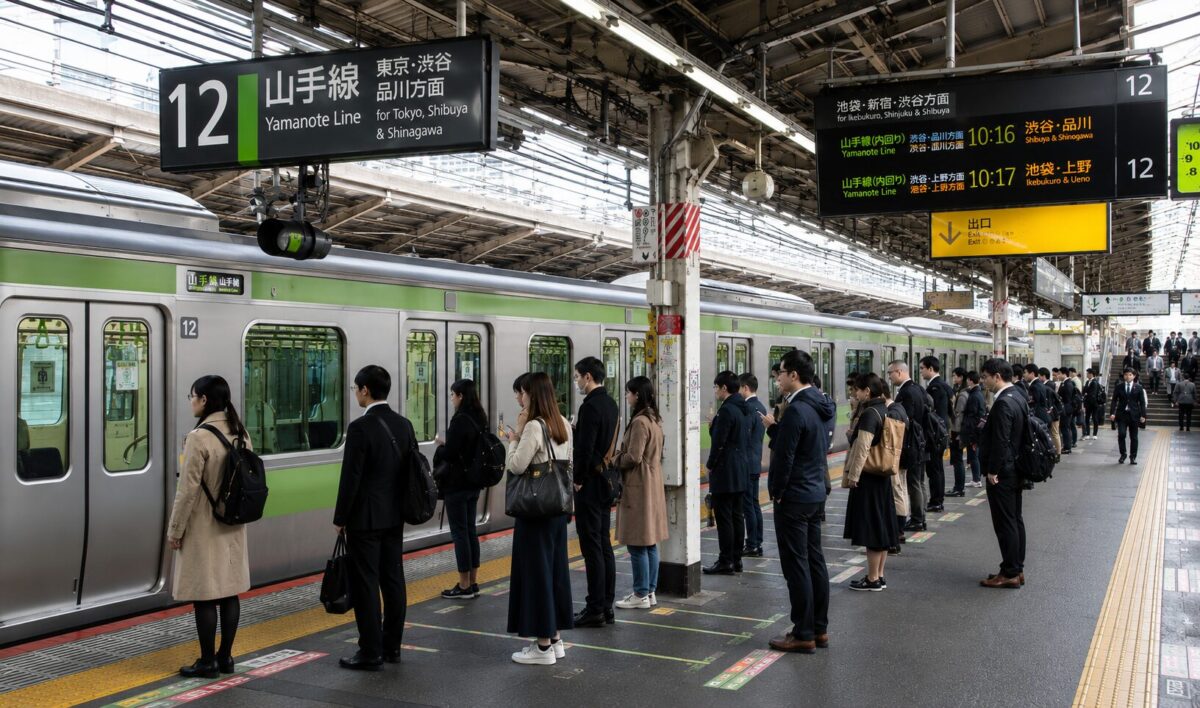
Keeping trains on time isn’t the responsibility of railway companies alone.
Passengers also play an important role.
If you’ve ever waited for a train in Japan, you’ve probably noticed the lines marked on the platform. They show where to queue, allowing passengers to board quickly once everyone has stepped off the train.
For people in Japan, this is simply part of everyday life. Most commuters line up naturally, wait for others to get off first, and board in an orderly way.
It may seem like a small habit, but in a railway network carrying millions of people every day, small habits make a big difference. If boarding takes just a few extra seconds at every station, those delays can quickly spread across the entire line.
That’s why orderly queues and smooth boarding are more than good manners—they’re part of the system that helps trains stay on schedule.
Station staff support this process by guiding passengers to less crowded cars, making announcements, and discouraging people from rushing onto trains at the last moment.
In Japan, passengers aren’t simply using the railway. Whether they realize it or not, they’re helping it work.
When Delays Happen
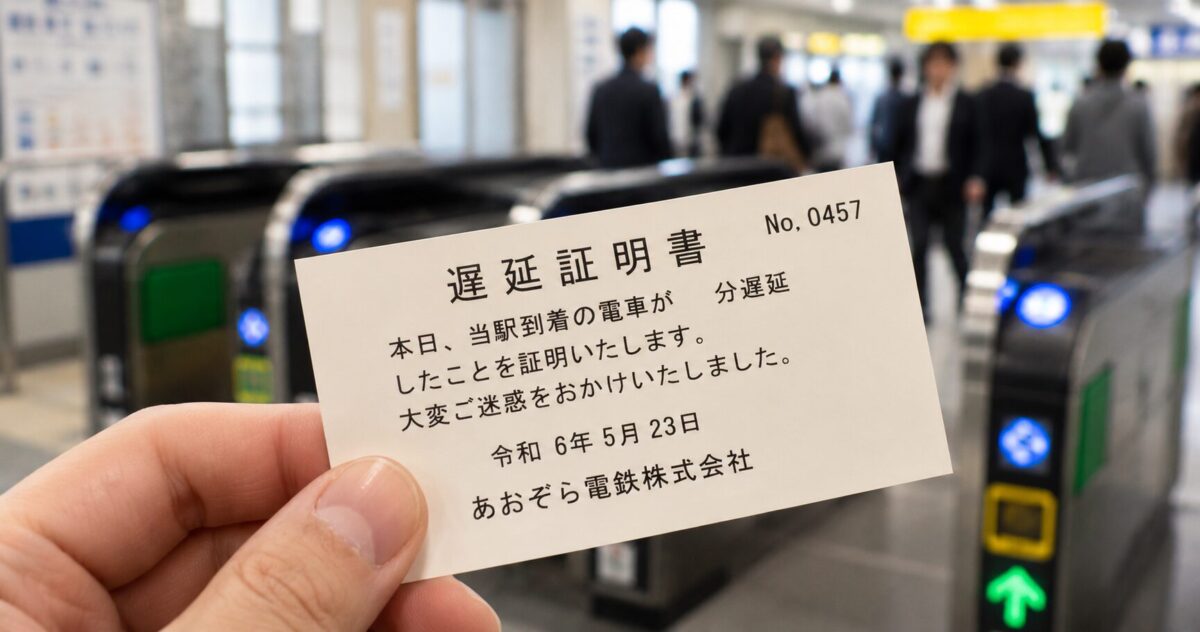
Despite their reputation, Japanese trains are not always perfectly on time. Heavy rain, earthquakes, equipment failures, and accidents involving passengers can all disrupt services.
What makes Japan different is not that delays never happen—it’s how quickly railway operators respond when they do.
Operation control centers immediately begin adjusting the timetable, while station staff provide updates and train crews receive new instructions. The goal is to prevent a small disruption from affecting the rest of the network.
Passengers are also kept informed. Even delays of just a few minutes are often announced on station platforms, inside trains, and through railway apps.
Japan also has something that surprises many visitors: delay certificates. If a train is significantly delayed, passengers can request an official certificate to show their employer or school as proof that the delay was beyond their control.
These certificates don’t exist because delays are common. They exist because punctuality is expected, and even a short disruption can affect thousands of commuters.
More Than Just Being on Time
At first glance, Japan’s railways seem remarkable simply because the trains are punctual.
But punctuality is really the result of something much bigger.
It comes from careful planning, well-designed systems, experienced railway staff, and millions of passengers following the same everyday routines. Each individual action may seem small, but together they create one of the most reliable railway networks in the world.
Perhaps that’s what makes Japan’s trains so fascinating.
The real story isn’t about trains arriving exactly on time. It’s about how thousands of ordinary actions—performed consistently, every single day—make that level of precision possible.
For many visitors, Japan’s railways are simply an efficient way to travel.
For those who look a little closer, they reveal something deeper about everyday life in Japan: a culture where systems are carefully designed, people understand their roles, and countless small efforts quietly come together to keep society moving.