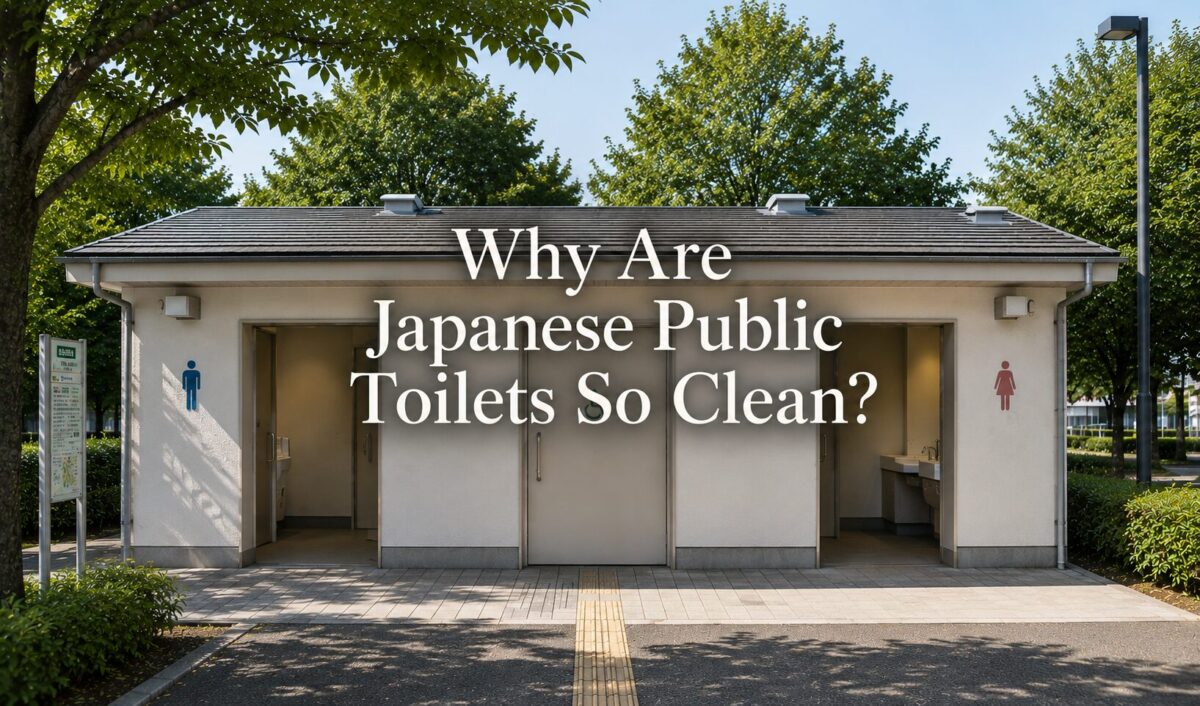
One of the first things many visitors notice in Japan is how clean the public toilets are.
Whether you’re at a train station, a neighborhood park, a shopping mall, or a highway service area, it’s usually easy to find a free restroom.
Most are bright, well-maintained, and stocked with toilet paper, soap, and running water.
In many countries, public toilets may require payment, remain locked, or simply be difficult to find. That’s why many travelers are surprised that clean, free restrooms are so widely available throughout Japan.
So what makes Japanese public toilets different?
The answer isn’t just advanced technology.
Their cleanliness is supported by regular maintenance, thoughtful public infrastructure, and a culture that encourages people to respect shared spaces.
In this article, we’ll look at why Japanese public toilets are so clean, how they’re maintained, and a few useful tips for travelers.
Free and Easy to Find
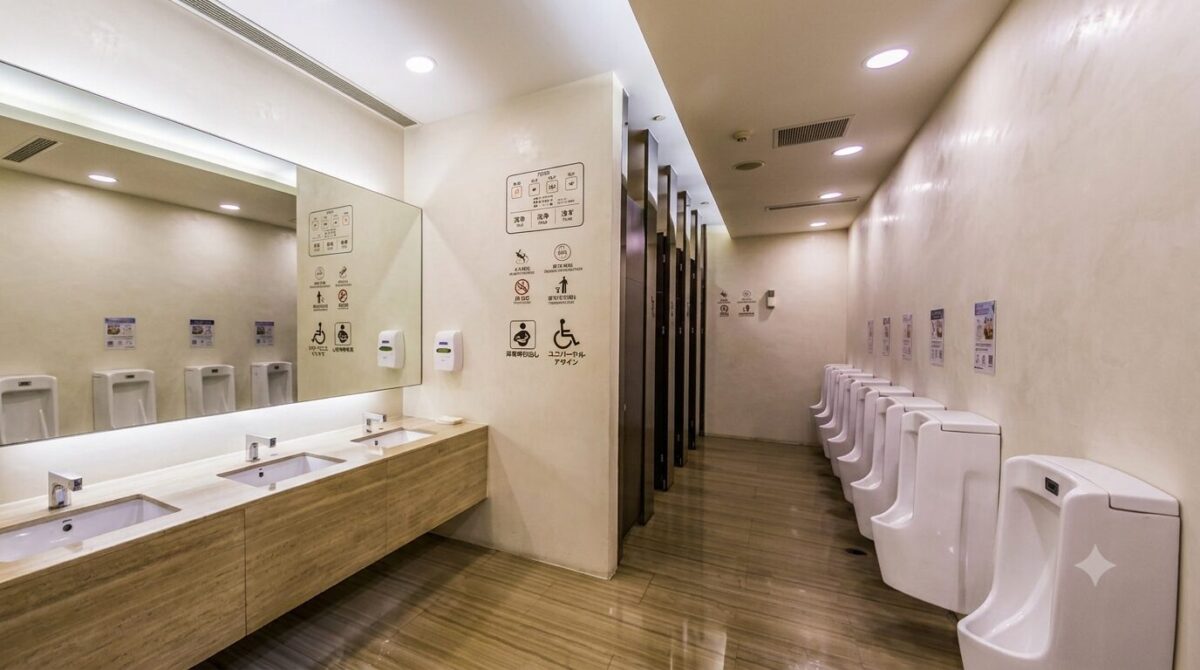
Finding a restroom in Japan is usually quick and easy.
Public toilets are available in train stations, parks, shopping malls, department stores, convenience stores, and highway service areas across the country.
In cities, you’re rarely more than a short walk from one.
Best of all, most public restrooms are completely free.
While a few facilities inside ticketed attractions may be exceptions, paying to use a toilet is uncommon.
In Japan, public toilets are considered part of everyday infrastructure rather than an optional convenience.
They’re designed to support commuters, families, tourists, older adults, and anyone else moving around the city.
Train stations are a good example.
Because so many people rely on rail travel, even medium-sized stations usually provide clean, clearly marked restrooms, and larger stations often have several restroom locations.
Neighborhood parks also commonly include public toilets, making them convenient for walkers, joggers, families, and local residents.
Convenience stores sometimes offer customer restrooms as well, although not every location does.
Access depends on the store’s size, location, and policies, so it’s always worth checking the signs or asking a staff member if you’re unsure.
Regular Cleaning Keeps Them Clean
Clean public toilets don’t stay clean on their own.
One of the biggest reasons Japan’s restrooms are so well maintained is regular cleaning and inspection.
Railway companies, shopping malls, local governments, and private contractors all employ staff who clean restrooms throughout the day.
Their work includes washing toilets, wiping sinks, mopping floors, refilling toilet paper and soap, emptying trash bins, and checking for odors.
Busy locations such as train stations and shopping centers may be cleaned several times a day.
Rather than waiting until a restroom becomes dirty, staff work continuously to keep facilities in good condition.
Maintenance also includes routine inspections.
Locks, lighting, plumbing, and other equipment are checked regularly so small problems can be repaired before they become larger ones.
Some public toilets even display cleaning logs showing when the facility was last inspected.
Of course, no restroom stays perfect all the time.
During busy periods, supplies may temporarily run low or floors may become wet.
Even so, these issues are usually addressed quickly instead of being left unattended.
The cleanliness of Japanese public toilets is supported not only by considerate users but also by the often unseen work of cleaners, maintenance staff, local governments, and private companies.
A Culture of Respect for Shared Spaces
Regular cleaning is only part of the story.
Japanese public toilets also benefit from a culture that places a strong emphasis on respecting shared spaces.
Many people naturally think about the next person who will use a restroom.
That doesn’t mean everyone follows the rules all the time, but it’s common for people to avoid leaving unnecessary messes, handle facilities with care, and keep public spaces as tidy as possible.
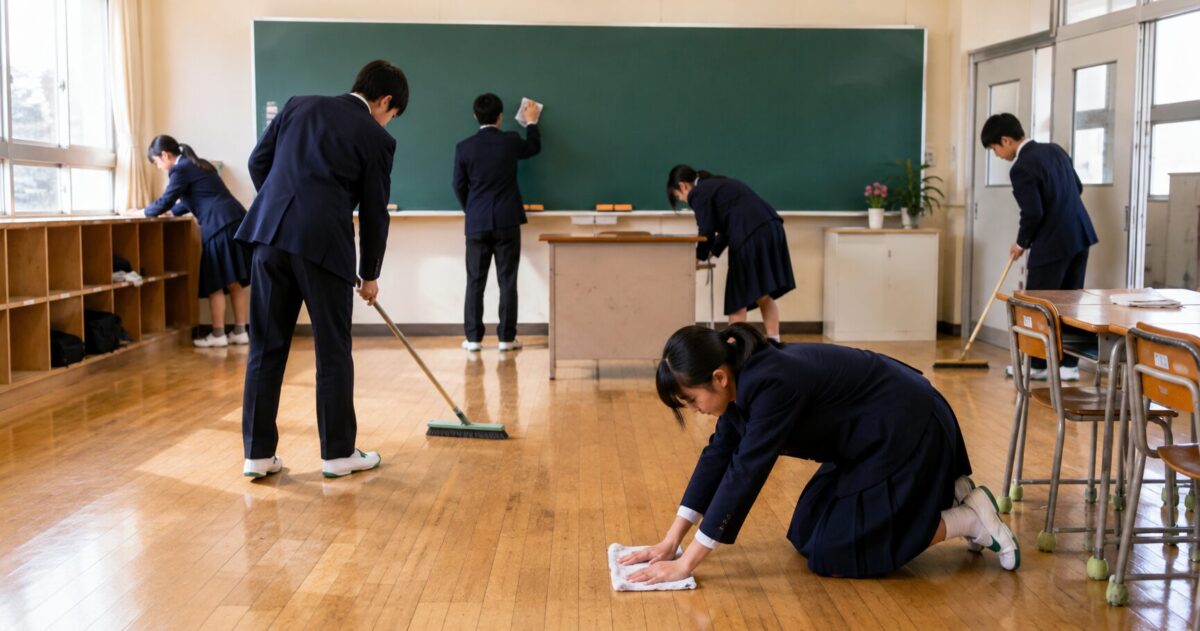
One influence often mentioned is the Japanese school tradition of **soji**, or classroom cleaning.
In many elementary and junior high schools, students clean their own classrooms, hallways, and other shared areas.
The goal isn’t simply to keep the school clean—it’s to teach responsibility for shared spaces.
Of course, school cleaning alone doesn’t determine how people behave as adults.
However, many believe it helps develop habits of consideration that continue later in life.
These small everyday actions help explain why public toilets in Japan often remain pleasant to use.
Designed for Comfort and Accessibility
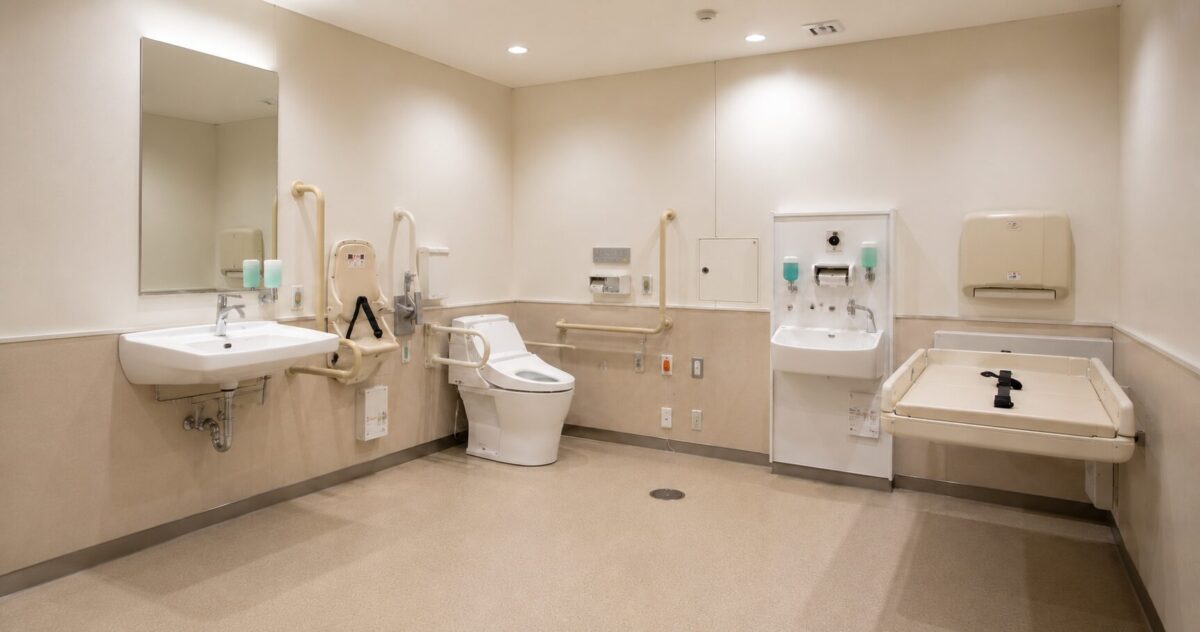
Japanese public toilets are known not only for being clean, but also for being comfortable.
Many visitors are surprised by the range of features found in modern public restrooms.
Heated seats, bidet functions, automatic flushing, and deodorizing systems are now common throughout Japan.
Even in winter, a warm toilet seat is something many travelers quickly come to appreciate.
Some toilets also feature **Otohime**, a sound-masking device that plays the sound of running water.
It offers users more privacy while also reducing unnecessary flushing and helping conserve water.
Accessibility is another priority.
Many public facilities include **accessible toilets** designed for wheelchair users, older adults, parents with strollers, and anyone who may need extra space or support.
These restrooms often provide wide entrances, handrails, baby-changing stations, and other practical features that make them easier for everyone to use.
As international tourism has grown, many public toilets have also become more visitor-friendly.
Multilingual signs and easy-to-understand pictograms make it simple to locate restrooms and identify available facilities, even if you don’t speak Japanese.
Some first-time visitors are initially intimidated by the number of buttons on Japanese toilet control panels.
Fortunately, most modern toilets include English labels and clear icons, making them much easier to use than they first appear.
Individually, these features may seem small.
Together, they create restrooms that are clean, comfortable, and welcoming for people from all over the world.
Not Perfect, but Constantly Improving
Of course, Japan’s public toilets aren’t perfect.
The quality of facilities varies depending on where you are, and older buildings don’t always offer the same level of comfort as newer ones.
For example, squat toilets can still be found in some older parks and public facilities, especially outside major cities.
While they’re familiar to many Japanese people, they can be confusing for first-time visitors who have never used one before.
Busy tourist attractions and major train stations can also become crowded during peak travel seasons, leading to long lines or temporarily messy conditions.
Facilities vary as well.
Many newer stations and shopping malls are equipped with heated bidet seats and accessible toilets, while smaller parks or older buildings may provide only basic amenities.
Even so, public restrooms across Japan continue to improve.
Older facilities are gradually being renovated with Western-style toilets, barrier-free access, water-saving fixtures, and easier-to-maintain designs.
Not every restroom can be modernized overnight, but the overall trend is clear: public toilets in Japan continue to become cleaner, more comfortable, and more accessible.
Essential Tips for Tourists: How to Find and Use Bathrooms in Japan
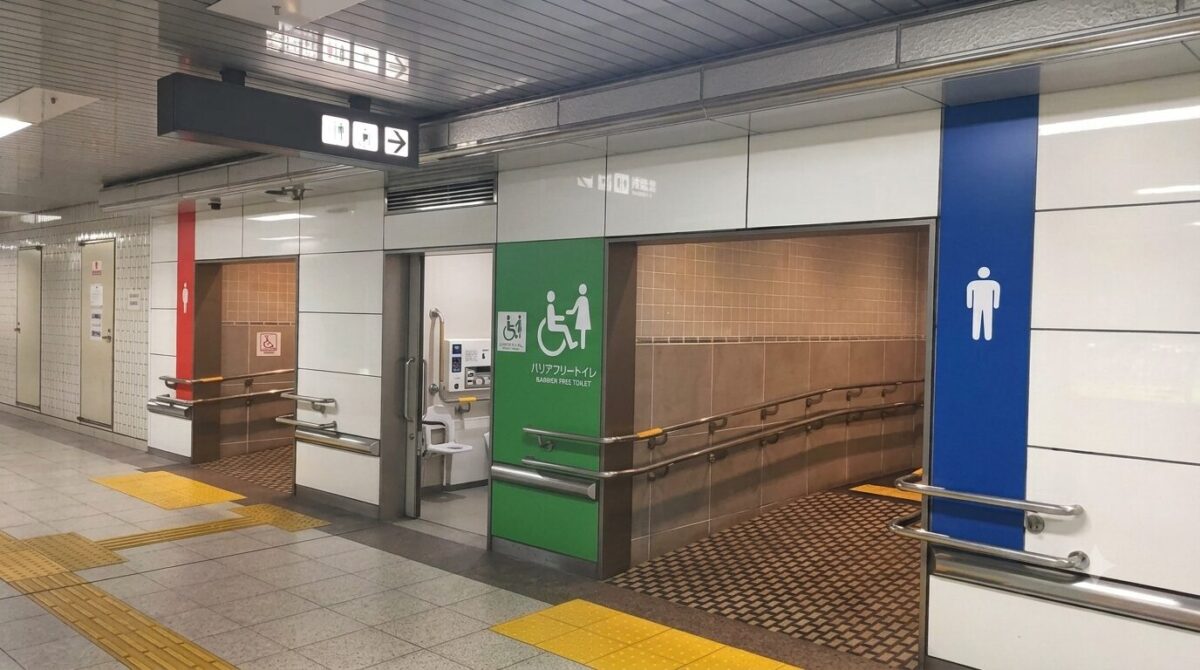
Knowing a few simple tips can make using public toilets in Japan even easier.
If you need a restroom, your best options are train stations, shopping malls, department stores, parks, and highway service areas.
These places almost always provide free public toilets.
Some convenience stores also have customer restrooms, but not every location makes them available to the public.
Policies vary from store to store, so it’s best to check the signs or ask a staff member before using one.
When I was a university student, I worked part-time at a convenience store, and one of my responsibilities was cleaning the restroom.
I remember how much I appreciated customers who left it clean for the next person.
That experience has stayed with me ever since.
Even today, whenever I use a convenience store restroom, I usually let the staff know first and buy a drink or a small snack before I leave.
It’s not required, but it’s my own way of showing appreciation.
One final tip: in Japan, toilet paper should be flushed down the toilet.
Unlike in some countries where used paper is placed in a trash bin, Japanese plumbing systems are designed for flushing toilet paper.
However, items other than toilet paper should never be flushed unless the instructions specifically say otherwise.
More Than Just Clean Toilets
Japanese public toilets are clean for more than one reason.
Their reputation is built on reliable maintenance, thoughtful public infrastructure, and a culture that encourages people to respect shared spaces.
Of course, challenges remain.
Older facilities still exist, and popular tourist destinations can become crowded.
Even so, having clean, free public restrooms available throughout the country remains one of the small everyday conveniences that many visitors remember long after their trip.
For people in Japan, public toilets may simply feel like part of daily life.
Yet that everyday convenience is made possible by the quiet work of cleaners, maintenance staff, and countless people who take a moment to think about the next person.
It’s a small detail, perhaps—but one that says a great deal about everyday life in Japan.