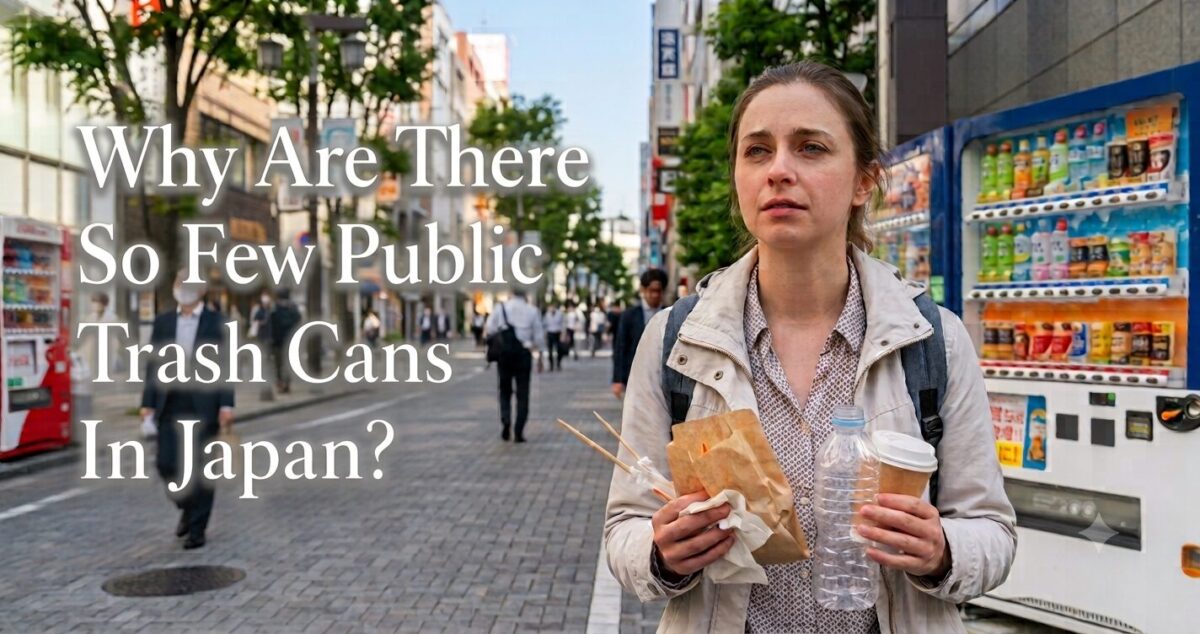
For many international travelers visiting Japan, the first place they head to after arriving at the airport isn’t a famous tourist attraction.
It’s a convenience store.
On social media, YouTube, and travel blogs, you’ll often find comments like these:
“Japanese convenience stores felt like another world.”
“I ended up going there every single day.”
“After returning home, the thing I missed most was the convenience store.”
For Japanese people, convenience stores are simply a part of everyday life.
You’ll find them near train stations, in residential neighborhoods, and in office districts.
But the reason so many visitors are amazed isn’t simply because they offer a wide variety of products.
Inside these small stores, you’ll find a glimpse of everyday Japanese life, its culture of service, and a philosophy of constantly improving even the most ordinary things.
- Convenience Stores Are Part of Japan’s Everyday Infrastructure
- Products That Keep Getting Better
- You Can Feel the Seasons in a Convenience Store
- Why They Feel Safe at Any Time of Day
- Why I Still Go to Convenience Stores
- A Convenience Store Is a Small Window into Japan
- How Travelers Can Enjoy Japanese Convenience Stores
- A Small Window into Everyday Japan
Convenience Stores Are Part of Japan’s Everyday Infrastructure
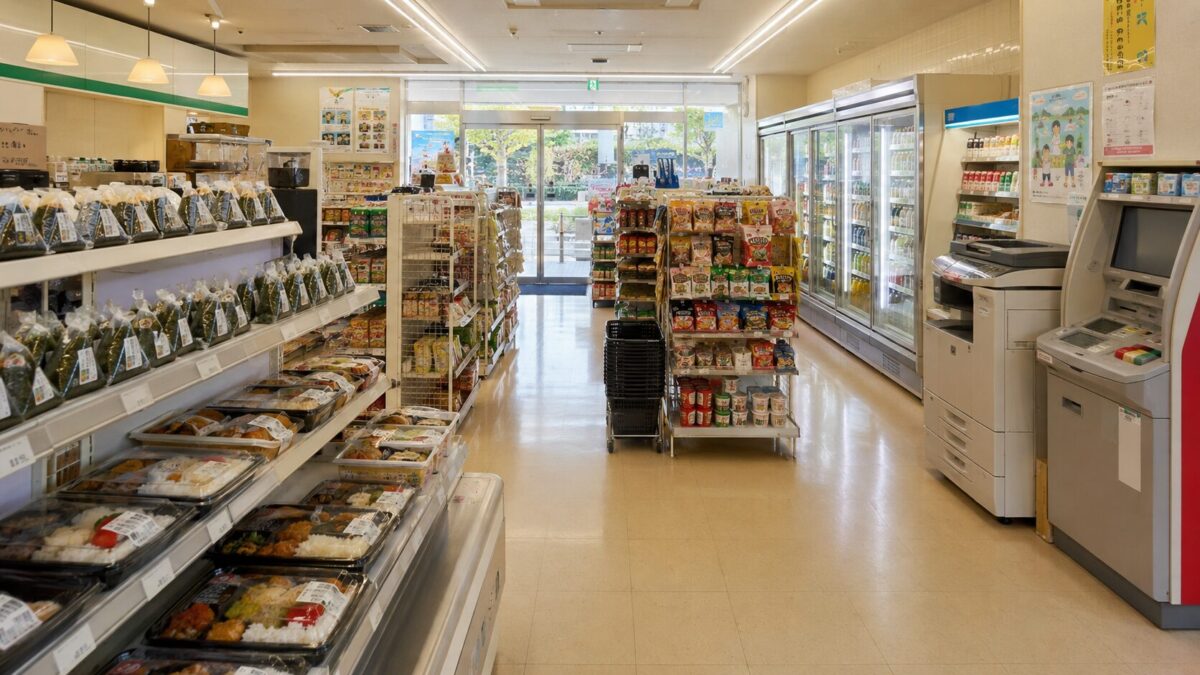
The first thing to understand is that Japanese convenience stores are much more than convenient places to shop.
In Japan, they aren’t simply stores where people buy food or drinks.
Some stop by for breakfast.
Some use the ATM.
Some pay utility bills.
Some send parcels.
Some make photocopies.
Some print concert or event tickets.
Depending on the location, some stores even provide access to certain local government services.
In other words, convenience stores have become a small but essential part of Japan’s daily infrastructure.
To travelers, they may simply seem incredibly useful.
But for people living in Japan, they’re familiar places that quietly support everyday life over and over again.
Products That Keep Getting Better
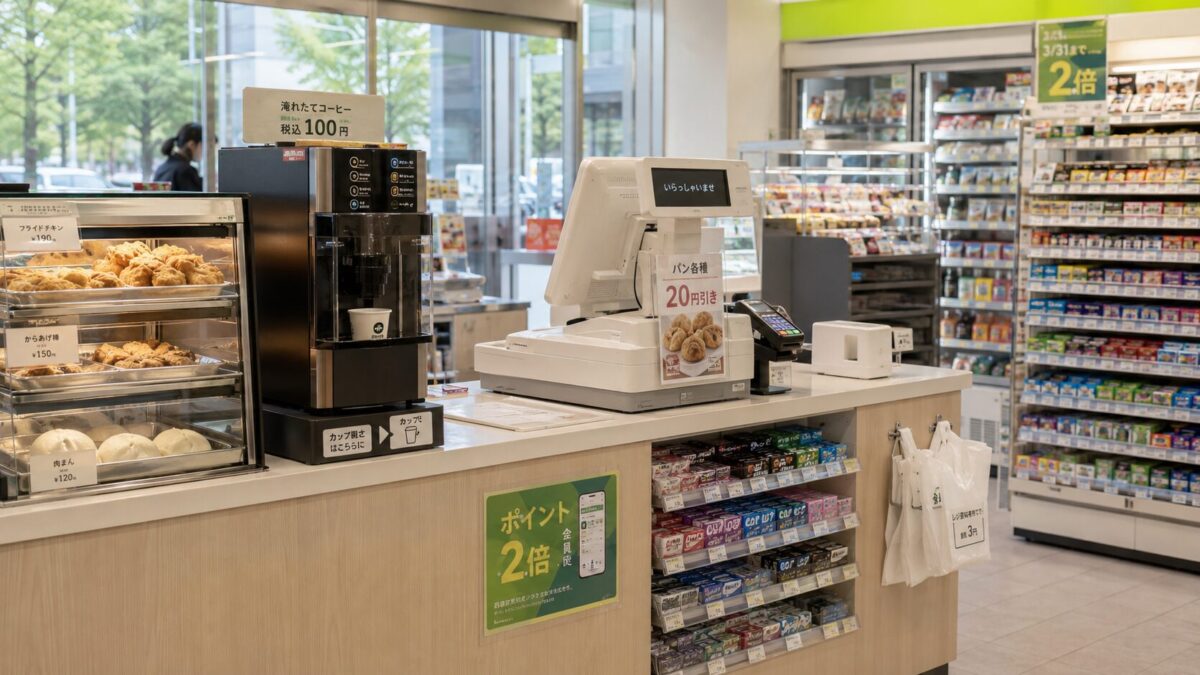
One of the things that makes Japanese convenience stores so unique is that their products are constantly evolving.
Major chains such as 7-Eleven, FamilyMart, and Lawson compete fiercely with one another.
As a result, products like rice balls, sandwiches, lunch boxes, desserts, coffee, and smoothies are refined year after year.
The bread becomes a little softer.
The seaweed wrapping the rice balls stays a little crispier.
The cream in the desserts becomes a little lighter.
The coffee tastes just a little better.
None of these changes are dramatic.
Yet it is this steady accumulation of small improvements that keeps Japanese convenience stores evolving.
This is the same philosophy I mentioned in my article about Japanese egg sandwiches.
Rather than constantly creating something entirely new, Japanese companies often focus on making familiar products just a little better.
Perhaps that is one of the defining characteristics of Japanese craftsmanship.
You Can Feel the Seasons in a Convenience Store
Convenience stores are also a wonderful place to experience Japan’s changing seasons.
In spring, shelves fill with cherry blossom and strawberry sweets.
Summer brings iced coffee, ice cream, beer, and hiyashi chuka, a refreshing chilled noodle dish.
In autumn, limited-edition sweets and snacks featuring sweet potatoes, chestnuts, and pumpkin begin to appear.
During winter, many people look forward to enjoying oden and steamed meat buns.
Simply walking through a convenience store is enough to notice the changing seasons in Japan.
That is one reason convenience stores are more than just convenient places to shop—they are closely connected to Japan’s appreciation of the seasons.
Why They Feel Safe at Any Time of Day
Japanese convenience stores have a reassuring atmosphere no matter when you visit.
The stores are bright.
They are clean.
The shelves are neatly organized.
Even late at night, they feel welcoming and safe.
This sense of comfort doesn’t happen by accident.
It comes from daily cleaning, careful quality control, regular restocking, and consistent customer service.
When I was a university student, I worked the night shift at a convenience store.
My shift started at 1:00 a.m. While working at the register, I stocked lunch boxes and prepared meals that had just arrived by truck.
I refilled drinks like beer and cola and cleaned the store until everything was spotless.
Late-night convenience stores had a very different atmosphere from those during the day.
Taxi drivers.
Truck drivers.
Students staying up late.
People heading home after work.
All kinds of customers came through the doors, and it was never boring to watch.
By the time my shift ended at 6:00 a.m., I was always hungry.
After work, I often stopped by a nearby gyudon restaurant for a hearty breakfast—probably a little too heavy for that early in the morning.
Even now, I sometimes find myself remembering the quiet atmosphere of those late-night convenience stores.
Why I Still Go to Convenience Stores
Of course, I still visit convenience stores regularly.
The closest one to my home is a Lawson, about a three-minute walk away. There’s also a 7-Eleven about five minutes from my house.
Sometimes I stop by to buy bread or coffee.
Other times, it’s ice cream or hot snacks.
I also pick up magazines or manga from time to time, use the ATM, or pay utility bills.
Even when I don’t need anything in particular, it’s fun just to browse the shelves and see what new products have arrived.
Convenience stores are not only useful for travelers—they’re an essential part of everyday life for people living in Japan.
A Convenience Store Is a Small Window into Japan
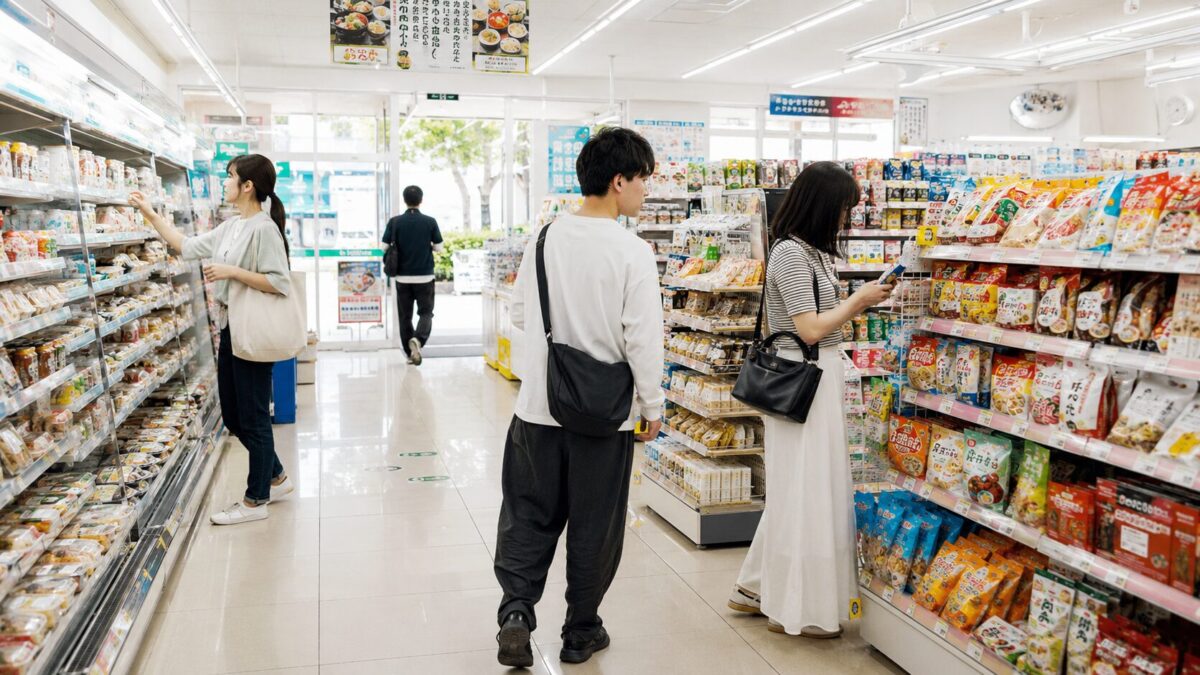
If you spend a little time watching what happens inside a convenience store, you begin to see everyday life in Japan.
In the morning, office workers stop by for coffee and rice balls before work.
At lunchtime, students and nearby office workers pick up lunch.
In the evening, people buy dinner or daily necessities on their way home.
Late at night, people finishing late shifts and taxi drivers drop in.
Throughout the day, people from all walks of life come and go.
For one person, it’s where they buy breakfast.
For another, it’s where they pay their bills.
For someone else, it’s simply a brightly lit place that offers a sense of comfort late at night.
A convenience store may be small, but inside it you’ll find a snapshot of everyday life in Japan.
How Travelers Can Enjoy Japanese Convenience Stores
If you’re visiting Japan, I recommend stopping by a convenience store at different times of the day.
In the morning, pick up some bread, a rice ball, coffee, or a smoothie for a quick breakfast.
At lunchtime, buy a lunch box and some tea, then enjoy your meal at a nearby park or sightseeing spot.
In the evening, grab a beer or canned chuhai along with some hot snacks and relax back at your hotel.
It’s also fun to look for regional specialties and seasonal limited-edition products.
You’ll discover flavors of everyday Japan that you won’t find in fine dining restaurants.
Being open 24 hours a day, 365 days a year, and having almost everything you need—that’s part of what makes Japanese convenience stores so special.
A Small Window into Everyday Japan
Japanese convenience stores are much more than places to shop.
They reflect the way people live, how they spend their time, Japan’s culture of service, its craftsmanship, and even the changing seasons.
There’s a side of Japan you won’t find at famous tourist attractions—but you’ll find it inside a convenience store.
So when you visit Japan, don’t just explore the famous landmarks.
Step into a nearby convenience store as well.
Inside that small shop, you may discover the real everyday life of Japan.