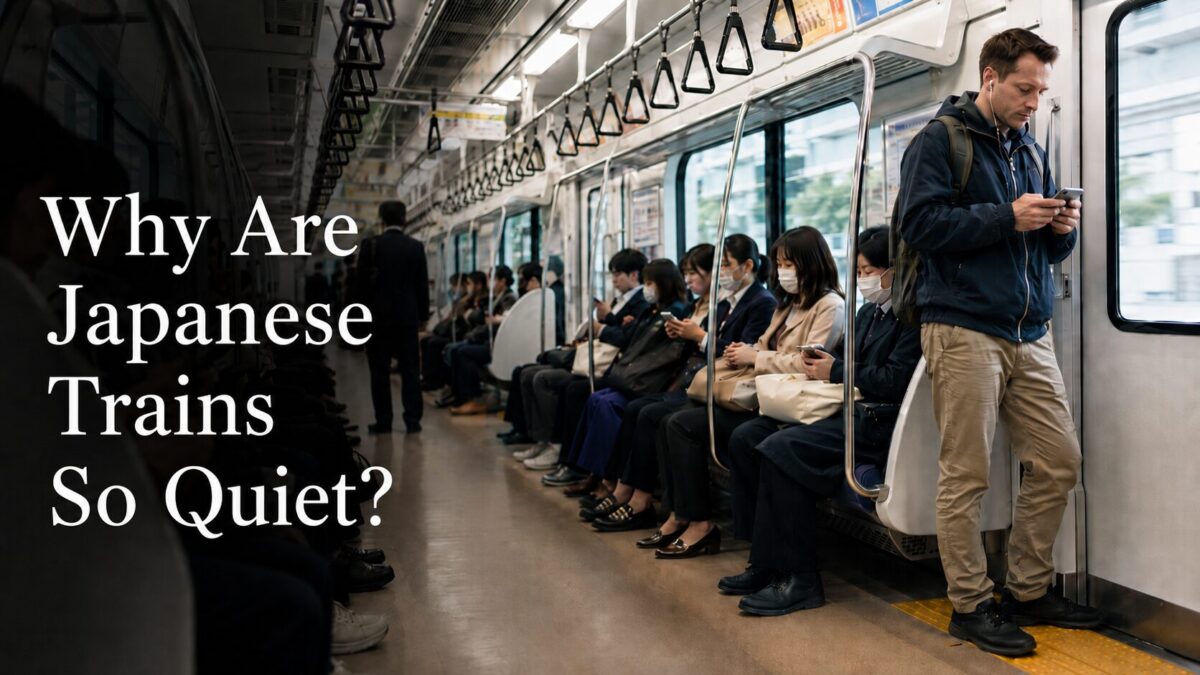
One of the first things that surprises many travelers when they visit Japan is how quiet the trains are.
It’s the morning rush hour.
The train is full of people.
Yet very few passengers are talking loudly.
You rarely see anyone making a phone call.
In many countries, it’s perfectly normal to chat with friends, talk on the phone, or play music while riding the train.
That’s why many first-time visitors to Japan say things like:
“It’s as quiet as a library.”
“Why isn’t anyone talking?”
So why are Japanese trains so quiet?
Are Japanese Trains Really That Quiet?
First of all, it’s important to understand that Japanese trains are not completely silent all the time.
Students chat with each other.
Babies cry.
You’ll occasionally see drunk passengers as well.
However, compared with many other countries, trains in Japan are remarkably quiet overall.
This is especially noticeable on commuter trains and the Shinkansen.
Thinking About the People Around You
This is probably the most important point in understanding why Japanese trains are so quiet.
From an early age, many Japanese children are taught at home and at school:
“Don’t make too much noise in public.”
“Try not to disturb the people around you.”
Many Japanese people grow up with the idea that public spaces don’t belong to any one person—they are shared by everyone.
That way of thinking naturally carries over to public transportation.
- Avoiding phone calls on the carriage.
- Using earphones and checking for sound leakage.
- Keeping conversations and laughter at a low volume.
- Refraining from blocking doors or spreading belongings.
This isn’t simply about being told to “be quiet.”
It’s about being considerate of the people around you.
That consideration also benefits yourself.
Because people respect one another, everyone can enjoy reading a book, listening to music, or taking a short nap in a peaceful environment.
There are many other examples of train etiquette in Japan as well.
Passengers move over to make room for others.
During rush hour, many people wear their backpacks on the front of their bodies.
They also try not to stand in front of the train doors any longer than necessary.
These may seem like small gestures, but most people follow them naturally every day.
Why Do So Many People Sleep on the Train?
Another thing that surprises many visitors is how many people sleep on Japanese trains.
Many people leave home early in the morning.
They spend long hours commuting to work or school.
Japan is also a relatively safe country, so many passengers feel comfortable closing their eyes for a short nap during the journey.
Because of these factors, it’s quite common to see people sleeping on trains.
The practice of inemuri, or “sleeping while present,” is often introduced overseas as a uniquely Japanese cultural habit.
And Japanese people seem to have one mysterious talent.
Many somehow wake up naturally just before arriving at their destination.
I Use Trains Almost Every Day
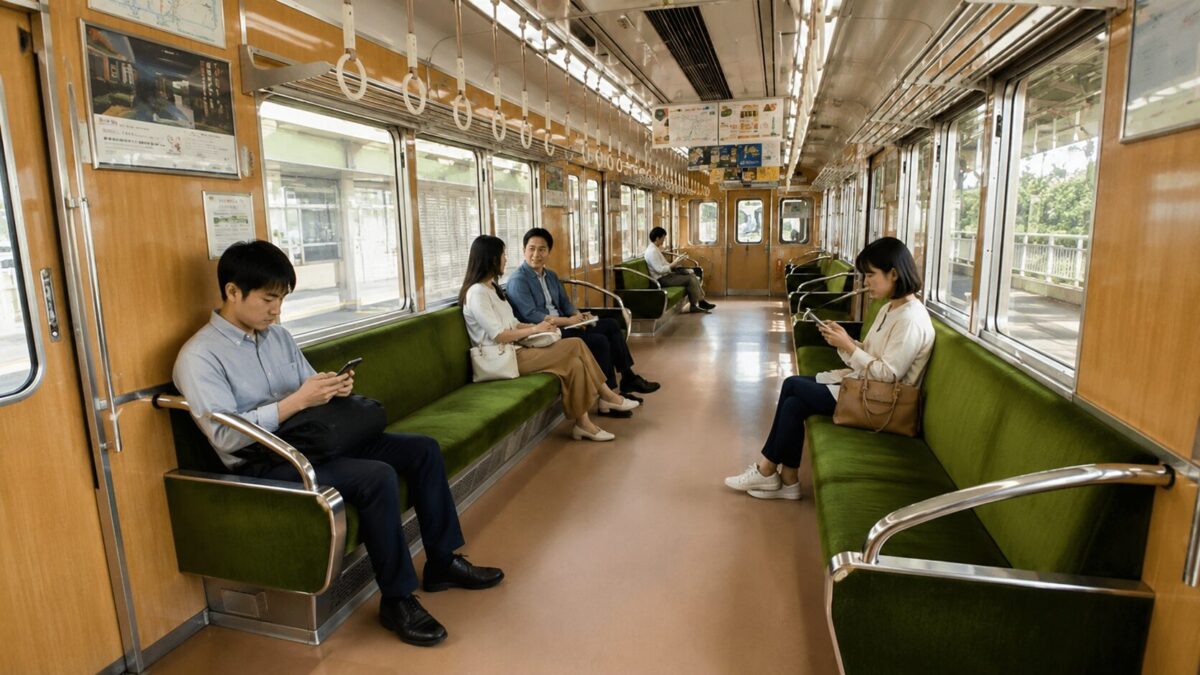
The railway I use most often is Hankyu Railway, one of the major private railway companies in the Kansai region.
Hankyu’s network is centered on Osaka-Umeda Station and connects Osaka with Kyoto and Kobe, serving countless commuters, students, and travelers every day.
One of its distinctive features is its elegant and timeless design. From the traditional maroon-colored trains to the warm wood-grain interiors and the comfortable seats upholstered in the signature “Golden Olive” fabric, everything feels refined and thoughtfully coordinated.
From my home, it takes about 20 minutes to reach central Osaka and around 30 minutes to get to Kyoto, so it’s an incredibly convenient way to travel.
When I look around the carriage, most people are reading the news on their smartphones, reading a book, or quietly sleeping. It’s actually quite rare to see groups talking loudly.
I usually spend the journey reading the news on my phone or listening to music.
If I’m tired, I sometimes fall asleep. Strangely enough, I almost always wake up just before my station.
I still have no idea why! (Laughs.)
I’ve never had my belongings stolen or felt that someone was trying to snatch my smartphone while I was asleep. In fact, I’ve never even witnessed anything like that.
If someone calls me while I’m on the train, I don’t answer.
Instead, I send a quick message saying, “I’m on the train right now. I’ll call you back later.”
To me, that’s simply part of everyday life.
If you have the chance to visit Osaka or Kyoto, I highly recommend riding the Hankyu Railway.
It may not be flashy, but its calm and peaceful atmosphere offers a wonderful glimpse into Japan’s railway culture.
Tips for Travelers
- Queue while waiting on the platform: Always line up behind the markings until the train arrives.
- Refrain from making phone calls: Wait until you’ve left the train, or step off at the next station if it’s urgent.
- Keep your voice down: Keep your conversations at a level that won’t disturb the people around you.
- Check your audio: Use earphones when listening to music or watching videos, and double-check for sound leakage.
- Mind your luggage: Wear your backpack on your front or place it on the overhead rack during crowded times.
- Offer priority seats: Keep these clear for elderly passengers, pregnant women, and others who need them.
That’s really all there is to it, and Japanese people will genuinely appreciate your consideration.
Quiet Trains Reflect Japanese Consideration
Japanese trains aren’t quiet because of strict penalties.
They’re quiet because countless people make small efforts to be considerate of one another.
Of course, nobody is perfect.
Even so, the idea of making the journey comfortable not only for yourself but also for everyone around you helps create the peaceful atmosphere found on Japanese trains.
If you have the chance to ride a train in Japan, don’t just look out the window.
Take a moment to listen to the quietness around you as well.
It may become one of the most memorable ways to experience everyday life in Japan.