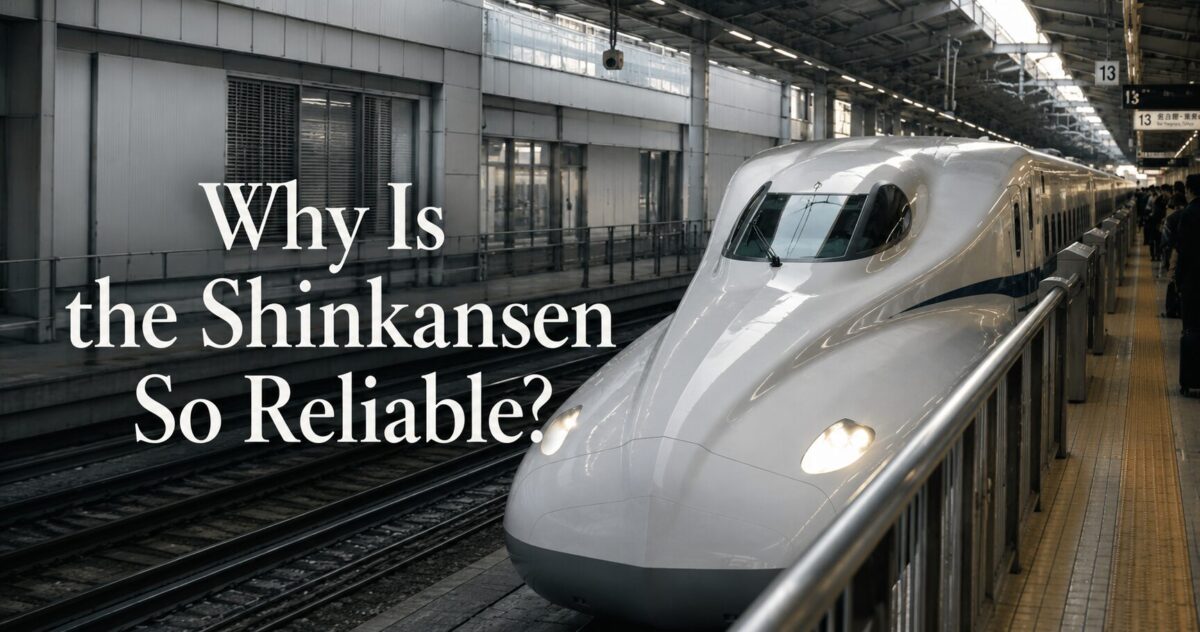
The Shinkansen, Japan’s famous high-speed rail network, began operation in 1964 to coincide with the Tokyo Olympic Games.
Today, its network stretches from Hokkaido in the north to Kyushu in the south, connecting major cities across the country and serving as one of Japan’s most important transportation systems.
While its high speed is certainly impressive, what has earned the Shinkansen worldwide recognition is something even more remarkable: its ability to run safely and on time, day after day.
Take the Tokaido Shinkansen, for example. Covering roughly 500 kilometers (310 miles) between Tokyo and Osaka in about 2 hours and 30 minutes, trains depart every few minutes during busy periods. Across Japan, hundreds of millions of passengers use the Shinkansen each year, yet it continues to maintain exceptional punctuality and an outstanding safety record.
Behind that reliability lies a combination of dedicated high-speed infrastructure, advanced safety technology, nightly maintenance, and the coordinated efforts of countless people working behind the scenes.
Let’s take a closer look at why the Shinkansen has earned its reputation as one of the world’s most reliable transportation systems.
- Built Exclusively for High-Speed Rail
- Operations Management That Keeps Trains on Schedule
- Layers of Safety Working Together
- Nightly Maintenance Behind the Scenes
- Cleaning Is Part of the Operating System
- The “Four-Hour Rule”: Where the Shinkansen Competes with Air Travel
- Enjoying the Journey Itself
- Why the Shinkansen Earns Trust
Built Exclusively for High-Speed Rail
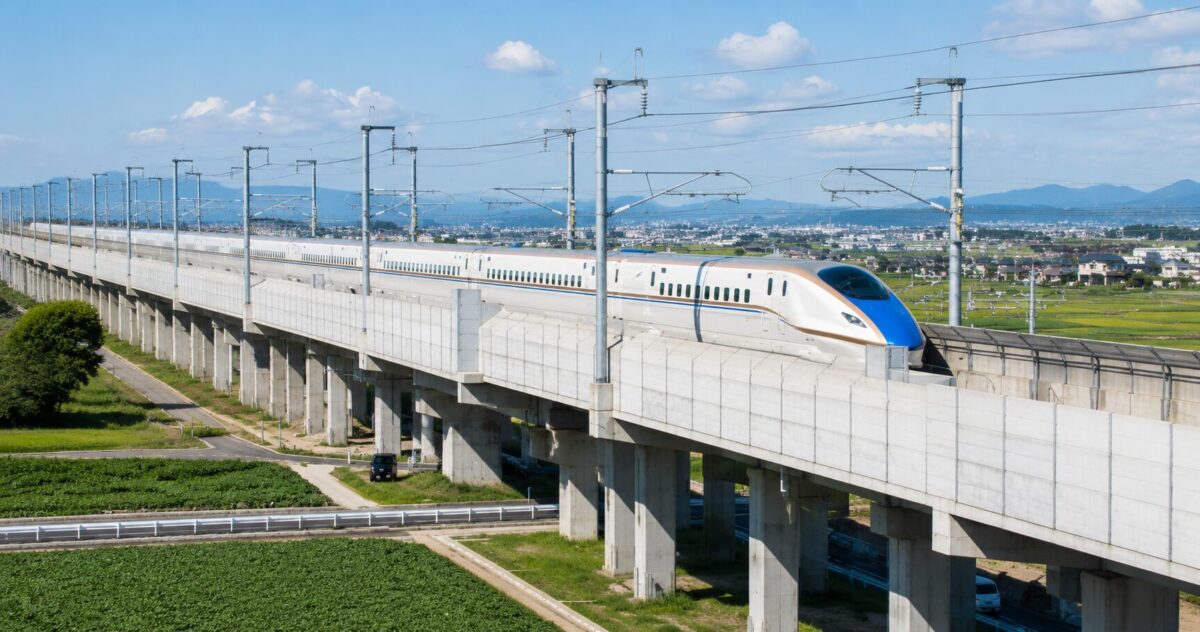
One of the biggest reasons for the Shinkansen’s reliability is that it was designed from the very beginning as a dedicated high-speed railway system.
On conventional railways, commuter trains, freight trains, and express services often share the same tracks despite traveling at different speeds and making different stops. The Shinkansen, however, operates on its own dedicated tracks, completely separated from conventional rail lines across most of its network.
There are also almost no level crossings, meaning trains never have to intersect with cars or pedestrians. This greatly reduces the risk of delays and accidents caused by external factors.
The tracks, curves, tunnels, and bridges were all engineered specifically for high-speed operation. Rather than relying on fast trains alone, the entire infrastructure was designed as a single integrated system.
Operations Management That Keeps Trains on Schedule
On the busiest sections of the network, Shinkansen trains run every few minutes.
Operating this many trains safely and punctually requires far more than high-performance rolling stock. At centralized control centers, operators continuously monitor the position and status of every train, managing the entire timetable in real time.
Station stops are also carefully planned. Passenger boarding and alighting, onboard inspections, cleaning, and departure preparations are all built into a precisely coordinated schedule.
Rather than focusing on keeping a single train on time, the system is designed so that trains, stations, and the people who operate them work together. This coordination is what allows the entire Shinkansen network to maintain its remarkable punctuality.
Layers of Safety Working Together
The Shinkansen does not rely on a single technology to keep passengers safe. Instead, it uses multiple layers of safety systems that work together.
Train speeds are controlled by an Automatic Train Control (ATC) system, meaning safe operation does not depend solely on the driver’s actions.
The network is also equipped with an earthquake detection system. When a major earthquake is detected, power to the overhead lines can be cut and emergency braking is automatically activated before the strongest shaking reaches the train, helping reduce the risk of an accident.
In addition, various other safety measures are in place, including systems designed to prevent derailments, equipment that helps keep trains from leaving the tracks if a derailment does occur, and protective barriers along sections of the line.
Thanks to these combined efforts, the Shinkansen is widely known for having never experienced a passenger fatality caused by a train accident such as a collision or derailment since it began operation in 1964.
Of course, services are sometimes delayed or suspended because of natural disasters or equipment problems. However, the Shinkansen’s willingness to prioritize safety over punctuality is itself one of the reasons it has earned such a high level of public trust.
Nightly Maintenance Behind the Scenes
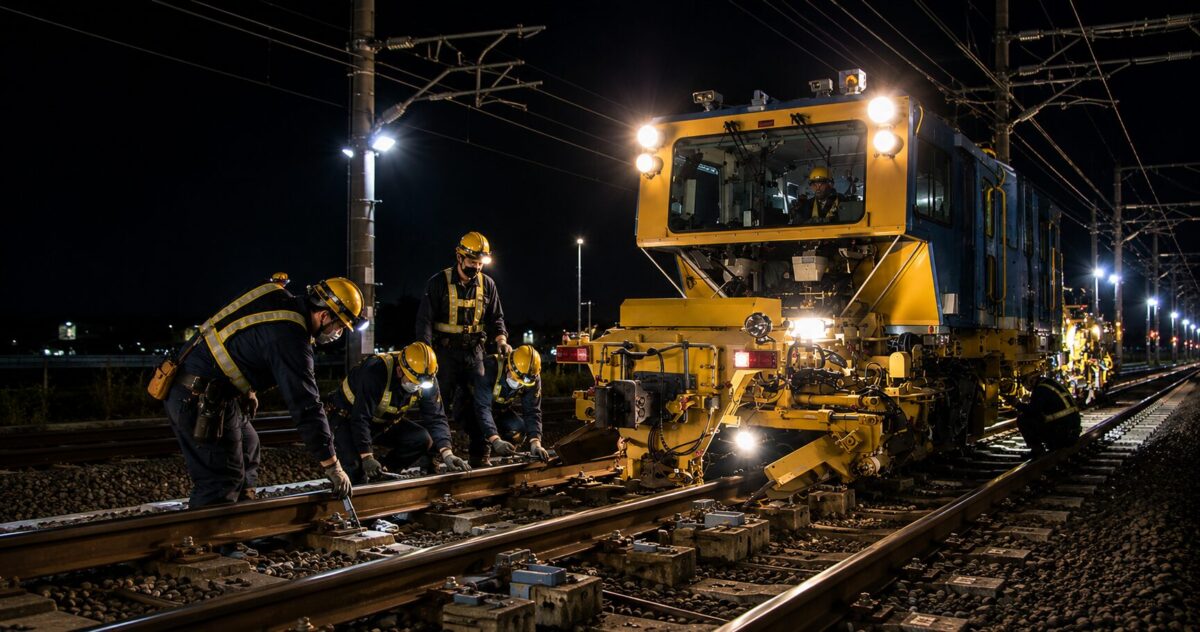
Another reason the Shinkansen operates so reliably every day is the extensive maintenance work carried out after the last train has finished running.
Once the day’s final service has ended, maintenance crews inspect the tracks, overhead power lines, signaling equipment, and other infrastructure. They check for even the smallest signs of wear or distortion and make repairs whenever necessary.
The Shinkansen does not operate overnight largely because this limited window between the last train and the first train of the following morning is reserved for maintenance and inspections.
My father once worked as a Shinkansen maintenance technician in the Osaka area.
He would head to the work site around 10 p.m. and return home at about 5 a.m. His job included packing the ballast beneath the sleepers to correct tiny irregularities in the track and inspecting or replacing the overhead catenary wires that supply electricity to the trains.
“Everything had to be finished before the first train of the morning, so every night was a race against the clock.”
I still remember hearing him say that when I was a child.
Passengers only see a Shinkansen arriving at the station the next morning as if nothing had happened.
But that smooth, reliable service is made possible by the quiet, dedicated work of the people maintaining the railway throughout the night.
Cleaning Is Part of the Operating System
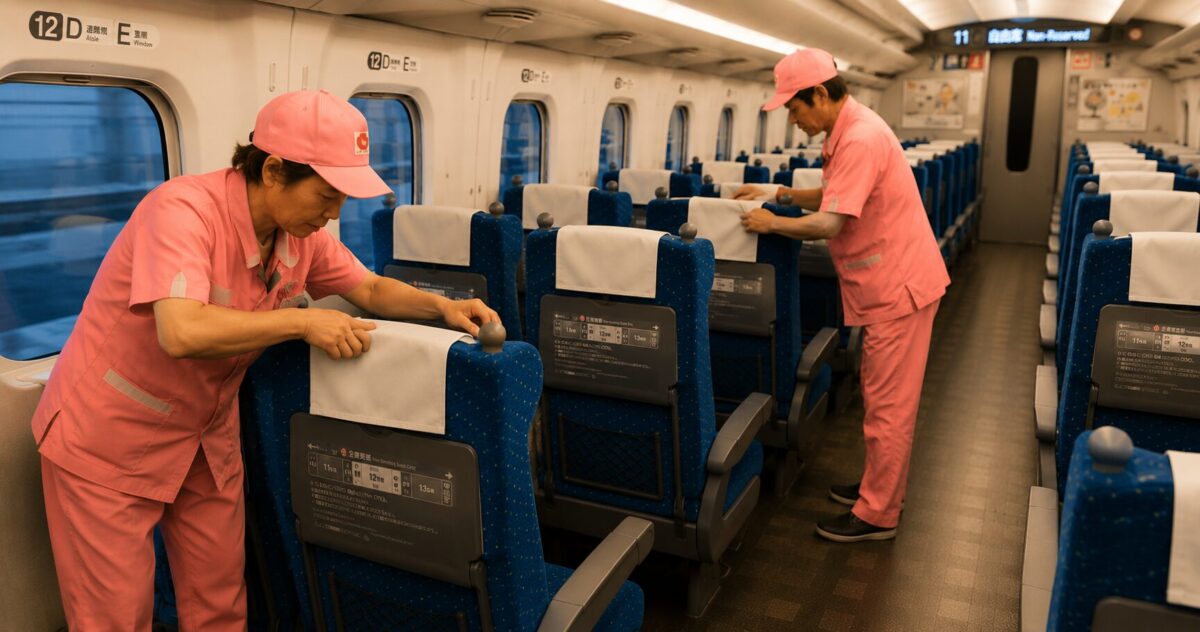
The Shinkansen’s cleaning crews have attracted international attention for the speed of their work.
However, what is truly impressive is not simply how quickly the cars are cleaned.
Within a limited turnaround time, passenger disembarkation, onboard inspections, cleaning, seat rotation, and boarding preparations are all carefully coordinated to eliminate unnecessary delays.
In other words, cleaning is not an independent task—it is an integral part of the Shinkansen’s overall operating system.
Each person performs a specific role, working together to ensure that the next train departs exactly as scheduled.
The “Four-Hour Rule”: Where the Shinkansen Competes with Air Travel
In Japan, journeys that take around four hours or less are often considered the point at which many travelers choose the Shinkansen over flying. This idea is commonly known as the “four-hour rule.”
Although airplanes are usually faster while in the air, the total travel time often includes getting to the airport, passing through security, waiting to board, and traveling from the destination airport into the city.
Shinkansen stations, by contrast, are usually located in city centers, and passengers do not need to arrive nearly as early before departure. As a result, the difference in total door-to-door travel time is often much smaller than people expect.
Cost is another important factor.
Airfares can sometimes be cheaper than Shinkansen tickets if booked well in advance or when flying with a low-cost carrier. However, prices often rise significantly for last-minute bookings or during busy travel seasons.
Shinkansen tickets are not necessarily inexpensive, but their pricing is generally more predictable, and the frequent departures make it much easier to change travel plans.
For routes such as Tokyo to Hiroshima, where the train journey approaches four hours, the Shinkansen and airlines compete directly for passengers. On longer routes, however, flying gradually becomes the more time-efficient option.
That said, the four-hour rule is not absolute. The best choice depends on many factors, including ticket prices, departure and arrival locations, luggage, booking timing, and service frequency.
As a result, there are many city pairs in Japan where the Shinkansen and air travel compete as practical alternatives.
Enjoying the Journey Itself
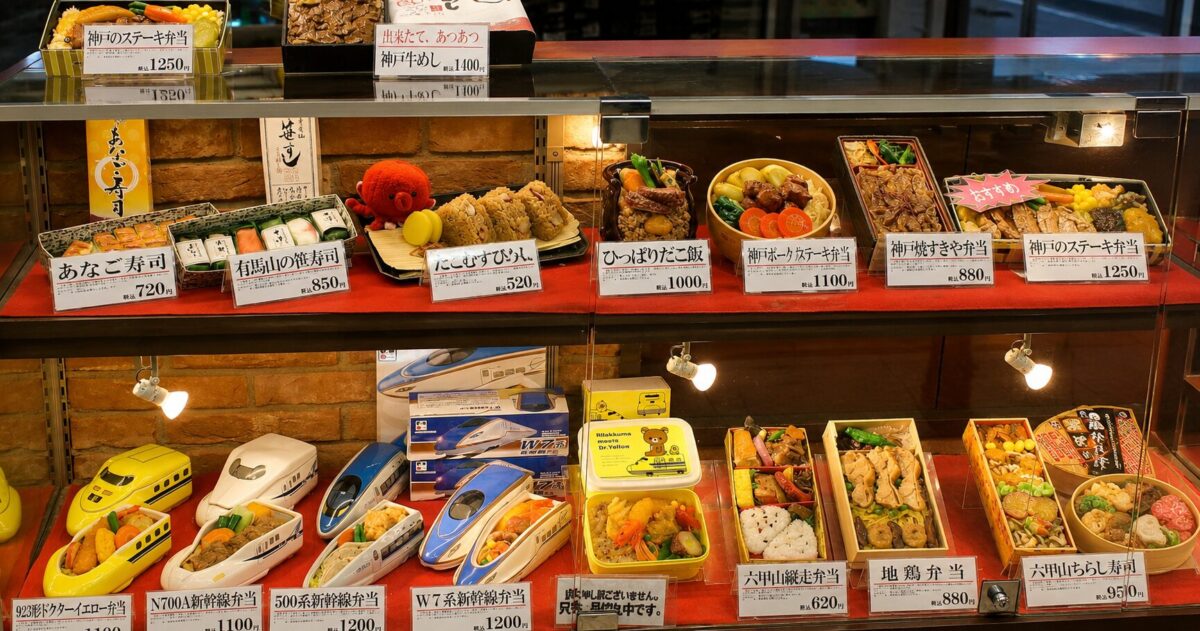
The Shinkansen is more than just a way to get from one place to another. For many people, the journey itself is part of the experience.
One of the best-known traditions is ekiben—boxed meals sold at railway stations.
These meals often feature regional specialties and local ingredients, and every station or region has its own unique selection.
Many passengers buy an ekiben before boarding and enjoy it while watching the scenery pass by. Some people even choose their travel routes based on the chance to try a particular station’s famous lunch box.
I also travel by Shinkansen whenever I visit my father’s hometown in Yamaguchi Prefecture.
From Shin-Osaka Station, I board the Sanyo Shinkansen and spend about two hours enjoying an ekiben on the way. Although I’m simply traveling to my destination, that time on the train always feels like a small escape from everyday life.
The Sanyo Shinkansen passes through many long tunnels, so there are fewer opportunities to enjoy the scenery than on some other routes. Still, every now and then the train emerges to reveal beautiful mountains or views of the sea. Those brief moments are enough to make the journey feel relaxing.
In the past, onboard trolley service was another familiar part of traveling by Shinkansen. Attendants pushed carts through the train selling drinks, snacks, and ice cream.
The famously rock-hard ice cream sold onboard even became something of a legend among travelers.
In recent years, however, trolley service has been reduced or discontinued on many routes because of labor shortages and changing travel habits.
Even so, choosing an ekiben before departure and enjoying it while watching the scenery remains one of the unique pleasures of traveling by Shinkansen.
For many people, the Shinkansen is not just about reaching a destination—it’s about enjoying the journey itself.
Why the Shinkansen Earns Trust
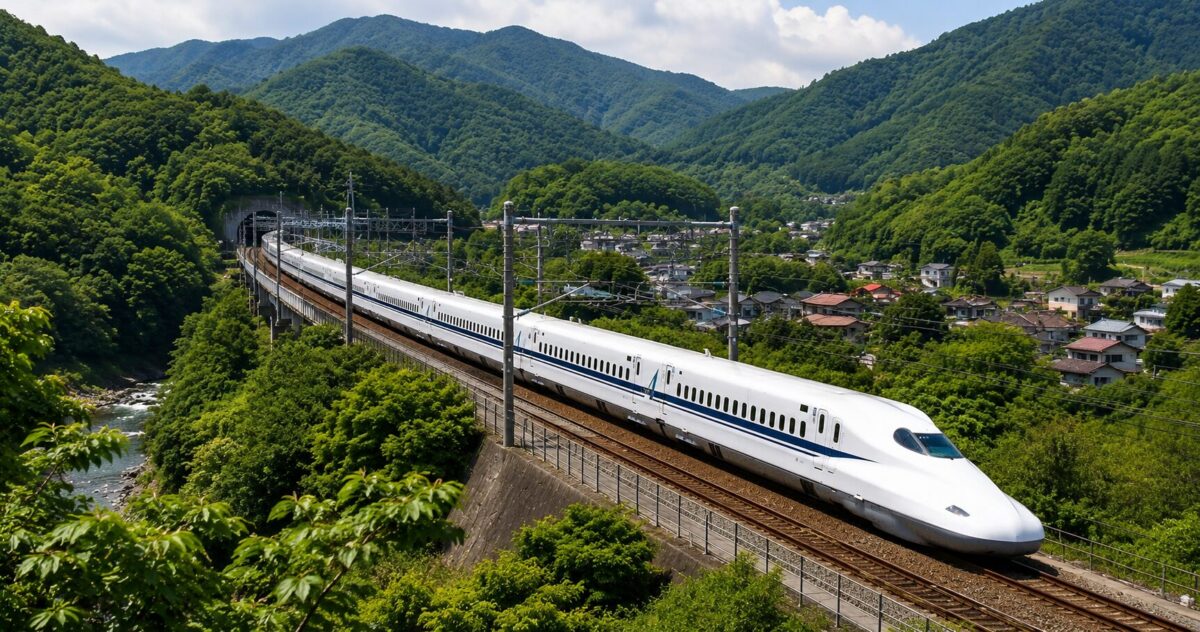
The Shinkansen’s greatest strength is not simply its speed.
Dedicated tracks, advanced safety technology, precise operations management, nightly maintenance, and the coordinated efforts of countless people all work together to create one of the world’s most reliable transportation systems.
The Shinkansen is much more than a high-speed train. It is a carefully integrated system in which infrastructure, operations, technology, maintenance, and the people behind the scenes all play essential roles in delivering safe and dependable service every day.
What makes the Shinkansen truly remarkable is not the train itself, but the system that keeps it running with such extraordinary reliability.