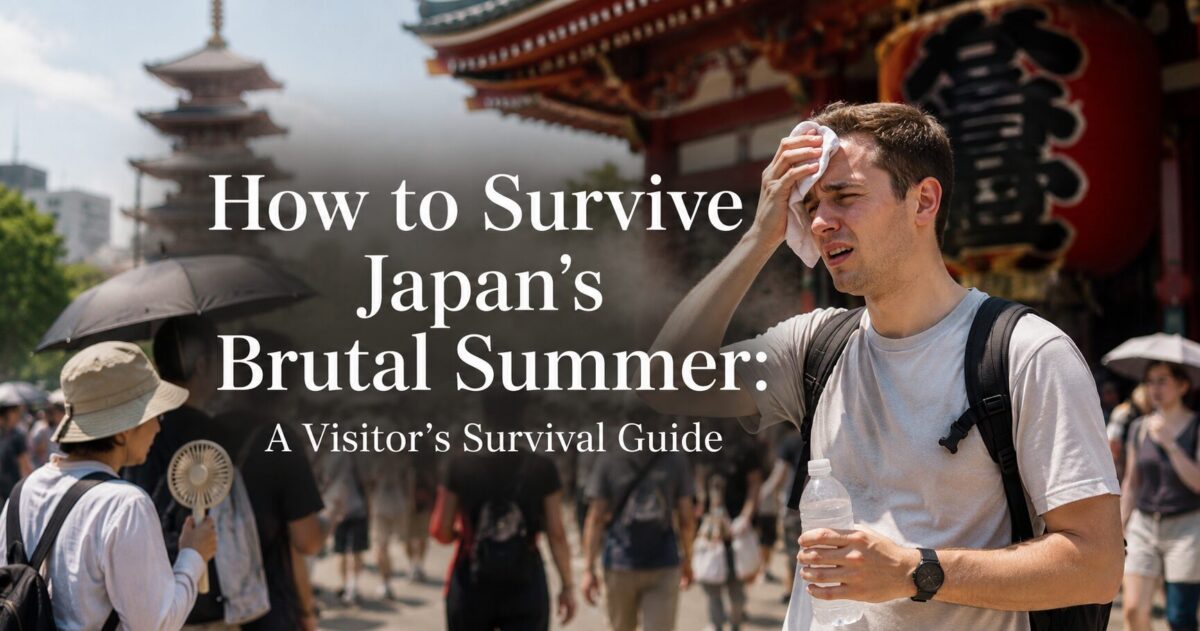
Japan’s summer is **hot, humid, and far more intense than many visitors expect**.
*”Japan is way too hot!”*
*”I had no idea it would be this humid!”*
These are comments you’ll often hear from travelers after visiting Japan during the summer.
Compared with the pleasant cherry blossom or autumn foliage seasons, **July through September is probably the most challenging time to visit Japan.**
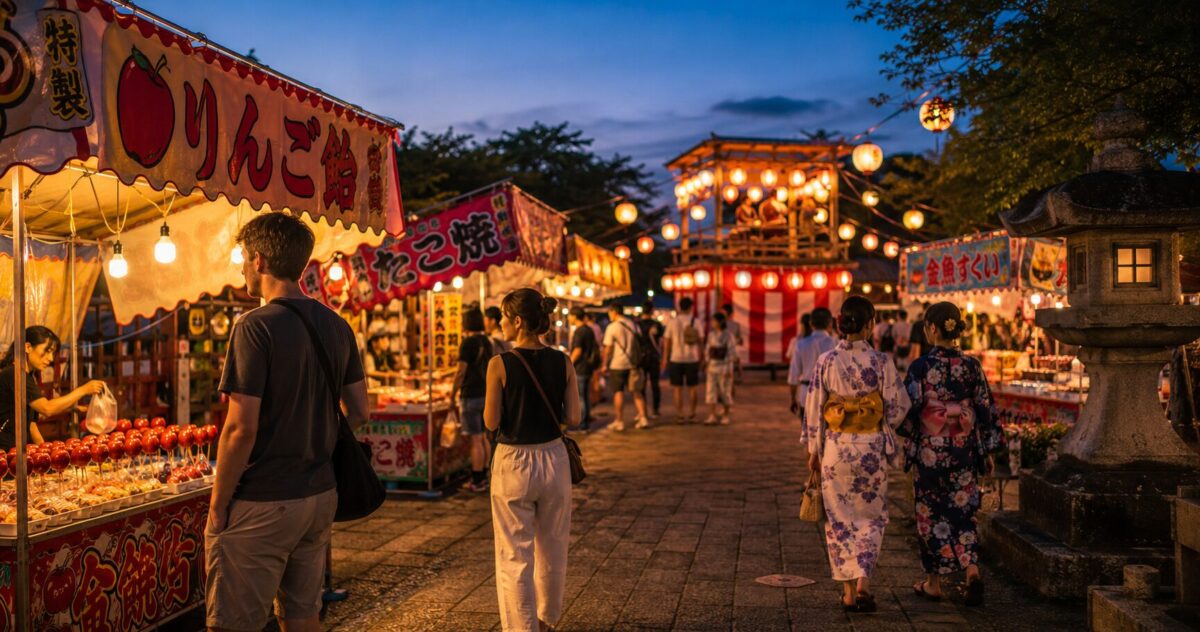
Of course, summer has its own attractions, including lively festivals, spectacular fireworks displays, and beautiful seasonal scenery. However, many visitors underestimate the heat and humidity, only to find themselves exhausted before they can fully enjoy their trip.
Japan’s summer isn’t just about high temperatures. The humidity is so high that sweat doesn’t evaporate easily, making it feel as though you’re walking inside a giant steam room.
In recent years, climate change has made summers even harsher. Daytime temperatures of around **35°C (95°F)** have become increasingly common, and in some urban areas, temperatures can approach **40°C (104°F)** during extreme heat waves.
That’s why Japanese people have developed countless ways to cope with the summer heat.
In this article, I’ll introduce practical tips that travelers can easily use to stay comfortable while visiting Japan.
How Japanese People Avoid the Heat While Getting Around
One of the most important things to remember is that **coping with Japan’s summer isn’t about enduring the heat—it’s about avoiding it whenever possible.**
Rather than spending long periods outdoors, many Japanese people simply change the way they move around the city.
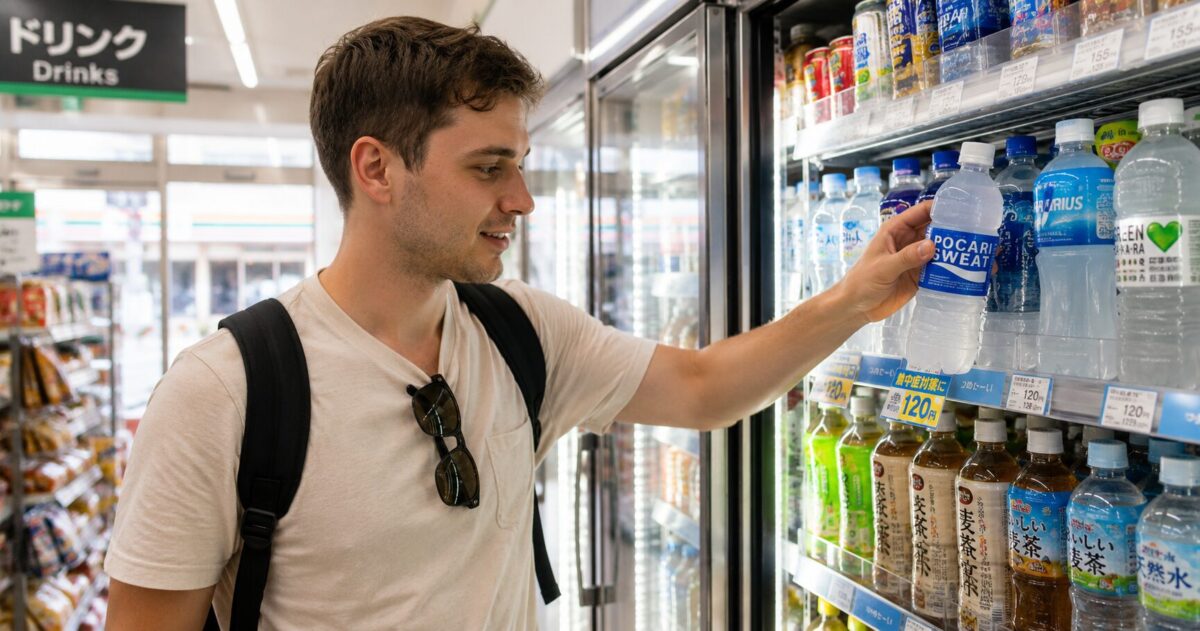
Convenience stores, for example, are more than just places to buy snacks. They’re air-conditioned shelters where you can cool down for a few minutes while picking up a cold drink. Taking a short break like this can make a surprising difference on a hot day.
Japan’s countless vending machines are another lifesaver. Since you can find cold drinks almost everywhere, it’s easy to stay hydrated before you even begin to feel thirsty.
In large cities, many people also use underground shopping streets, station complexes, and department stores to avoid walking under the blazing sun. In places like Tokyo and Osaka, it’s often possible to travel surprisingly long distances almost entirely underground.
If you’re sightseeing, try to plan outdoor activities during the morning or late afternoon when temperatures are slightly lower. The hottest hours of the day are better spent in museums, shopping malls, cafés, or other air-conditioned buildings.
There’s one more thing visitors often don’t expect.
While it’s extremely hot outside, trains, department stores, and shopping centers in Japan are often **heavily air-conditioned**. Walking into a freezing-cold building while you’re covered in sweat can quickly make you feel chilly.
For that reason, it’s a good idea to carry a lightweight cardigan, shirt, or jacket, even in the middle of summer. It doesn’t take up much space, but it can make indoor travel much more comfortable.
Why Japanese People Wear Summer-Specific Clothing
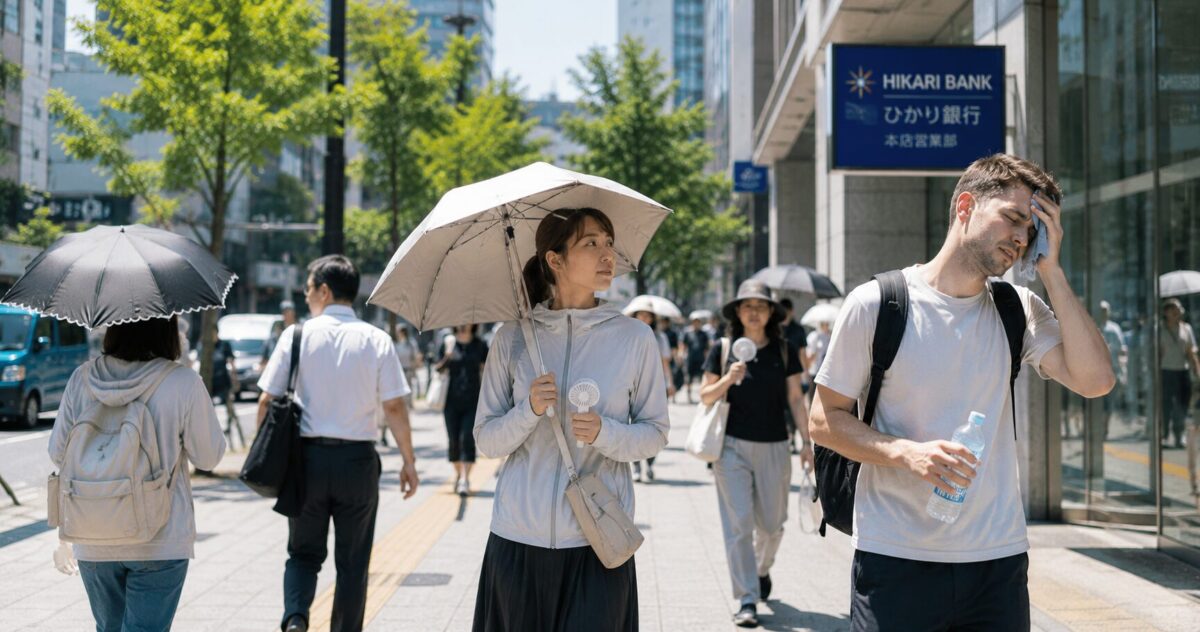
In Japan, many people switch to clothing designed specifically for hot and humid weather once summer arrives.
Simply wearing fewer clothes is not always enough. Strong sunlight can heat the skin directly, while sweat and humidity can make ordinary fabrics feel heavy and uncomfortable.
That is why functional clothing with features such as the following has become widely available:
- Cool-touch fabrics
- Moisture-wicking and quick-drying materials
- UV protection
- Heat-blocking fabrics
One of the best-known examples is UNIQLO’s AIRism range.
AIRism is especially popular as summer underwear because its smooth, lightweight fabric helps manage sweat and dries quickly. Many people wear AIRism shirts or undershirts beneath their everyday clothes during the hottest months.
Another increasingly popular option is WORKMAN’s X Shelter series.
WORKMAN was originally known for clothing designed for construction sites and other demanding workplaces. However, many of its products are now also worn as everyday clothing.
The X Shelter series focuses on features such as heat protection, UV protection, and shielding the body from strong sunlight. Lightweight jackets and parkas from the range are especially useful when spending long periods outdoors.
I personally wear both AIRism underwear and an X Shelter parka during the summer.
The X Shelter parka is particularly helpful on days when I have to walk outside for a long time. Although wearing a long-sleeved layer in summer may seem strange, blocking direct sunlight can sometimes feel more comfortable than exposing your skin to it.
I also finally bought a parasol after struggling through another extremely hot summer.
At first, I felt slightly self-conscious about using one. Parasols were once seen mainly as accessories for women in Japan. However, they are becoming increasingly common among men as well.
Eventually, I realized that protecting myself from the heat was far more important than worrying about how other people might see me.
Besides functional clothing, I usually carry three small summer items:
- A handheld electric fan
- A small spray bottle containing diluted Japanese mint oil
- A parasol
Japanese mint oil, known as hakka oil, creates a cooling sensation when it is properly diluted and sprayed around the neck or onto suitable areas of the skin.
A few drops mixed with water in a small spray bottle can feel refreshing when the heat becomes overwhelming. The cooling feeling does not actually lower your body temperature, but it can make a tiring walk feel a little more comfortable.
Be careful not to use too much, spray it near the eyes, or apply it undiluted, as mint oil can irritate the skin.
Japan has even developed something that looks like a wearable air conditioner.
It is known as kūchōfuku, or fan-equipped workwear.
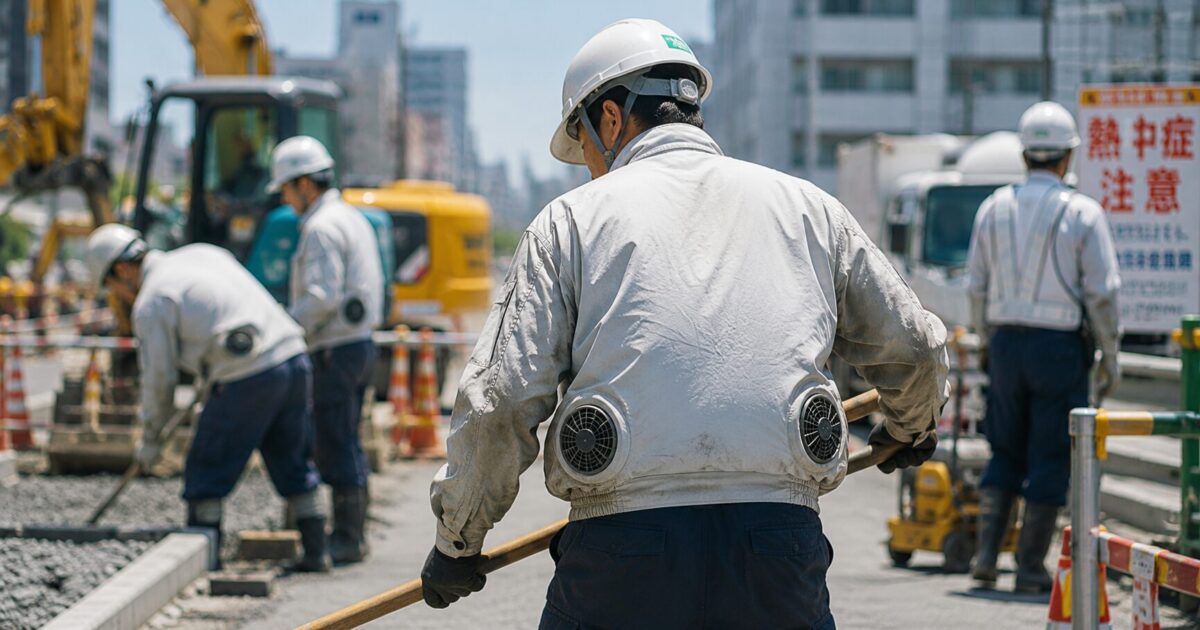
These jackets have small electric fans built into the lower back or sides. The fans continuously pull outside air into the clothing, allowing it to circulate around the body before escaping through the collar and sleeves.
Fan-equipped clothing is now commonly used by:
- Construction workers
- Delivery drivers
- Farmers
- Outdoor event staff
- Factory and warehouse workers
When this kind of clothing first appeared, some people thought its inflated shape looked unusual.
Today, however, it has become an essential piece of equipment for many people who work outdoors. As Japanese summers have grown hotter, appearance has become far less important than preventing heat-related illness.
Convenience Stores and Drugstores Are Full of Heat-Relief Products
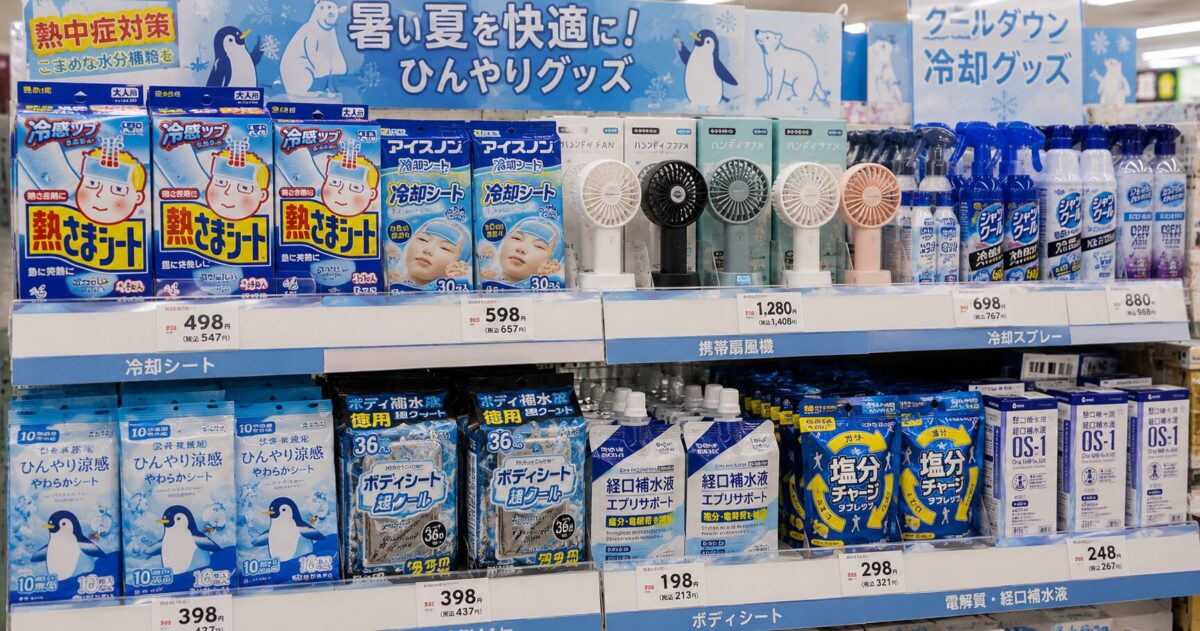
During the summer, convenience stores and drugstores across Japan fill entire shelves with products designed to make the heat more manageable.
Common items include:
- Cooling body wipes
- Cooling sprays for clothing
- Cooling towels
- Neck coolers
- Handheld electric fans
- Salt candies
- Electrolyte tablets
- Sports drinks
Cooling body wipes are particularly popular.
They remove sweat and leave a temporary cooling sensation on the skin, making them useful after walking outside or before getting back on a train. Many office workers, students, and commuters carry a packet in their bag throughout the summer.
Cooling sprays are usually applied to clothing rather than directly to the skin. Some create a refreshing sensation when the fabric moves, although the effect is temporary.
Cooling towels and reusable neck rings are also common. Some products are chilled in a refrigerator or freezer before use, while others are activated simply by soaking them in water.
Portable electric fans have also become an everyday sight. They are sold in many sizes, from small handheld models to fans that can be worn around the neck.
For hydration, convenience stores stock large selections of water, tea, and sports drinks. Drugstores and supermarkets also sell salt candies and electrolyte tablets intended to replace some of the minerals lost through sweat.
Most of these products are inexpensive and easy to use, so visitors do not necessarily need to bring everything from home.
You can arrive in Japan, visit a nearby convenience store or drugstore, and quickly put together a basic summer survival kit.
Stay Hydrated and Replenish Electrolytes Through Food
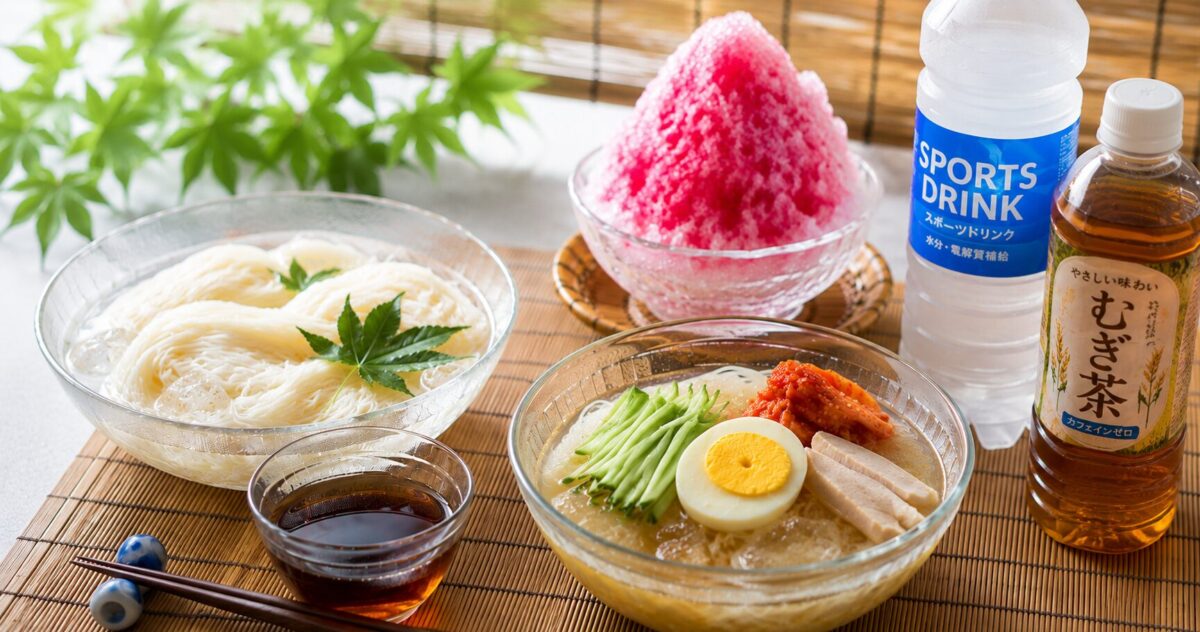
Drinking plenty of water is important, but during Japan’s summer, water alone is often not enough.
When you sweat heavily, your body loses not only water but also salt and other electrolytes.
That’s why many Japanese people also replenish electrolytes by drinking or eating products such as:
- Sports drinks
- Barley tea (mugicha)
- Salt candies
- Electrolyte tablets
Japan also has many foods that are especially popular during the hottest months of the year.
Some of the most common include:
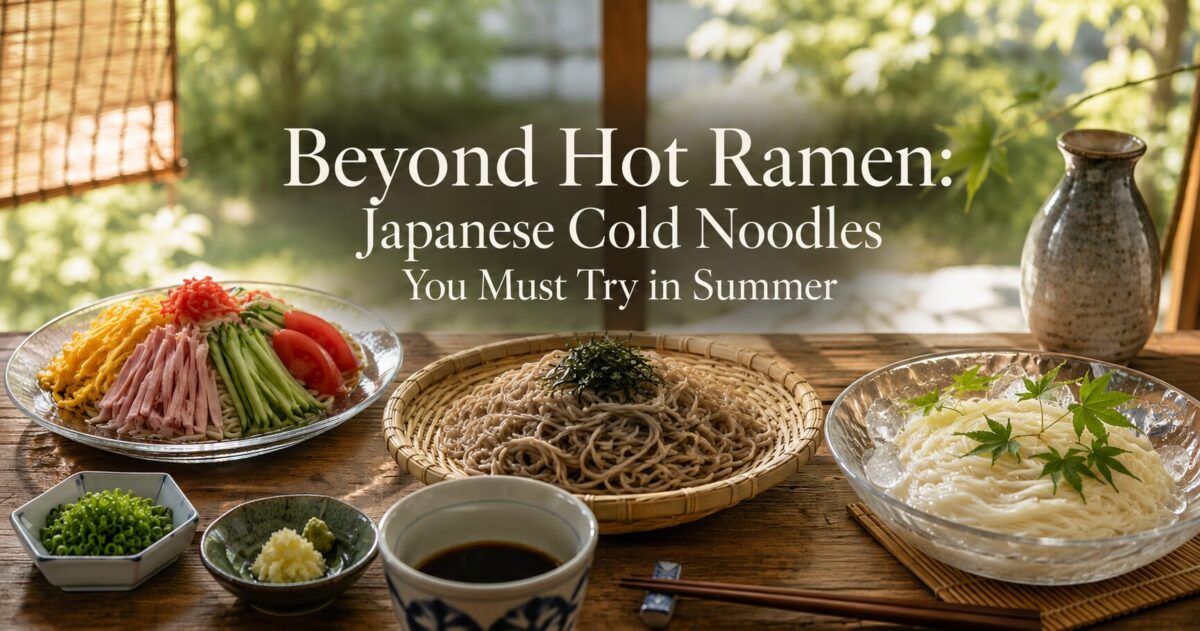
- Somen (thin cold wheat noodles)
- Hiyashi Chuka (cold ramen with toppings)
- Cold udon noodles
- Kakigori (Japanese shaved ice)
These dishes are light, refreshing, and easy to eat even when the heat reduces your appetite.
Beyond Hot Ramen: Japanese Cold Noodles You Must Try in Summer
I often eat somen or cold udon for lunch during the summer because they’re simple to prepare and don’t feel too heavy.
Ice cream is also tempting on hot days, but eating too much of it can quickly lead to unwanted summer weight gain—something I try to keep in mind every year.
Fortunately, all of these foods and drinks are easy to find at convenience stores and supermarkets throughout Japan.
What to Do If You Think You Have Heatstroke
If you begin to experience any of the following symptoms while traveling, don’t try to push yourself.
- Dizziness
- Headache
- Nausea
- Extreme fatigue
- Heavy sweating or unusual sweating
These may be early signs of heatstroke.
If you notice any of these symptoms, move to a cool place as soon as possible.
Drink water together with sports drinks or other sources of electrolytes, loosen your clothing, and cool your body using air conditioning, a fan, or cold towels.
Don’t continue walking or sightseeing just because you don’t want to interrupt your schedule.
If your symptoms become severe or don’t improve, ask someone nearby or the staff at your hotel for assistance and seek medical attention as soon as possible.
Conclusion
Japan’s summer is famous for its intense heat and humidity, and for many visitors, it can be much more challenging than expected.
Fortunately, Japan has also developed countless ways to cope with the heat.
Functional clothing, practical cooling products, convenience stores, vending machines, and air-conditioned indoor spaces all make it easier to stay comfortable, even during the hottest months.
By taking regular breaks, staying hydrated, and planning your day around the weather, you’ll be able to enjoy Japan’s summer much more safely.
Don’t try to fight the heat. Instead, do what the locals do—slow down, stay cool, and enjoy everything that a Japanese summer has to offer.