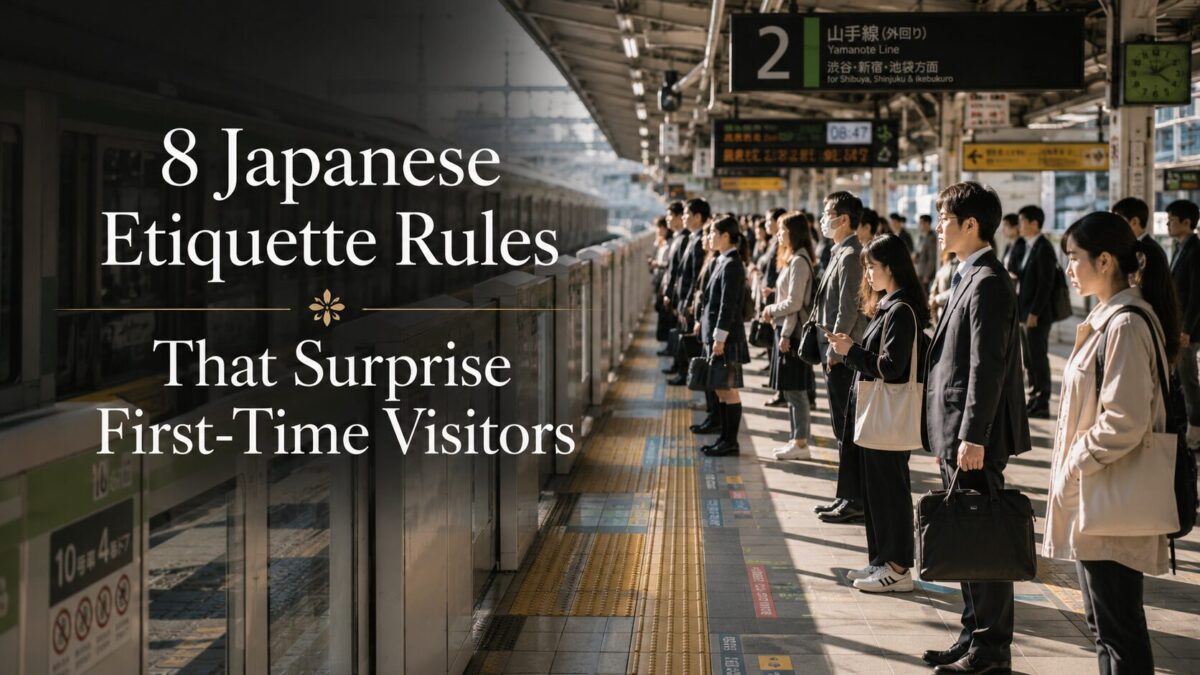
One of the first things many foreign visitors notice in Japan is the number of unwritten social rules that shape everyday life.
Even when something isn’t required by law, Japanese society places a strong emphasis on not inconveniencing others and being considerate of the people around you. As a result, actions that may seem perfectly normal in other countries can sometimes surprise locals.
In this article, we’ll introduce some of the everyday etiquette that often catches visitors off guard—and explain the cultural values behind it.
1. Keep Quiet on Trains
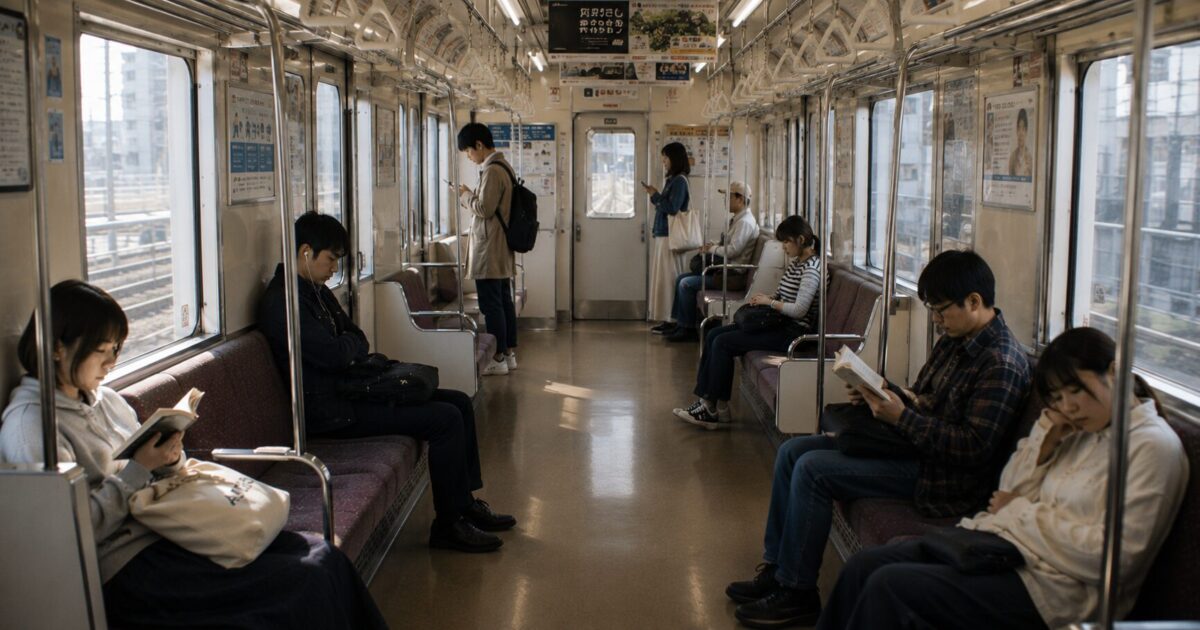
Japanese trains are known for being some of the quietest public transportation systems in the world.
Most passengers naturally avoid behaviors such as:
- Speaking loudly
- Talking on the phone inside the train
- Using smartphones near priority seating with consideration for others
This reflects the idea that public spaces are shared by everyone. Since millions of people rely on trains every day for commuting and school, maintaining a calm and comfortable environment has become an important part of everyday etiquette.
If you’d like to learn more, read our article: Why Are Japanese Trains So Quiet?
People Always Queue
Wherever you go in Japan, you’ll see orderly lines.
Whether it’s:
- Train platforms
- Store checkouts
- Elevators and escalators
- Popular restaurants
People patiently wait their turn.
The idea behind this is simple: if everyone follows the rules, things move more smoothly, and everyone benefits.
Because of this, cutting in line is generally considered very rude.
3. Place Your Money on the Cash Tray
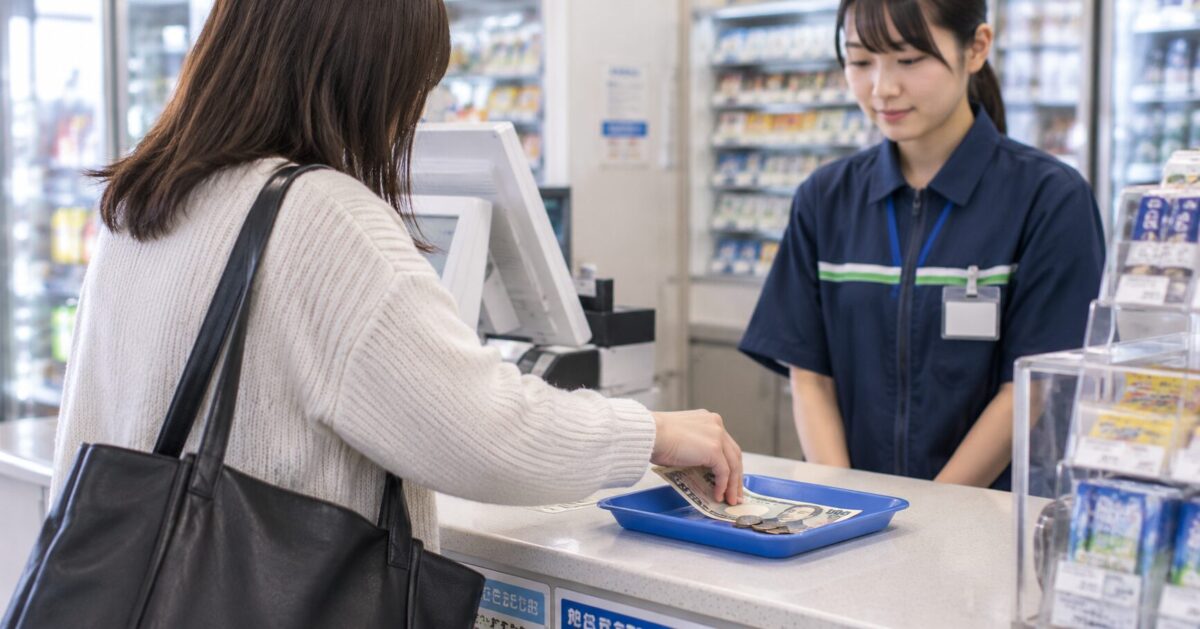
When paying with cash in Japan, customers usually place their money on a small tray near the register instead of handing it directly to the cashier.
This makes it easier to count the money accurately while creating a smoother and more comfortable exchange for both people.
Although cashless payments have become increasingly common, many stores still use cash trays whenever customers pay with cash.
4. Escalator Etiquette Depends on the Region
Many people in Japan leave one side of an escalator open so others can pass.
Traditionally:
- People stand on the left in Tokyo.
- People stand on the right in Osaka.
However, this custom has been changing in recent years. To reduce accidents, more railway stations and public facilities now encourage people to stand on both sides instead of walking.
It’s a good example of how etiquette can vary by region—and continue to evolve over time.
5. Tattoos May Prevent You from Entering Hot Springs
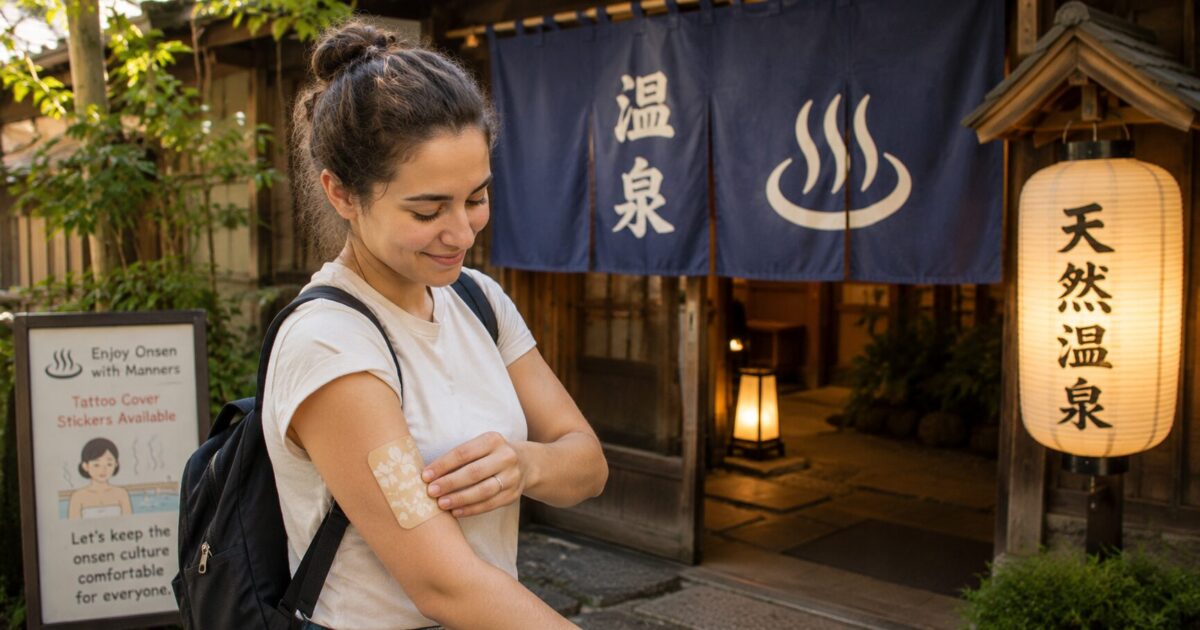
One of the biggest surprises for many visitors is that some hot springs, public baths, and swimming pools may refuse entry to people with tattoos.
Unlike many countries, tattoo culture has never been widespread among the general public in Japan. Historically, tattoos were associated with criminals and later with organized crime groups.
Traditional values such as respecting the body you were born with have also influenced public attitudes toward tattoos.
That said, policies are gradually changing as international tourism grows.
Many travelers can still enjoy hot springs by:
- Covering tattoos with special stickers
- Using a private bath (family bath)
- Choosing tattoo-friendly facilities
Websites such as Tattoo Friendly can help you find accommodations and hot springs that welcome guests with tattoos before your trip.
We’ll also cover Japanese hot spring etiquette in more detail in a future guide.
6. Eating While Walking Depends on Where You Are
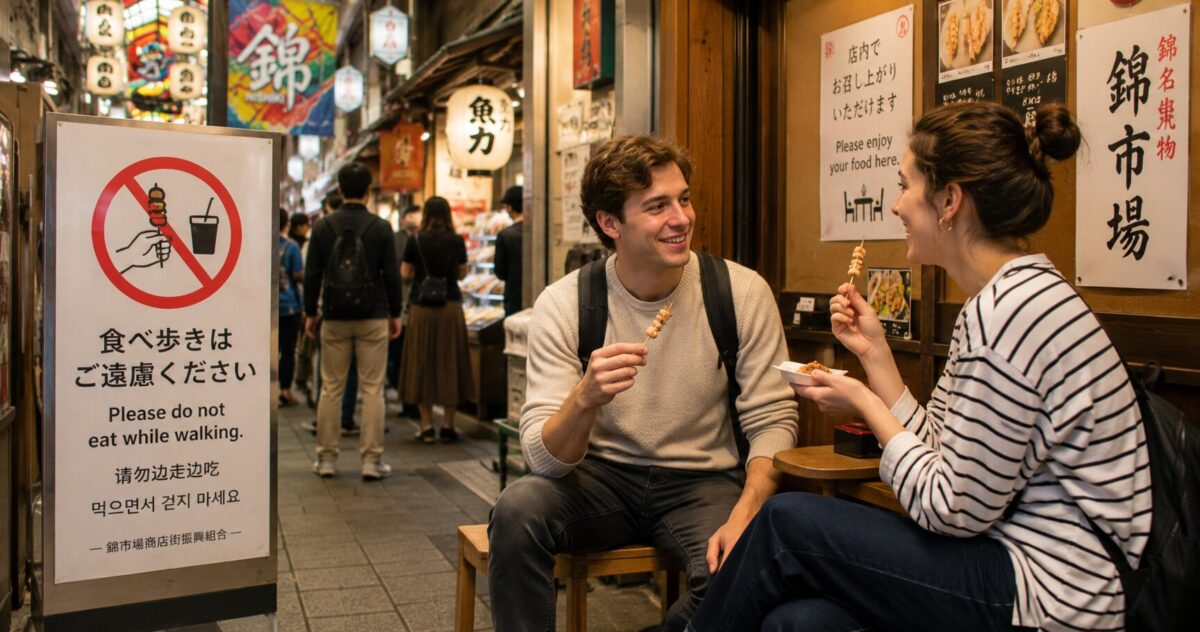
Eating while walking isn’t illegal in Japan, but whether it’s considered acceptable depends on the location.
At festivals and many tourist attractions, it’s perfectly normal to enjoy food while exploring.
However, some famous destinations—such as Nishiki Market in Kyoto and Komachi Street in Kamakura—ask visitors not to eat while walking. Instead, they encourage people to eat in designated areas or in front of the shop where they purchased the food.
In ordinary neighborhoods, shopping streets, and around train stations, many people also avoid eating while walking.
This comes from a desire to avoid spilling food, littering, or getting in other people’s way.
7. Take Your Trash With You
One of the biggest surprises for many visitors is how few public trash cans there are in Japan.
Because of this, it’s common for people to carry empty bottles, food wrappers, and other small items until they can dispose of them later.
Many travelers even carry a small plastic bag for their trash—a habit that is also common among Japanese people.
If you’re wondering why public trash cans are so rare, check out our article: Why Are There So Few Public Trash Cans in Japan?
8. Take Off Your Shoes Indoors
Removing your shoes before entering certain indoor spaces is one of Japan’s most well-known customs.
You’ll commonly be expected to take off your shoes in places such as:
- Private homes
- Traditional ryokan inns
- Some restaurants
- Temples and traditional buildings
If you see a raised entrance (genkan) or tatami flooring, it’s usually a sign that shoes should be removed.
This custom helps keep indoor spaces clean while reflecting the idea that the home is a special living space.
You can also learn more about Japanese hospitality in our article: Why Is Customer Service in Japan So Different?
Conclusion
Japanese etiquette isn’t simply about following strict rules.
Most of these customs have developed over time to help people share limited public spaces comfortably and avoid inconveniencing others.
You don’t need to memorize every rule before visiting Japan. Simply understanding the idea of showing consideration for those around you will make your trip smoother—and help you appreciate everyday life in Japan even more.