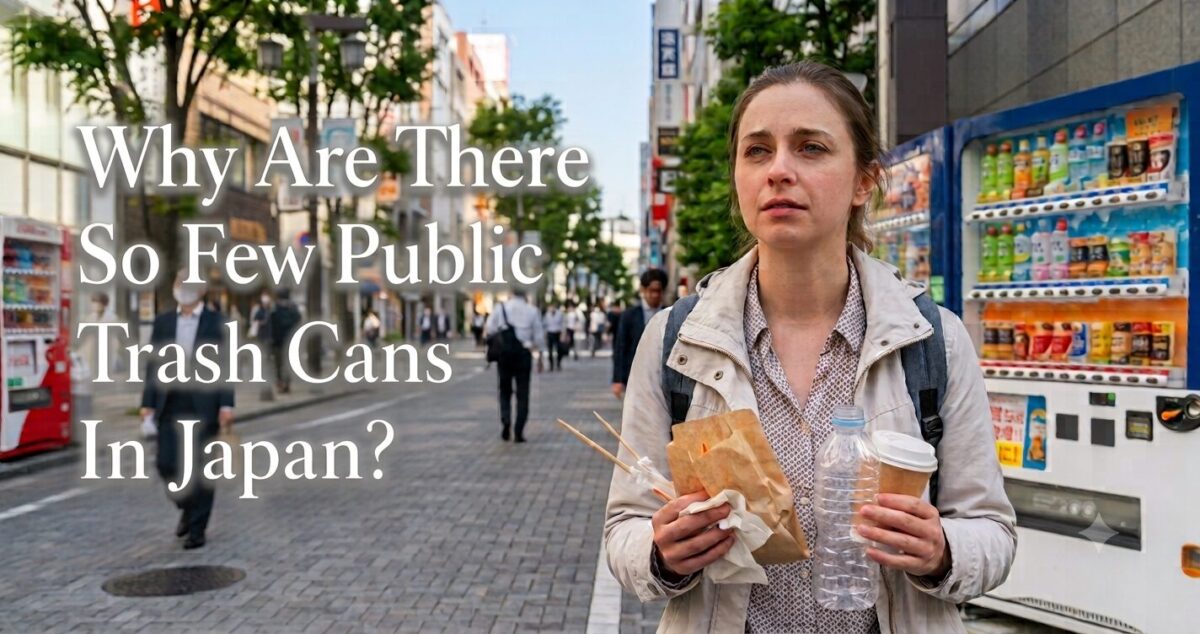
One of the first things that surprises many visitors to Japan is how difficult it can be to find a public trash can.
You buy a drink at a convenience store.
You enjoy some street food.
You finish your bottle of water.
Then you suddenly realize something.
“Where’s the trash can?”
This question comes up again and again on social media and travel blogs.
What makes it even more surprising is that, despite the lack of public trash cans, Japan’s streets are remarkably clean.
How can both of these things be true?
Are There Really So Few Trash Cans in Japan?
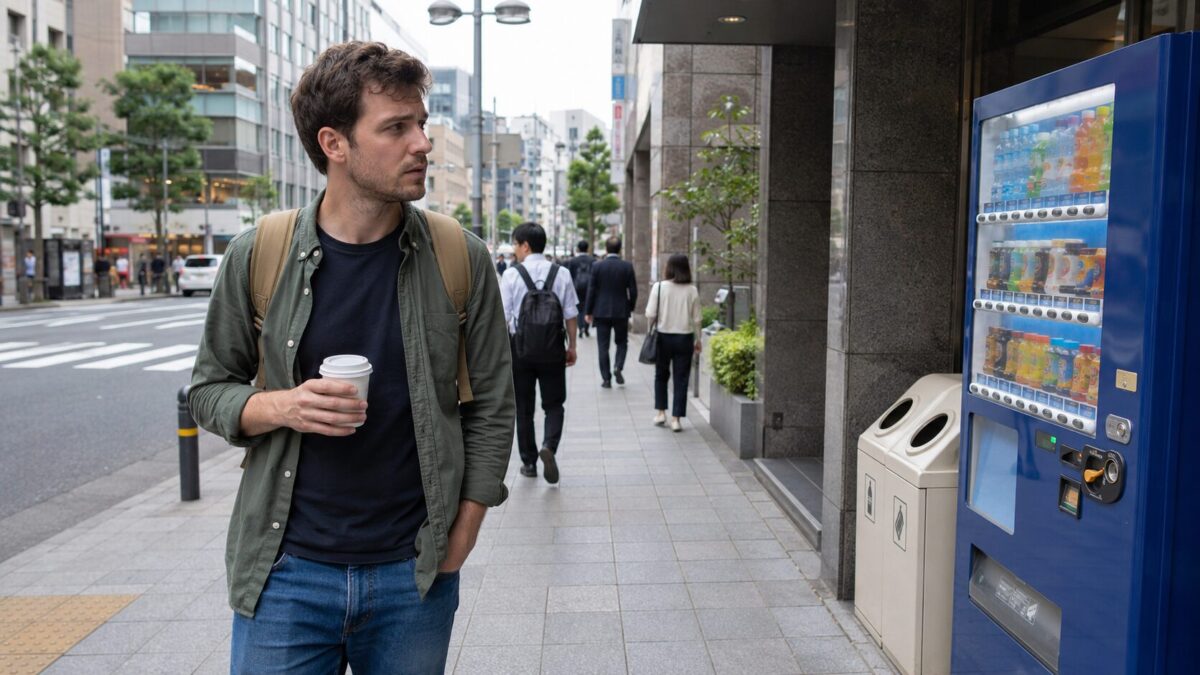
The first thing to know is that public trash cans haven’t disappeared completely.
You can still find them in places such as:
Inside train stations.
Recycling bins next to vending machines for bottles and cans.
Shopping malls and commercial facilities.
Outside of these places, however, public trash cans are surprisingly rare.
On sidewalks, street corners, in parks, and even around many tourist attractions, you may struggle to find one.
In many countries, public trash cans are a common part of the streetscape, so first-time visitors to Japan are often surprised by the difference.
Why Have Public Trash Cans Become So Rare?
There are several reasons why public trash cans have become less common in Japan.
Since the late 1990s, concerns about public safety and terrorism, along with maintenance costs and the challenges of sorting waste, have led many cities and facilities to reduce the number of public trash cans.
As a result, even today, finding a public trash can while walking around a Japanese city is not always easy.
A Culture of Taking Your Trash Home
In Japan, many people grow up with the idea that you should take responsibility for your own trash.
Of course, not everyone follows this perfectly.
Even so, it is a fairly common habit.
Cherry blossom viewing parties.
Local festivals.
Hiking trips.
Outdoor events.
Even at these gatherings, many people take their own trash home instead of leaving it behind.
For that reason, it is quite common for Japanese people to carry a small plastic bag or simply keep their trash in their backpack or tote bag until they can throw it away later.
Rather than searching for a trash can, many people simply assume they will take their trash home from the beginning.
Why Are Japan’s Streets Still So Clean?
Japan’s streets are not clean simply because there are plenty of trash cans.
People who clean the streets.
Community clean-up activities.
Cleaning carried out by businesses.
And the everyday manners of ordinary people.
All of these small efforts come together to keep Japan’s streets remarkably clean.
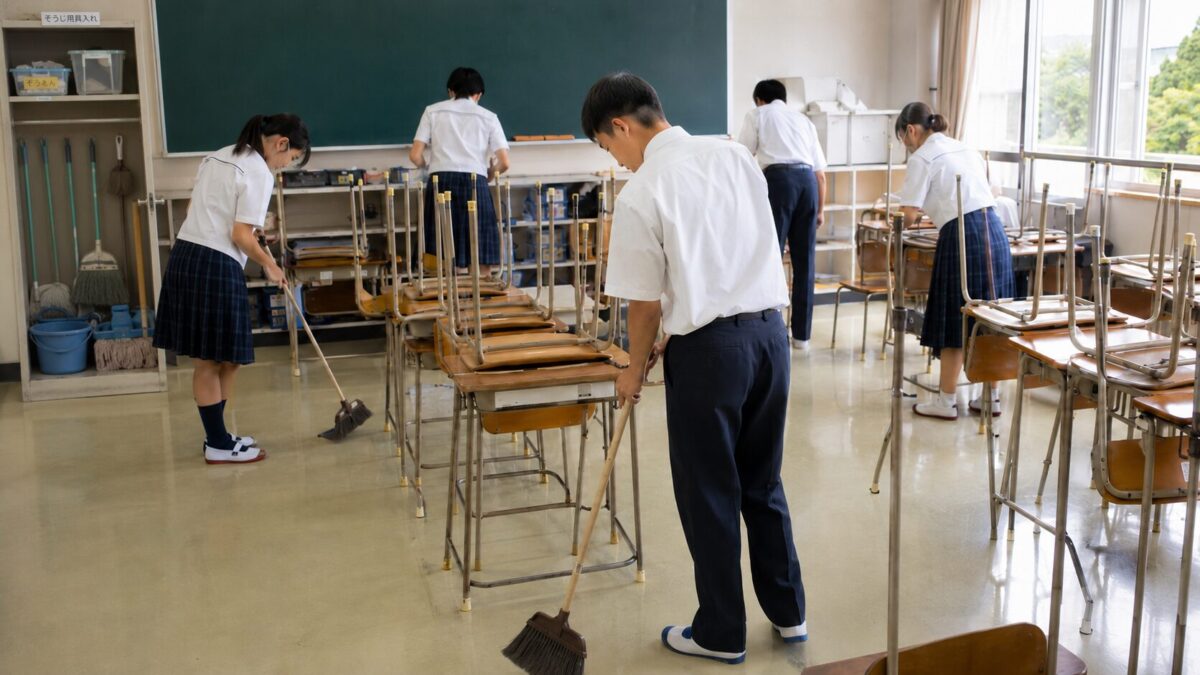
One of the biggest influences, I believe, is the culture of cleaning in Japanese schools.
Throughout compulsory education, students at many schools clean their own classrooms and hallways.
Each classroom has cleaning supplies, and at the end of the school day, students sweep the floor, wipe it with cloths, collect the trash, and throw it away together.
I grew up thinking this was completely normal.
“If you use a place, you clean it yourself.”
From an early age, many children naturally learn this way of thinking.
Perhaps that’s why many Japanese people grow up wanting to keep public places as clean as possible.
There’s another reason as well.
I think many Japanese people simply don’t like seeing dirty places or spending time in untidy surroundings.
That feeling may be one of the reasons Japan’s streets stay so clean.
You can even see this attitude at sporting events.
Japanese soccer fans are well known for picking up trash around their seats before leaving the stadium after a match.
This scene attracted worldwide attention during international tournaments such as the FIFA World Cup, with many media outlets asking, “Why do Japanese fans clean the stadium after the game?”
Of course, not every Japanese person does this.
Even so, the idea of leaving a place as clean as—or cleaner than—you found it is a value that many people in Japan naturally share.
There is a Japanese proverb that says, “Tatsu tori ato o nigosazu.”
It literally means, “A bird does not muddy the water when it flies away.”
In other words, when you leave a place, you should leave it in good condition.
I see this idea reflected in school cleaning, in soccer fans picking up trash after matches, and in many other parts of everyday life in Japan.
It’s also a saying that I personally try to live by.
What Do Japanese People Actually Do?
In Japan, it’s common for people to carry a bag whenever they go out.
Not only women, but many men also carry backpacks or tote bags.
I always carry a tote bag when I leave the house.
Inside, I usually have either a reusable bottle filled with tea or a bottle of water.
Since I don’t often need to buy drinks while I’m out, I naturally create less trash.
I also keep a foldable reusable shopping bag in my tote bag.
If I go shopping—or if I happen to have any trash—I simply put it in the bag and take it home.
For me, that’s nothing unusual. It’s just part of everyday life.
Tips for Travelers
Even if you can’t find a public trash can in Japan, a little preparation will make your trip much easier.
If you’re looking for a place to throw something away, try checking:
Convenience stores.
Train stations.
Shopping malls.
Hotels.
These are usually your best options.
You’ll also often find recycling bins for bottles and cans next to vending machines.
It’s also common in Japan to dispose of drink bottles or takeaway food packaging at the store where you bought them, or in a designated collection bin on the store’s premises.
Carrying a small plastic bag in your backpack or pocket can also be surprisingly useful.
It gives you a place to keep your trash until you find somewhere appropriate to dispose of it.
Fewer Trash Cans, A Different Way of Thinking
Japan has relatively few public trash cans.
Yet its streets remain remarkably clean.
The reason isn’t the number of trash cans.
It’s the everyday habits, values, and shared sense of responsibility that many people have toward public spaces.
If you can’t find a trash can during your trip to Japan, try carrying your trash with you for a little while.
It may seem like a small inconvenience, but it also offers a small glimpse into everyday life and values in Japan.