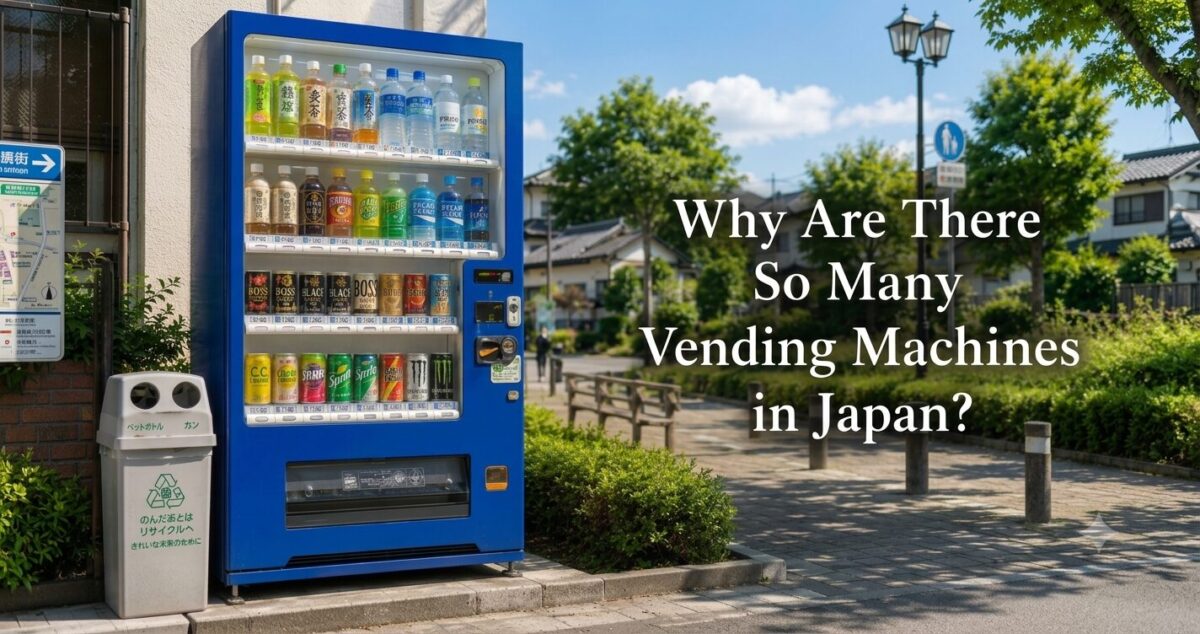
One of the first things many visitors notice in Japan is the sheer number of vending machines.
They are not limited to train stations or busy shopping districts.
You can find them on quiet residential corners, outside apartment buildings, near shrines, along rural roads, and even halfway up a mountain path. They often appear in places that make visitors wonder, “Why is there a vending machine here?”
Many countries have vending machines, but few have integrated them so completely into everyday life. In Japan, they have become part of the landscape.
When you feel thirsty while traveling, there is a good chance you will find a vending machine within a few minutes. They are so common that most people living in Japan barely notice them anymore.
So why does Japan have so many vending machines?
The answer is not simply convenience. Japan’s distinctive vending machine culture has developed through a combination of public safety, efficient distribution networks, working patterns, and everyday habits.
One of the World’s Largest Vending Machine Networks
Japan has around 3.8 million vending machines, approximately 2.2 million of which sell drinks.
The United States has more vending machines in total, but Japan has one of the highest numbers per person anywhere in the world.
That is why vending machines are not treated as something unusual in Japan.
Like convenience stores and train stations, they are often seen as part of the infrastructure that supports daily life.
When you want a drink, there is usually a vending machine nearby.
For people in Japan, this feels completely ordinary.
From an international perspective, however, it is anything but ordinary. That is why so many visitors find themselves asking the same question: why are there vending machines almost everywhere in Japan?
Why Can They Be Left Almost Anywhere?
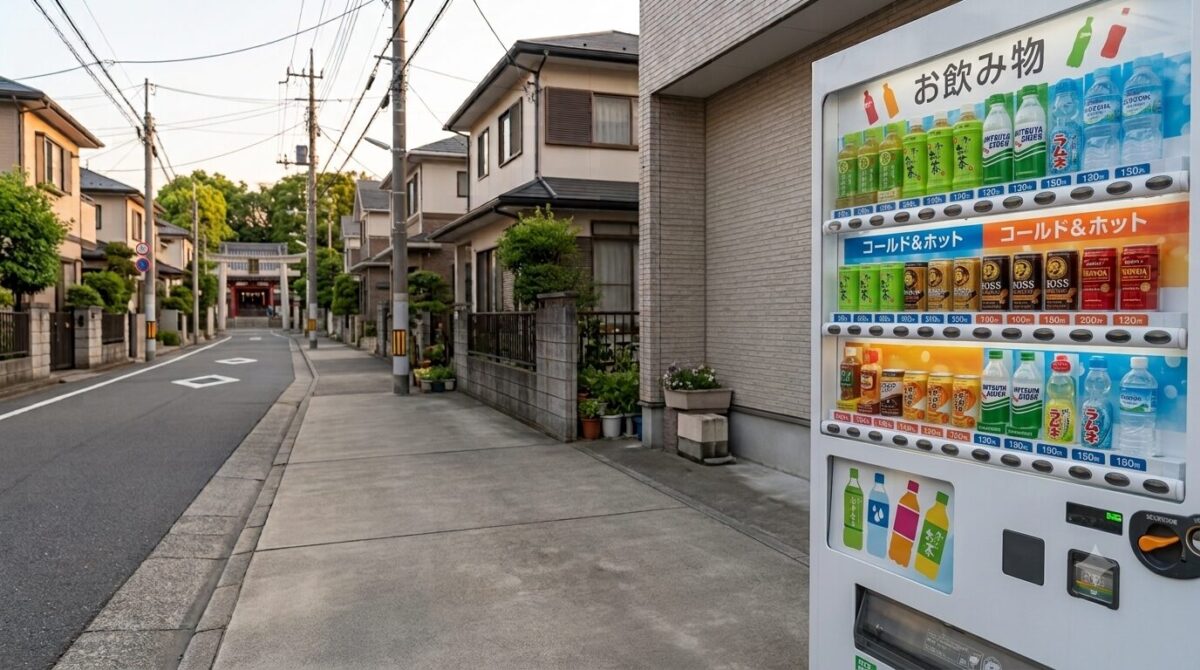
Visitors often have another question when they see a vending machine standing alone on a quiet street:
“Why doesn’t anyone steal it?”
Vending machines in Japan are not found only inside stations and shopping centers. Many stand on residential streets or beside roads that become almost empty at night.
And most of them contain not only products, but cash as well.
One reason they can be installed so widely is Japan’s relatively low level of street crime. Vandalizing a machine or breaking it open to steal the money is less common than in many other countries, making outdoor installation easier.
Their locations also provide a certain amount of informal surveillance. Machines placed outside homes, shops, or apartment buildings are often visible to neighbors and passersby. Security cameras are also common, so a machine is rarely left completely out of sight.
Japan’s long-standing cash culture also helped vending machines spread. For decades, people were accustomed to carrying coins and using them for small everyday purchases. Buying a drink quickly without entering a shop fit naturally into this way of life.
Today, an increasing number of machines accept transit cards and QR-code payments. Cashless vending machines are now a familiar sight, especially in cities.
Of course, vending machines in Japan are not completely immune to theft or damage. There are still reports of machines being broken into or vandalized.
Their widespread presence does not mean Japan is perfectly safe.
Rather, relatively good public safety, security measures, community visibility, and decades of established use have created an environment in which unattended machines can operate outdoors around the clock.
More Than Just Drinks
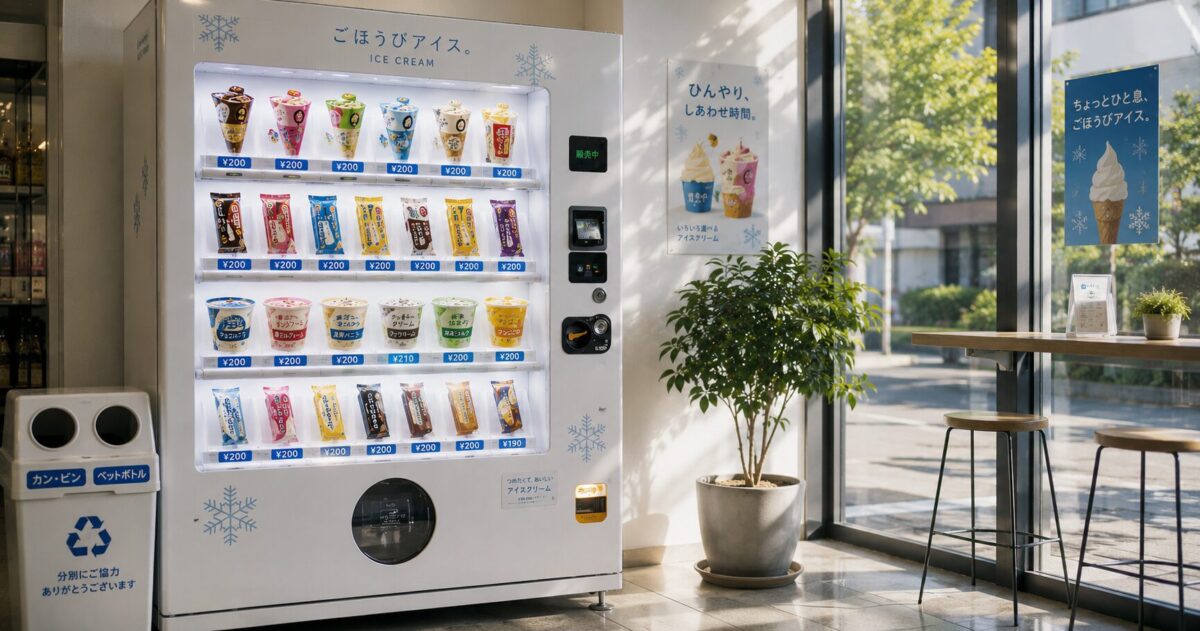
When people think of Japanese vending machines, drinks are usually the first thing that comes to mind.
And in fact, most vending machines in Japan do sell beverages.
But many others offer completely different products.
Depending on the location, you may find machines selling ice cream, frozen ramen, eggs, flowers, umbrellas, or toys.
More recently, vending machines that squeeze fresh orange juice on the spot and machines selling slices of cake in cans have attracted attention.
Overseas, these are sometimes presented as examples of Japan’s “strange” or “unique” vending machines. For most people in Japan, however, they are not especially extraordinary.
They exist not simply because they are entertaining, but because someone needs what they sell.
An umbrella vending machine can be useful when rain begins unexpectedly. A frozen ramen machine may serve commuters returning home after nearby restaurants have closed. Ice cream machines work well at stations, parks, and event venues where permanent staff are not always available.
Vending machines can offer products around the clock, even in places where keeping a shop open would be impractical.
In this sense, Japanese vending machines are not merely machines that sell unusual products. They are a flexible form of retail that has adapted to local habits and needs.
What began mainly as a convenient way to buy drinks has expanded into a small but surprisingly versatile part of everyday infrastructure.
The People Who Keep Them Running
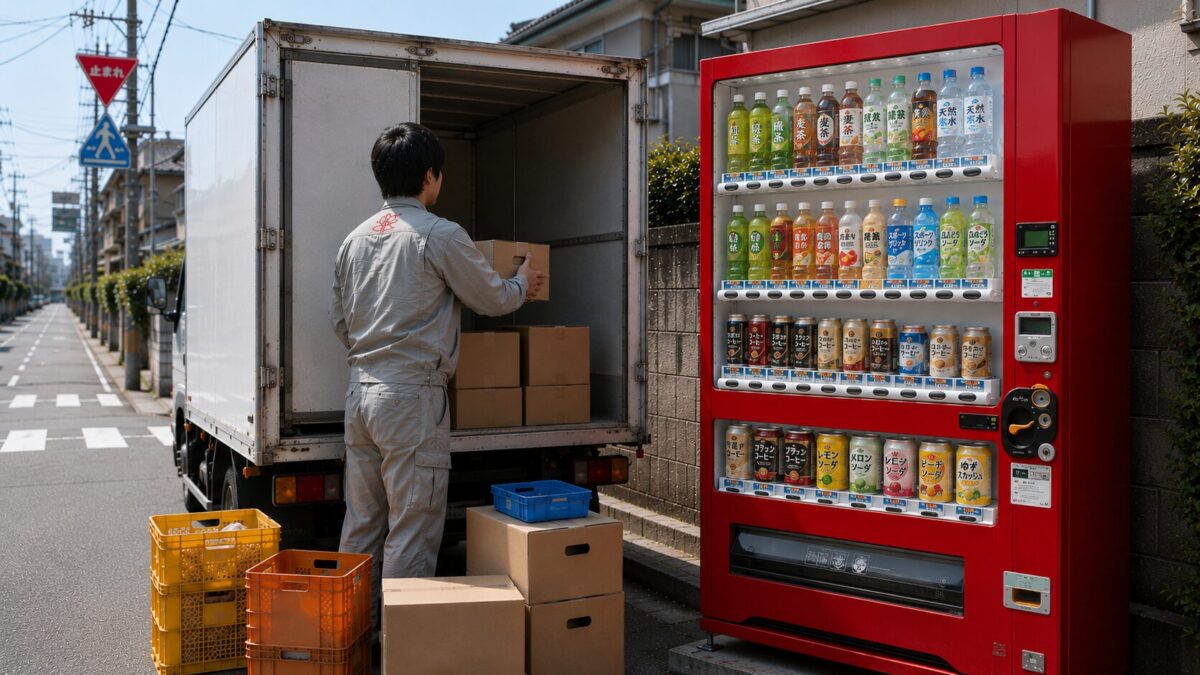
Because vending machines are always standing quietly on street corners, it is easy to assume that their convenience somehow maintains itself.
It does not.
One of my friends works as a vending machine route driver.
Every day, he travels around his assigned area by truck. His work involves far more than simply refilling drinks. He collects cash, removes empty cans and bottles, cleans the machines, and changes the product selection according to the season.
Some days, he visits dozens of machines. He works outdoors through the heat of summer and the cold of winter.
And he does not stock every machine in exactly the same way.
Coffee may sell well in an office district. Sports drinks may be more popular near a park, while juice may sell better near a school.
Adjusting the number and type of products according to local demand is an important part of the job.
For customers, buying a drink takes only a few seconds.
But those few seconds of convenience are made possible by people who spend their days driving from one machine to another, keeping each one stocked, clean, and ready to use.
Whenever I buy a drink from a vending machine, I sometimes think of my friend working somewhere nearby, refilling another machine.
Japan has so many vending machines not only because the technology works well.
It is also because people work every day to keep them working as if their convenience were effortless.