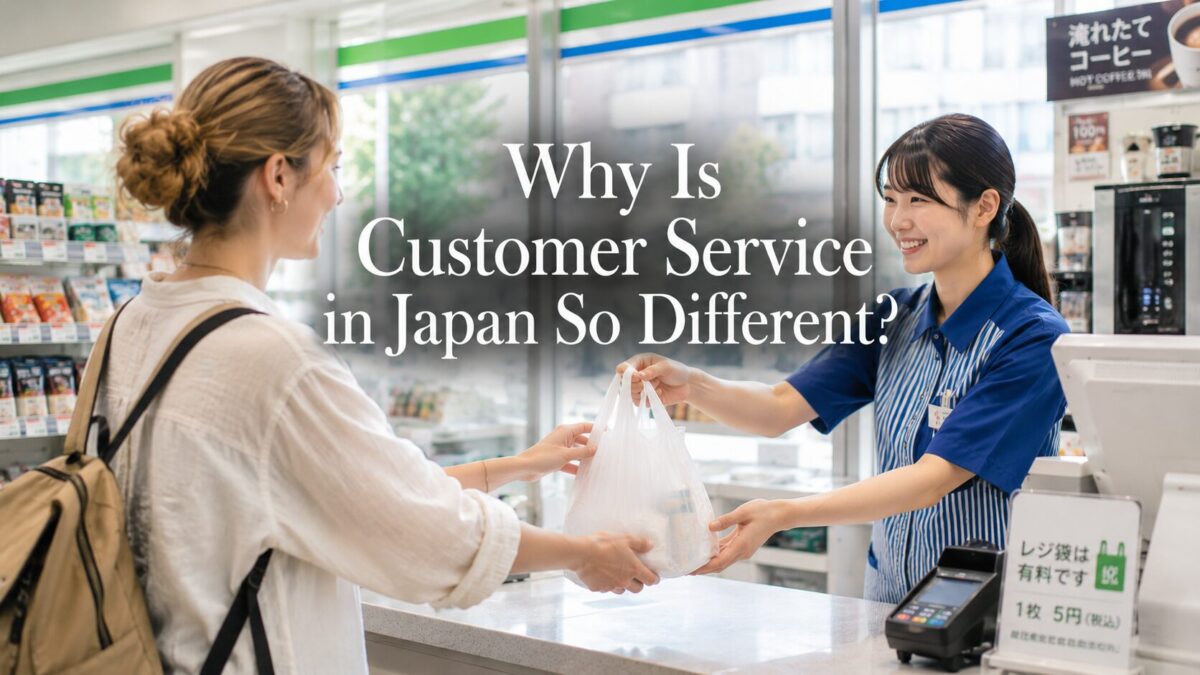
One of the things that surprises many first-time visitors to Japan is the politeness of its customer service.
At convenience stores, employees may bow as they hand over a purchase. Restaurants greet customers warmly, while hotels provide detailed guidance and thoughtful assistance. In a taxi, the door opens automatically, and the interior is often carefully kept clean.
These experiences are not limited to luxury businesses. They can be found in many ordinary places throughout everyday life in Japan.
However, simply saying that “Japanese people are kind” does not fully explain why the service feels so distinctive.
Behind it are a culture that values courtesy, systems that teach customer service as a professional skill, and a strong emphasis on avoiding discomfort or inconvenience for others.
In this article, we will look at why customer service in Japan is so different through several familiar examples.
Politeness Is Built into Everyday Service
In Japan, polite customer service is generally treated as a basic part of the job rather than an exceptional performance.
Employees may bow, use formal language, hand over products or change with both hands, and greet customers with phrases such as irasshaimase when they enter and arigatou gozaimashita when they leave.
These behaviors are found not only in department stores and luxury hotels, but also in convenience stores, pharmacies, supermarkets, and casual restaurants.
Of course, the quality of service varies from place to place. Even so, the expectation that employees should behave politely is a basic feature of Japanese service culture.
Customers also tend to accept this kind of treatment as ordinary rather than something especially remarkable.
Where Can Japanese Service Be Seen?
Customer service takes different forms depending on the industry. However, many Japanese businesses share the idea that the environment should be arranged so customers can use a service comfortably and without confusion.
Hotels and Ryokan
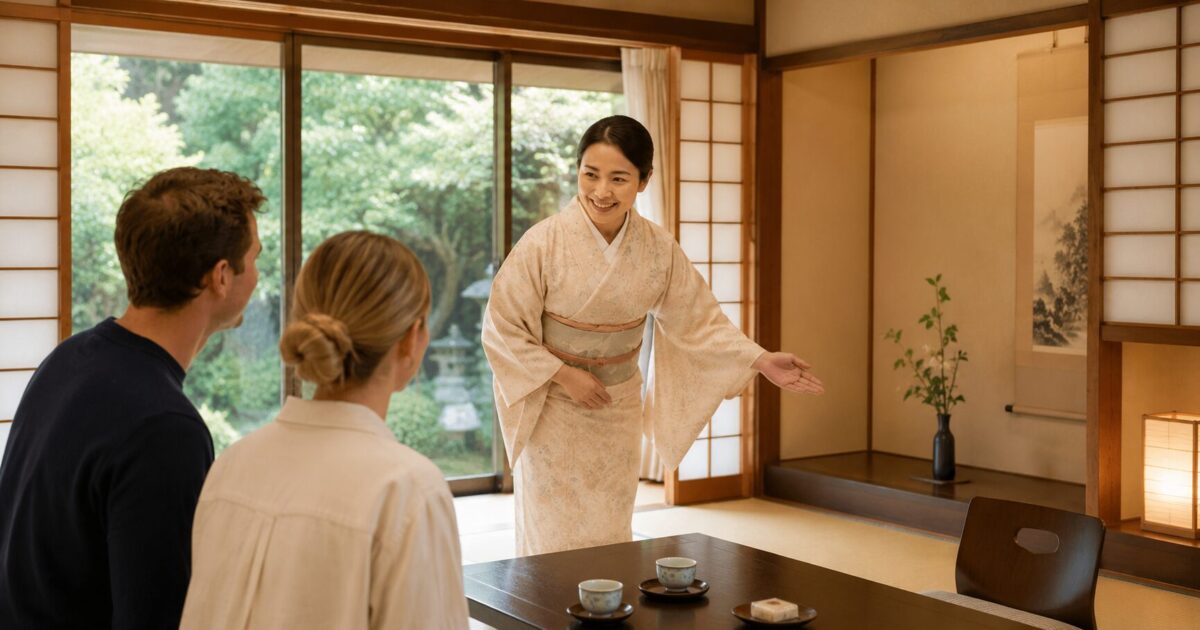
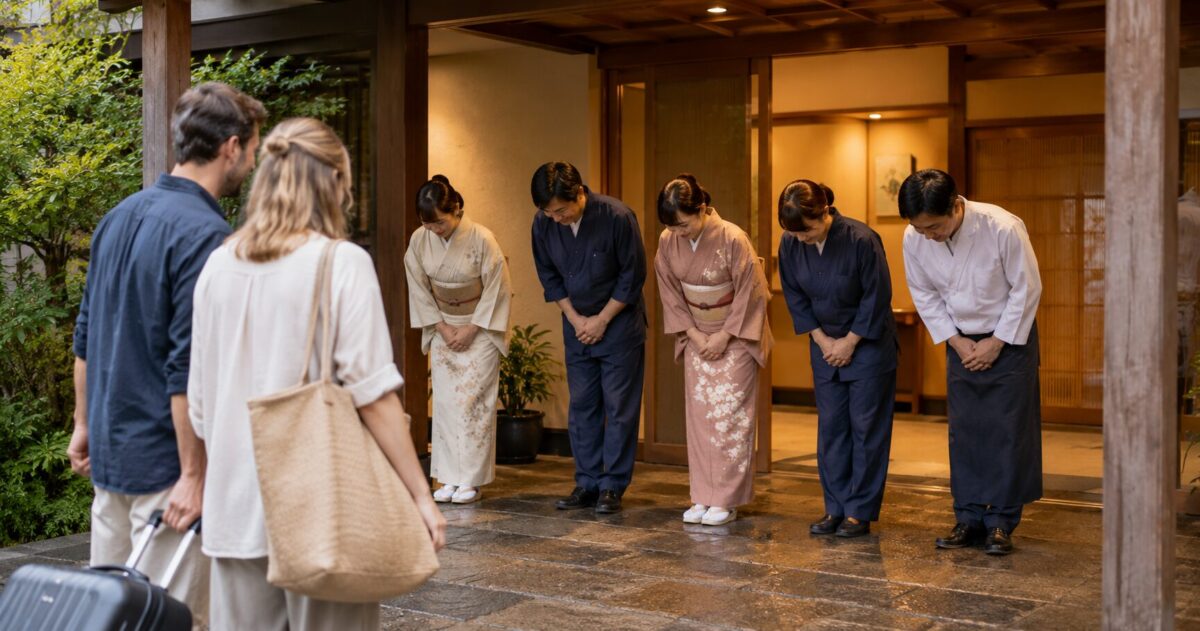
At hotels and traditional Japanese inns known as ryokan, staff members wearing uniforms or kimono may guide guests to their rooms and help carry their luggage.
At some ryokan, employees also prepare and put away the futon bedding and assist with meals.
The service is not limited to providing a room. Helping guests understand what to do next and allowing them to move through their stay without unnecessary confusion are also considered part of the experience.
Restaurants
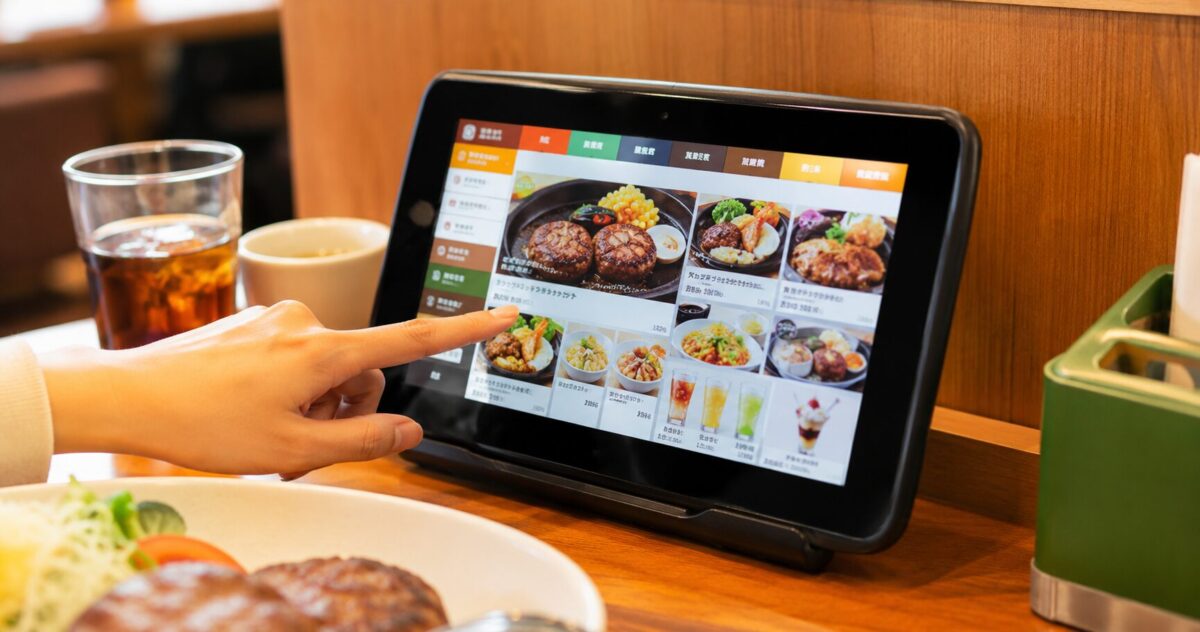
Tablet ordering, self-checkout machines, and serving robots have become increasingly common in Japanese restaurants.
At the same time, human service remains visible in the way staff present food, speak to customers during payment, and thank them as they leave.
Technology and polite personal service do not necessarily conflict. In many restaurants, the two exist side by side.
Trains
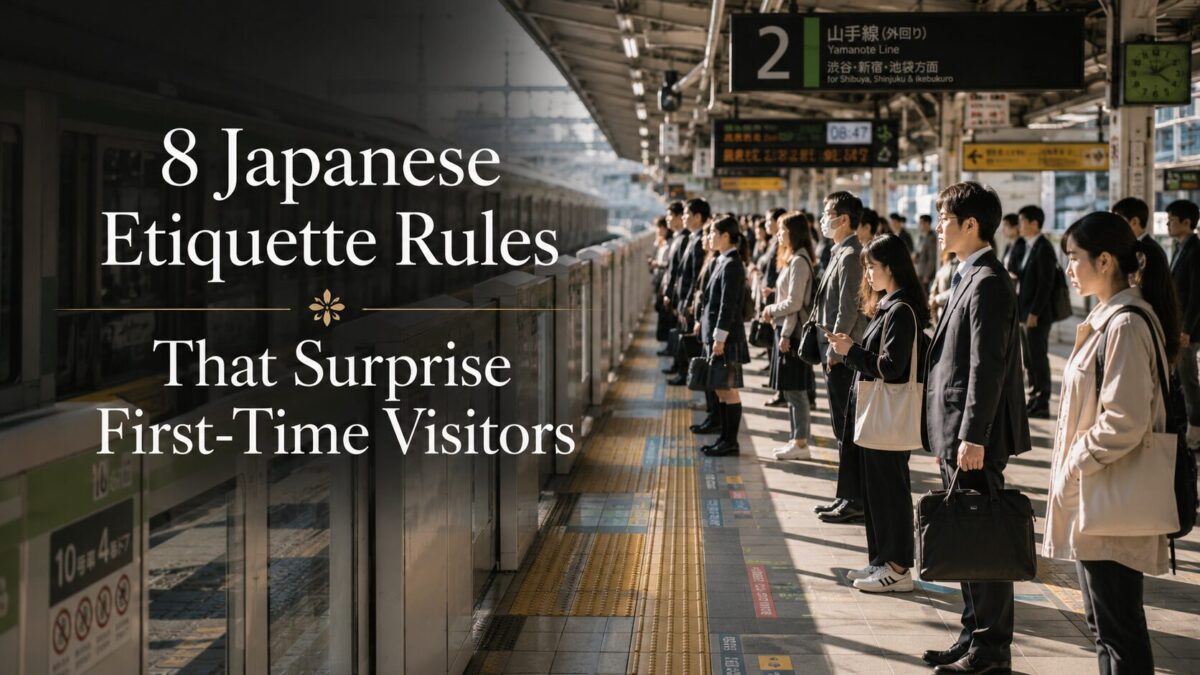
In the railway system, operating on schedule, providing clear signs, and keeping stations and train cars clean are also forms of service.
Passengers may complete an entire journey without speaking to a station employee, yet the environment is designed to help them travel safely and with as little confusion as possible.
In Japan, good service is not always expressed through smiles and conversation. It can also be built into the accuracy of a system.
Taxis
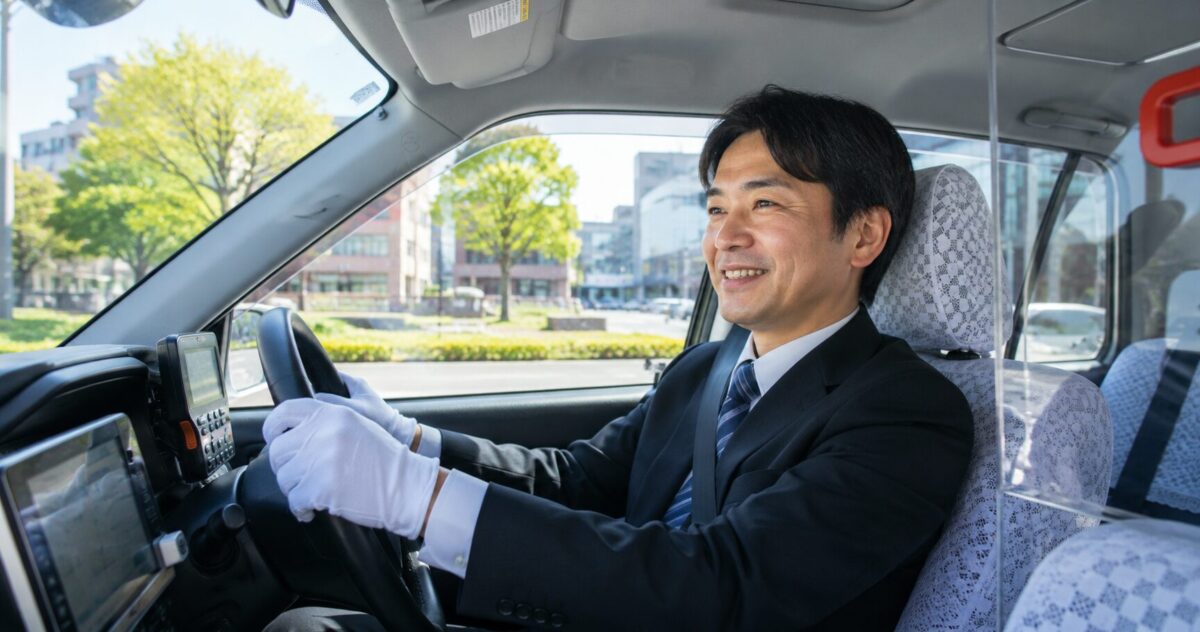
Japanese taxis are often associated with uniformed drivers, automatic doors, and clean interiors.
Drivers may help load luggage and carefully confirm the destination before leaving.
Even during a short ride, there is often visible attention to making sure the passenger feels comfortable.
Hair Salons and Barbershops

At many hair salons and barbershops, the process begins with a detailed consultation and continues through shampooing, cutting, and styling with frequent confirmation.
Technical skill is important, but creating a comfortable experience inside the salon is also treated as part of the service.
Some salons in major cities offer assistance in English and have become popular with international visitors interested in Japanese hair-cutting, coloring, and treatment techniques.
Omotenashi Is Not About Luxury
The word omotenashi is often used when explaining Japanese service.
Outside Japan, it is sometimes presented as a form of luxurious or uniquely Japanese hospitality. However, its meaning is not necessarily connected to expensive or elaborate treatment.
Omotenashi describes an attitude of considering what another person may need and acting naturally before being asked.
For example, a shop may place a protective cover over a purchase on a rainy day. An employee may offer assistance to someone carrying several bags or explain the next step before the customer needs to ask.
These small acts of anticipation can also be understood as omotenashi.
However, explaining all Japanese service through this single word would be too simple.
In practice, customer service is shaped not only by individual thoughtfulness, but also by training, manuals, workplace rules, and the expectations of customers.
Politeness Is a Professional Skill
One reason service standards do not vary too dramatically between locations is the emphasis placed on training and manuals.
At many workplaces, new employees learn how to greet customers, use formal language, maintain an appropriate appearance, hand over products, and respond to complaints.
Some businesses have detailed rules covering posture, tone of voice, and even cleaning procedures.
Japanese customer service therefore does not depend entirely on an employee’s natural personality.
It is also a professional skill that is taught, practiced, and shared within an organization.
At the same time, highly detailed manuals can make service feel mechanical and may increase the pressure placed on employees.
Service Does Not Change Without a Tip
Japan generally does not have a tipping culture.
At restaurants and hotels, polite service is not usually treated as an extra reward offered in exchange for additional payment. It is considered part of the product or service that the customer has already purchased.
As a result, customers do not normally expect better treatment because they have paid a tip.
Businesses are also expected to provide a relatively consistent level of service to everyone rather than openly changing their behavior according to additional payments.
However, the absence of tipping does not mean the work is easy. The expectation that employees remain consistently polite can itself create considerable pressure.
The Customer Is Not Always “God”
Japan has a famous expression that translates as “The customer is God.”
However, its original meaning was not that every customer demand must be accepted.
Today, the phrase is sometimes interpreted as meaning that customers should always be given the highest priority.
This can lead to excessive apologies, responses to unreasonable demands, and physical strain from long hours of standing and emotional control.
In recent years, the term customer harassment—often shortened to kasuhara in Japanese—has become more widely recognized. Businesses are increasingly introducing measures to protect employees from abusive language and excessive demands.
Japanese customer service is often praised, but it is also important to consider whether that politeness is being supported by unreasonable pressure on the people providing it.
What Supports Japan’s Polite Service?
Customer service in Japan is not distinctive simply because Japanese people are naturally kinder than everyone else.
It is shaped by a culture that values courtesy, systems for teaching customer service, manuals that help maintain consistency, clean and reliable environments, and the desire to avoid causing discomfort to others.
Together, these elements create a relatively consistent standard of service across many parts of daily life.
At the same time, treating this level of politeness as an automatic entitlement can place a heavy burden on employees.
What defines Japanese service culture is not extravagant hospitality.
It is the accumulation of small, often unnoticed acts of consideration—and the systems that make it possible to repeat them every day.