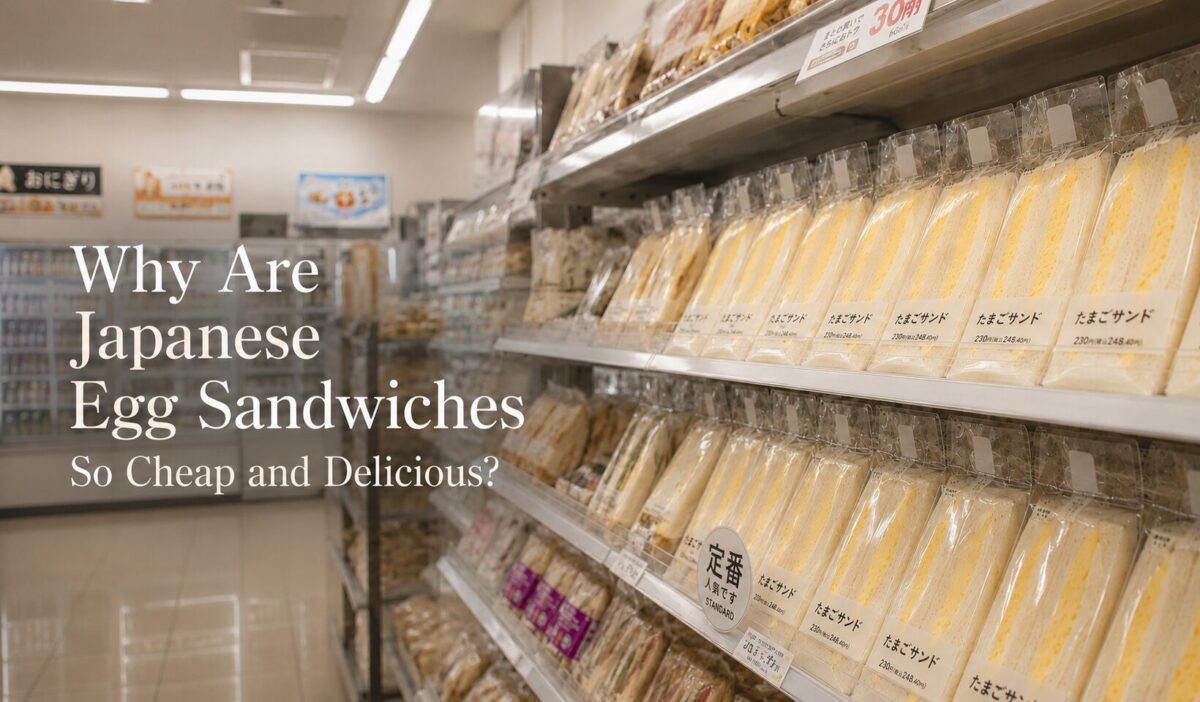
There is one food that often surprises travelers visiting Japan.
It is not sushi.
It is not ramen.
It is the convenience store egg sandwich.
On social media, YouTube, and Reddit, many travelers talk about Japanese convenience stores as one of the surprisingly memorable parts of their trip.
For some visitors, the egg sandwich is not just a quick snack. It becomes one of those small, everyday foods they remember long after leaving Japan.
That reaction may seem unusual at first. After all, an egg sandwich is not a luxury meal. But that is exactly what makes it interesting.
For Japanese people, egg sandwiches are not special or unusual. They are a familiar everyday food that many people have eaten since childhood.
But inside this small sandwich, you can find something very Japanese: a food culture built on care, balance, and quiet improvement.
Simple Food Leaves No Room to Hide
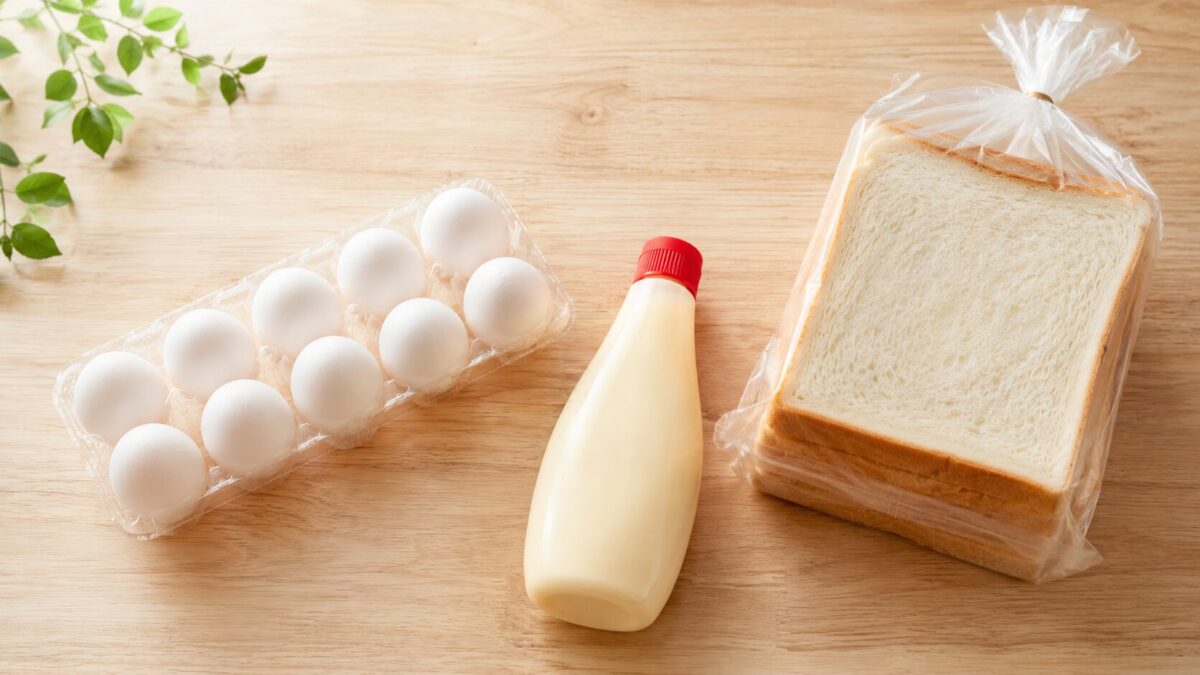
The ingredients are very simple.
Eggs, bread, and mayonnaise.
There’s nothing unusual about these ingredients.
What makes Japanese egg sandwiches so delicious isn’t the use of expensive ingredients. It’s the careful selection of everyday ingredients and the way they’re combined in just the right balance.
I often make egg sandwiches myself on weekend mornings. Eggs, bread, and mayonnaise are usually staples I already have at home, making them easy to **whip up**, so they’re easy to put together whenever I feel like it.
Perhaps that’s another reason why egg sandwiches have become such a familiar part of everyday life in Japan.
High-Quality Eggs Support the Flavor
The main ingredient in an egg sandwich is, of course, the egg.
In Japan, eggs are relatively affordable, but there is also a strong awareness of quality control.
Because Japan has a culture of eating raw eggs, freshness and safety are taken very seriously.
Japanese eggs also tend to have a clean taste and consistent quality.
The flavor of the egg itself directly affects the flavor of the sandwich.
The simpler the food, the harder it is to hide the quality of the ingredients. That is why the egg matters so much.
The Softness of Shokupan
Another important feature is the bread.
The bread used for many Japanese egg sandwiches is usually shokupan, a soft Japanese white bread.
Shokupan is slightly different from ordinary sandwich bread in many countries. It is fluffy, moist, tender, and gentle in texture.
That softness works perfectly with the smooth egg filling.
The bread does not overpower the egg. Instead, it gently holds the filling and makes the whole sandwich feel soft from the first bite to the last.
Japanese Mayonnaise Brings Everything Together
Another essential ingredient is mayonnaise.
Japanese mayonnaise has a rich flavor, but its acidity is usually gentle. It helps bring out the taste of the egg without overwhelming it.
The best-known example is Kewpie mayonnaise, or キユーピー in Japanese.
Kewpie is a familiar brand in Japan, but it has also gained an almost cult-like following overseas among people who love Japanese food.
Compared with many standard mayonnaises, Japanese mayonnaise often tastes richer, creamier, and more savory.
In a sandwich made from only a few ingredients, that small difference becomes very noticeable.
Eggs, shokupan, and mayonnaise.
None of them are rare or luxurious ingredients.
But when their quality and balance are right, they create the gentle flavor that makes Japanese egg sandwiches so appealing.
Why Are They So Cheap?
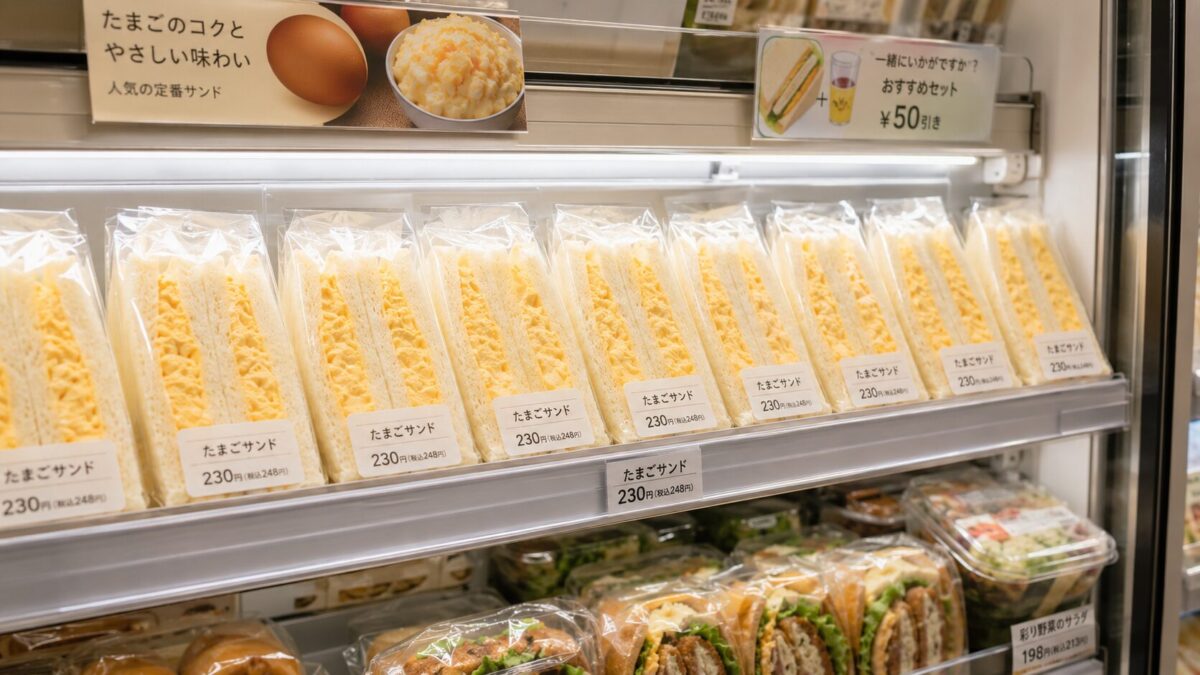
Travelers are often surprised not only by the taste, but also by the price.
Many convenience store egg sandwiches in Japan cost around 200 to 300 yen, roughly US$1.20 to US$1.90 depending on exchange rates.
For visitors from overseas, it can feel surprising that a sandwich of this quality is available so easily at such an affordable price.
Behind that price are mass production, efficient logistics, and strong competition among convenience stores.
In Japan, convenience stores are constantly competing for limited shelf space.
Taste, price, appearance, ease of eating, and even how easy the package is to open are all improved little by little.
“Cheap and delicious” may feel normal in Japan, but it is the result of many small improvements made over time.
A Culture of Improving the Ordinary
Japan has a culture of not only creating new things, but also improving existing things little by little.
Make the bread a little softer.
Make the egg filling a little smoother.
Adjust the richness and acidity of the mayonnaise.
Make the package a little easier to open.
Each change may be small.
But together, those small changes make the Japanese egg sandwich feel special.
This way of thinking is not limited to food.
You can see it in stationery, home appliances, trains, convenience store products, and many other parts of everyday life in Japan.
Make ordinary things a little easier to use.
Make familiar things a little better.
The Japanese egg sandwich reflects that way of thinking very well.
A Sandwich Filled with Everyday Japan
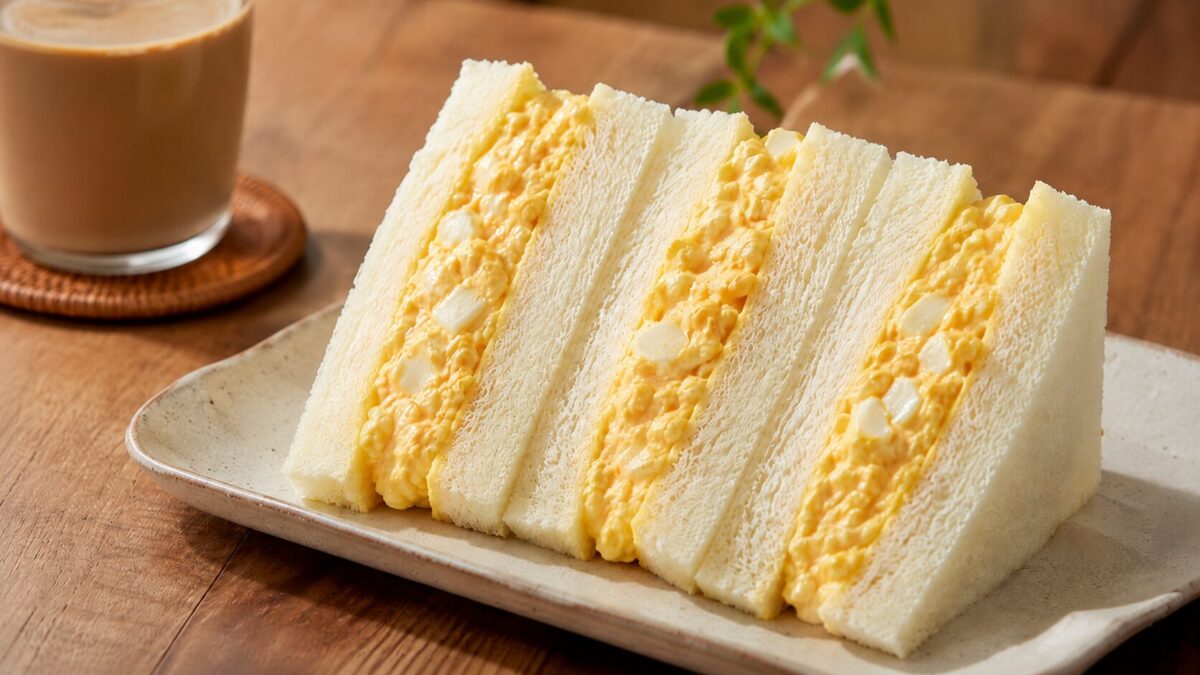
For Japanese people, the egg sandwich is not a special dish.
That is exactly why it shows everyday Japan so clearly.
High-quality eggs.
Soft shokupan.
Rich Japanese mayonnaise.
A culture of quiet, continuous improvement.
And the convenience of being able to buy it almost anytime, almost anywhere.
None of these things are flashy.
But together, they create the Japanese egg sandwich that surprises so many travelers.
If you visit Japan, try picking up an egg sandwich at a nearby convenience store.
Inside that small sandwich, you may find a quiet taste of Japanese everyday life and food culture.