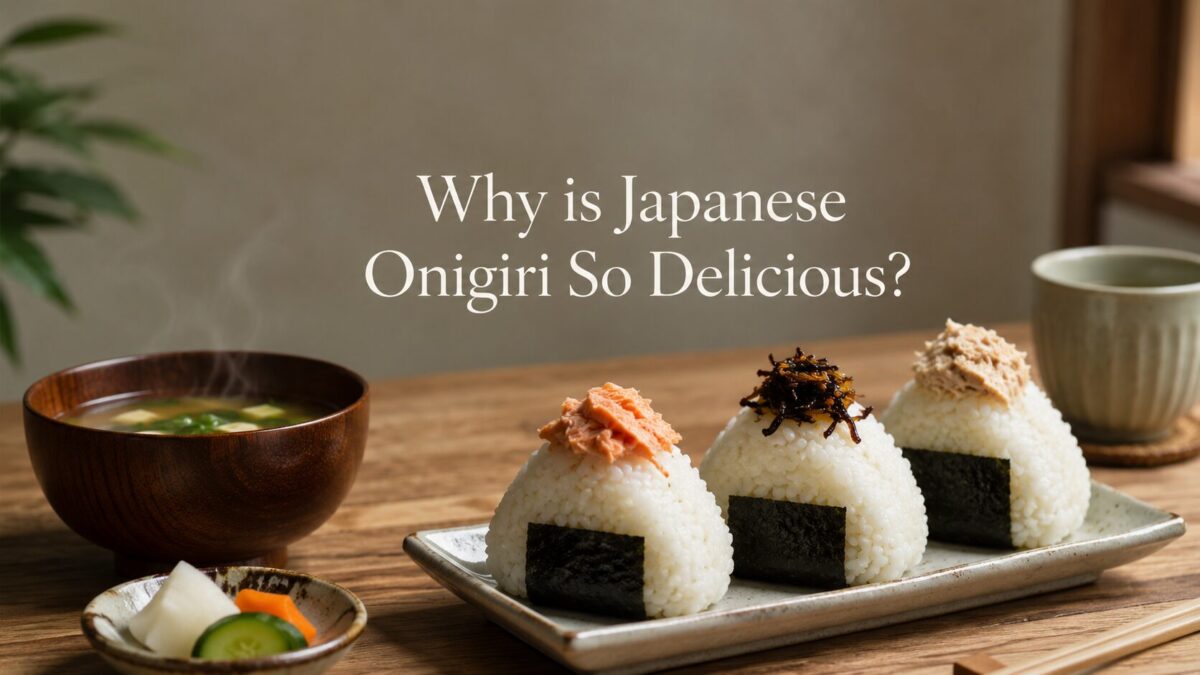
Have you ever tried a convenience-store onigiri while visiting Japan?
It is a very simple food: cold rice, a small amount of filling, and a sheet of nori.
Yet it can be surprisingly satisfying.
For many first-time visitors, this raises a simple question:
Why does something so cold and simple taste so good?
The answer is not only the filling.
The characteristics of Japanese rice, the way it is cooked, the balance of salt and nori, and even the packaging all play a part.
Onigiri is one of the easiest ways to experience Japan’s everyday rice culture.
Rice Is the Main Ingredient
Salmon, pickled plum, kombu, and tuna mayonnaise are among the many fillings found in onigiri.
But the real main ingredient is the rice.
In Japan, plain white rice is usually eaten without strong seasoning and served alongside other dishes.
Because of this, the rice’s natural sweetness, aroma, and softness have long been valued.
Onigiri contains only a few ingredients, so the quality of the rice and the way it is cooked are easy to notice.
Short-Grain Rice with Natural Stickiness
The rice most commonly eaten in Japan is short, rounded Japonica rice.
When cooked, it absorbs water and develops a gentle stickiness.
The grains naturally hold together, making the rice easy to shape by hand without falling apart.
Just as long-grain rice works well with curries and fried dishes, different types of rice are suited to different ways of eating.
Japanese rice fits a food culture in which rice is eaten plain, picked up with chopsticks, or shaped into onigiri.
Careful Cooking Brings Out the Best in Rice
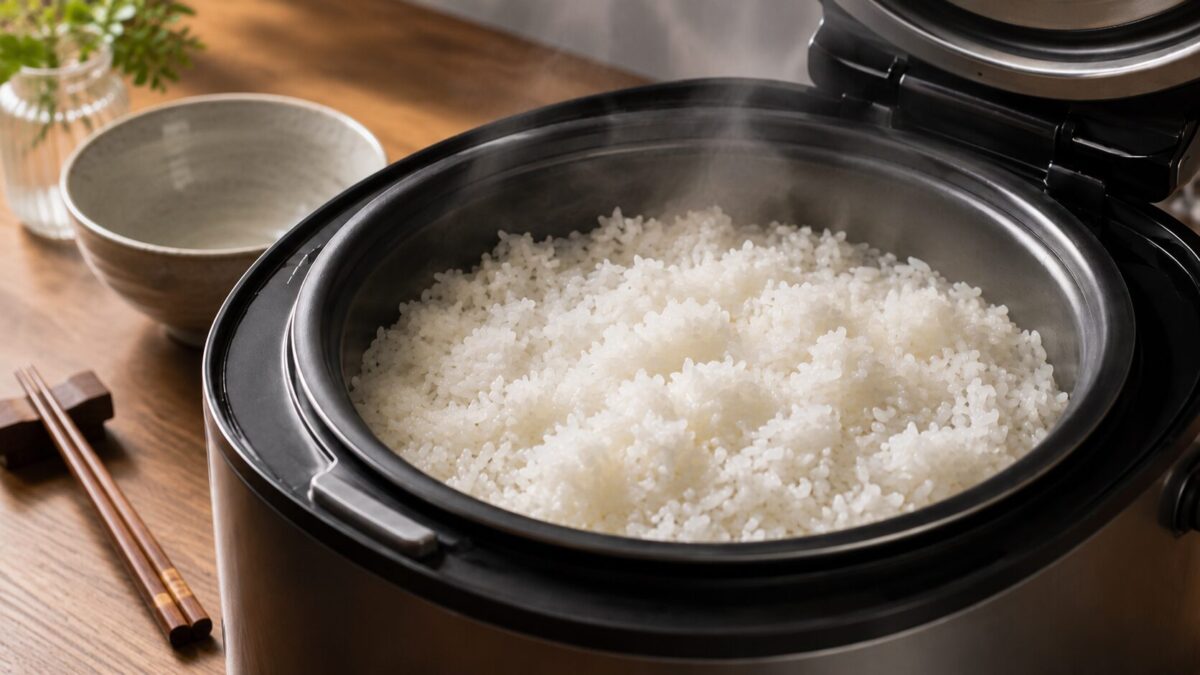
In Japan, rice is usually rinsed and allowed to absorb water before cooking.
After it is cooked, it is left to steam for a short time and then gently loosened without crushing the grains.
Even small differences in the amount of water and soaking time can change the softness and stickiness.
The rice cooker is an everyday appliance designed to make this process consistent and convenient.
Why Does It Still Taste Good When Cold?
Convenience-store onigiri is normally eaten without reheating.
It does not taste exactly the same as freshly cooked rice, but Japanese rice tends to remain cohesive and pleasantly soft after cooling.
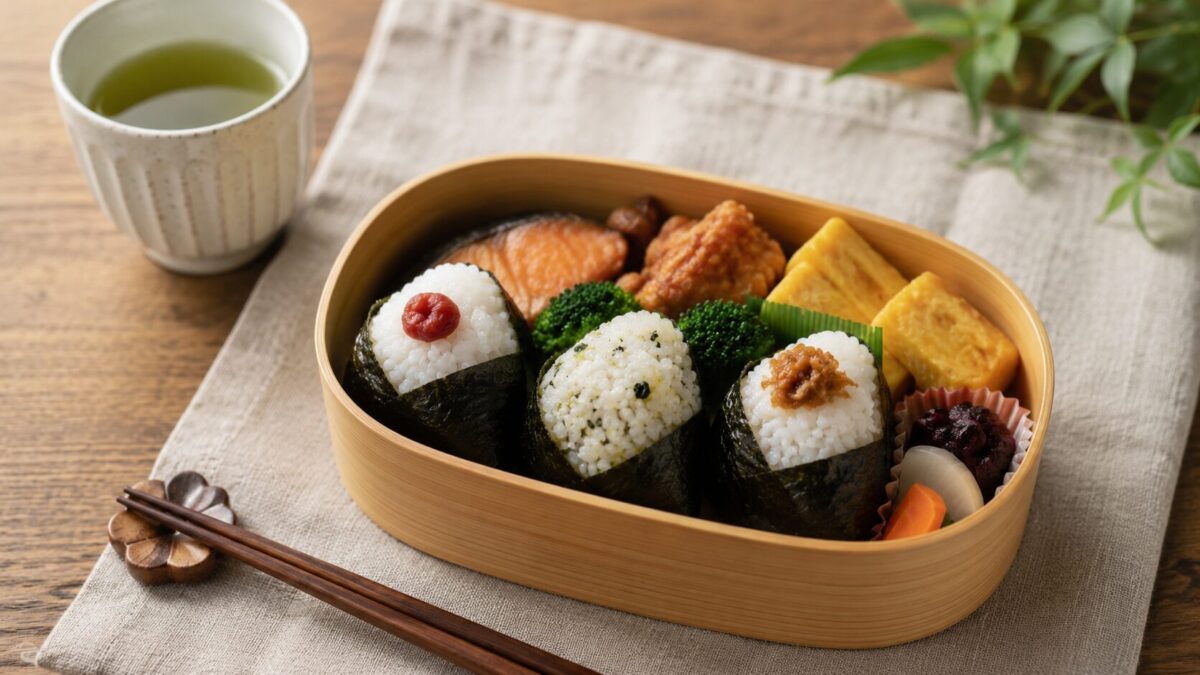
Japan also has a long tradition of carrying and eating cooled rice in onigiri and bento.
Cold rice is still common in school and workplace lunches, as well as at picnics, flower-viewing parties, and on day trips.
Convenience-store onigiri is made to be eaten cold, so the rice variety, cooking method, and moisture level are carefully adjusted for that purpose.
Salt, Nori, and Packaging Complete the Onigiri
Salt Brings Out the Rice’s Sweetness
A small amount of salt is usually added to onigiri.
Its purpose is not to make the rice strongly salty, but to make its subtle sweetness easier to notice.
Fillings such as pickled plum, salted salmon, and seasoned kombu also add saltiness, acidity, and umami to the plain rice.
Because the filling is not overpowering, the flavor of the rice remains present until the last bite.
Nori Adds Aroma and Texture
Nori adds aroma and umami that rice does not have on its own.
Homemade onigiri often uses nori that has absorbed moisture from the rice and become soft.
At convenience stores, however, crisp nori is one of the main attractions.
The contrast between soft rice and delicate, crisp nori keeps the simple combination from feeling monotonous.
The Wrapper Keeps the Nori Crisp
Convenience-store onigiri uses a thin layer of plastic film to keep the rice and nori separate.
Because the nori does not touch the rice until just before eating, it stays dry and crisp.
The wrapper can be confusing the first time you see it.
In most cases, you simply follow the numbers printed on the package: 1, 2, and 3.
The film slides away, leaving the nori neatly wrapped around the rice.
The packaging is not merely protection.
It is part of the final texture of the onigiri.
Simple Fillings, Carefully Balanced
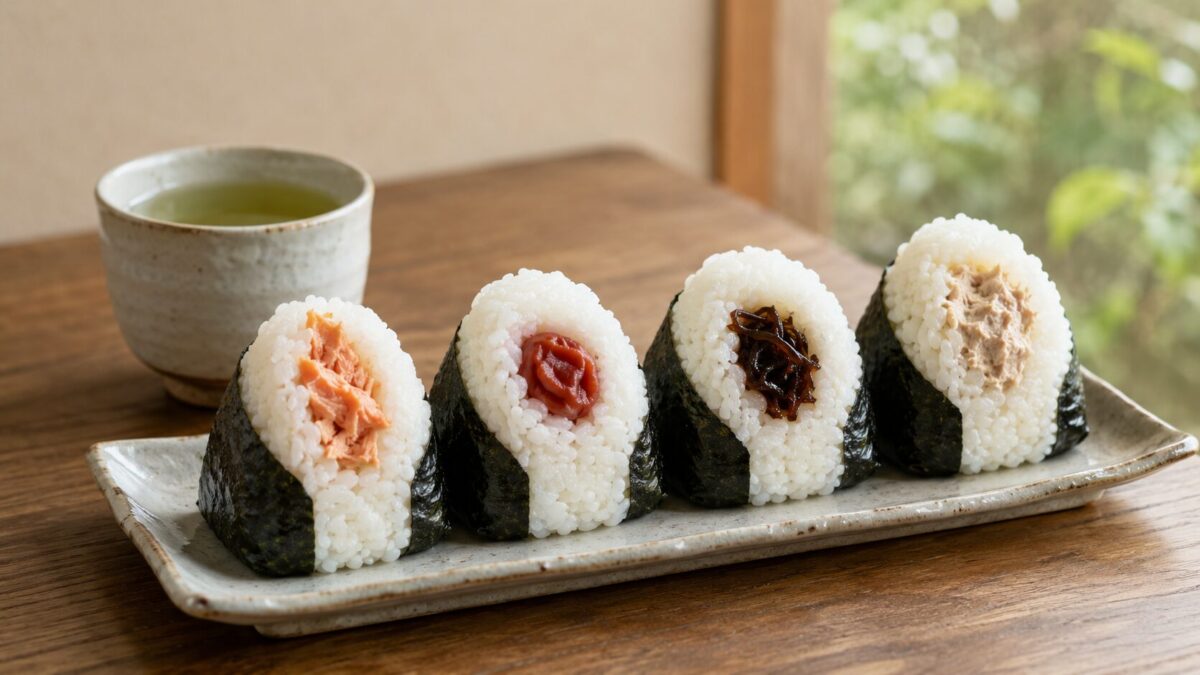
Traditional onigiri fillings include pickled plum, salmon, and kombu.
These ingredients contain saltiness or acidity and pair naturally with plain rice.
They were also relatively suitable for a portable food that might be kept for several hours.
Today, the range has expanded to include tuna mayonnaise, spicy cod roe, grilled meat, and even omelet rice–style fillings.
Even so, the filling in most onigiri does not take over the entire rice ball.
Keeping the amount moderate allows the flavor of the rice to remain central and preserves the overall balance.
What Onigiri Reveals About Everyday Rice Culture in Japan
In Japanese, the word gohan can mean both cooked rice and a meal itself.
The expressions asagohan, hirugohan, and bangohan mean breakfast, lunch, and dinner—even when no rice is served.
This shows how deeply rice has been connected with everyday eating in Japan.
Of course, modern Japanese meals are not always built around traditional rice dishes. As I explored in What Do Japanese People Really Eat Every Day?, people in Japan regularly move between rice, bread, noodles, bento, convenience-store food, and home-cooked dishes.
Looking at my own life in Japan, rice is still something I would find difficult to do without.
I often have bread or salad for breakfast.
At lunchtime, I may eat onigiri, gyudon, or butadon.
For dinner, I usually eat white rice with a meat or fish dish.
Not every meal is traditional Japanese food.
Even so, rice naturally appears somewhere in my day.
I think this is close to the relationship many people in modern Japan have with rice.
The Present and Future of Rice in Japan
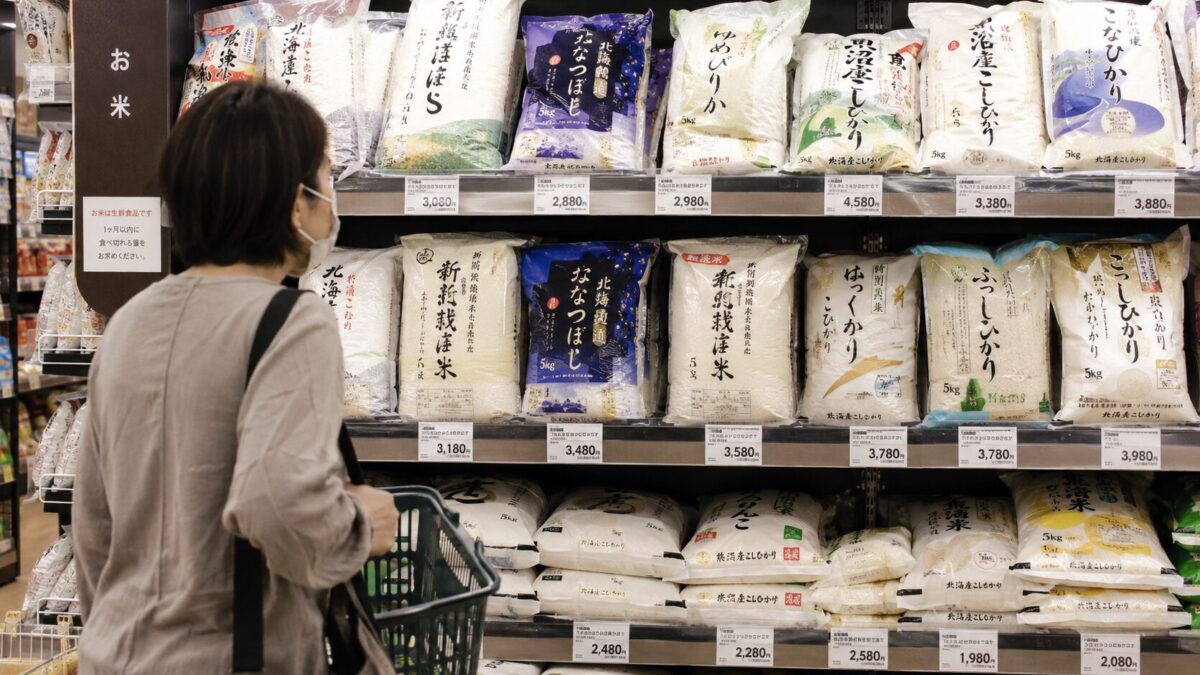
Rice remains an everyday food, but rising prices have become a major concern in recent years.
In the summer of 2024, rice became scarce in some stores, and the situation was sometimes called the “Reiwa rice crisis.”
Several factors were believed to have overlapped, including the effects of the previous year’s extreme heat on quality, changes in demand, panic buying after disaster warnings, and distribution problems.
Rice prices began rising around that period and have not returned to their earlier levels.
Higher production and distribution costs have also helped keep prices elevated.
According to retail sales data published by Japan’s Ministry of Agriculture, Forestry and Fisheries, the average price of milled rice in February 2026 was ¥4,131 for five kilograms.
Prices fell slightly in early March but remained close to ¥4,000.
In a family of four, a five-kilogram bag may last only about seven to ten days.
A rise in rice prices therefore has a direct effect on the household food budget.
Over the longer term, the declining and aging population of rice farmers is another challenge.
The rice we casually pick up at the supermarket depends on farmers, rice fields, machinery, fertilizer, fuel, storage, and transportation.
Rising agricultural material and energy costs also place additional pressure on farms, according to Japan’s Ministry of Agriculture, Forestry and Fisheries.
Onigiri Is More Than a Convenience-Store Snack
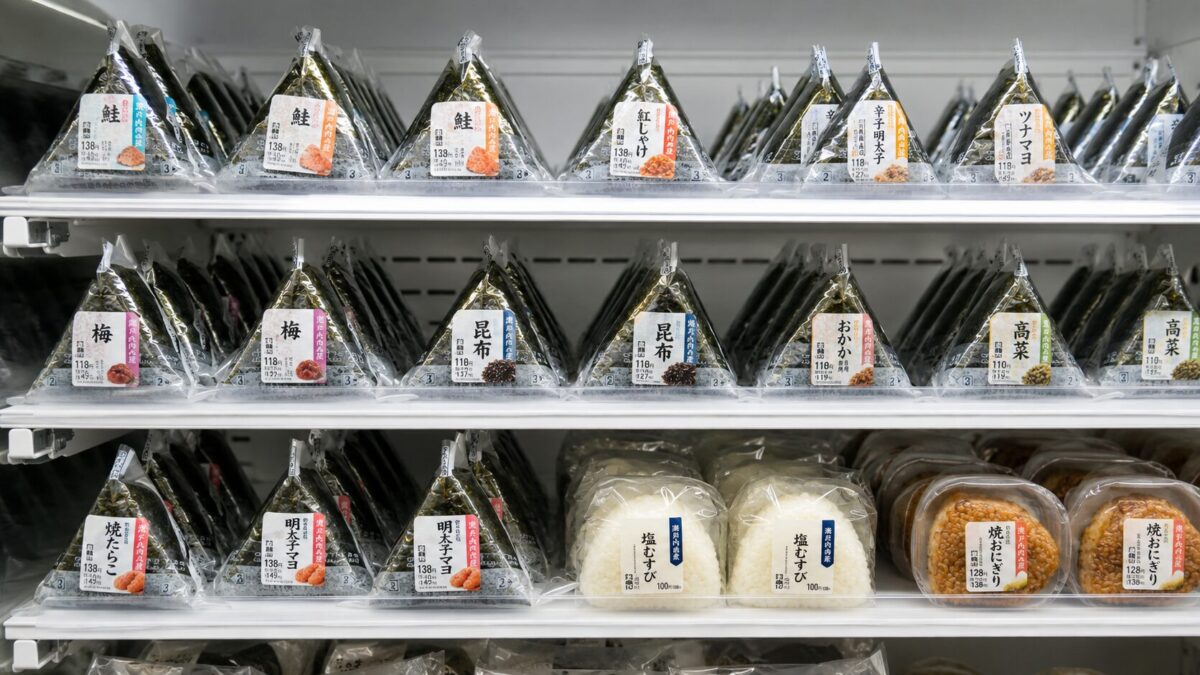
A convenience-store onigiri is an easy introduction to the appeal of Japanese rice.
The next time you visit Japan, try a freshly made onigiri from a specialist shop.
You could also try freshly cooked white rice at a set-meal restaurant, ryokan, or local home-style restaurant.
The taste of onigiri comes from the rice variety, cooking method, salt, nori, filling, and packaging working together.
It may look extremely simple, but each onigiri contains the history of how rice has been grown, cooked, and valued in everyday Japanese life.
Rice is one of the foundations of the Japanese diet and something many people cannot imagine living without.
I hope Japan will remain a country where people can continue to enjoy good rice as an ordinary part of daily life.