When planning a trip to Japan, one practical question comes up quickly:
How much should you budget for food each day?
The answer is not as simple as looking at an average meal price.
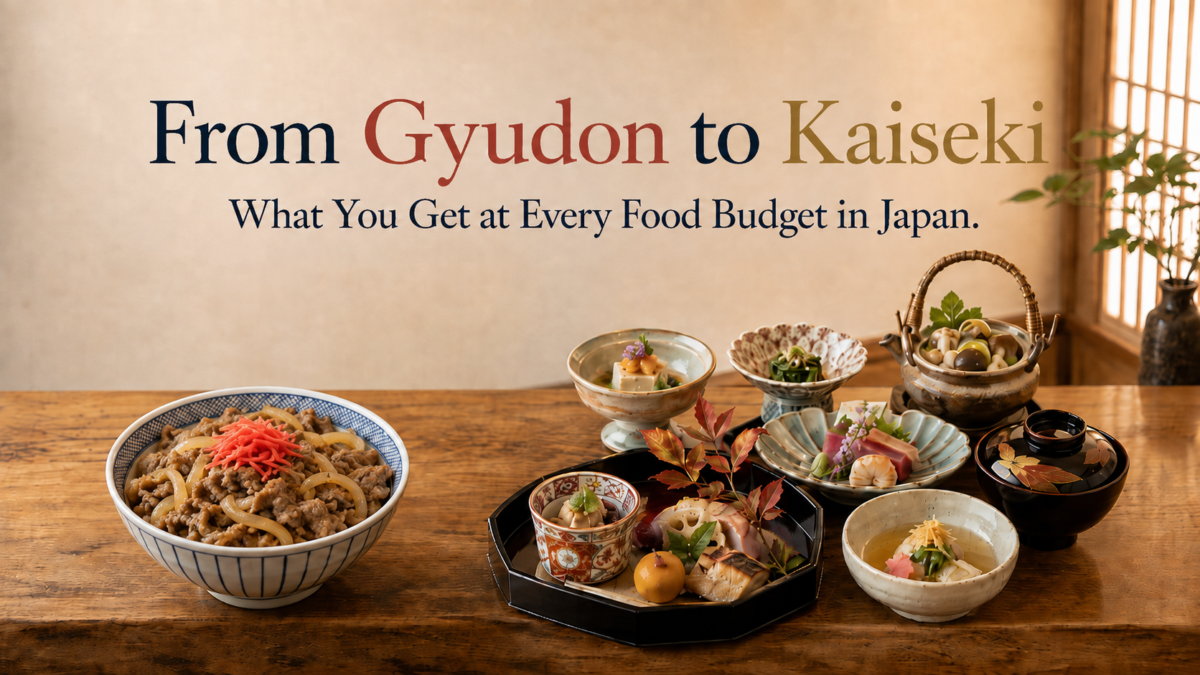
In Japan, you can eat a bowl of gyudon for around a few hundred yen, while an omakase sushi dinner or kaiseki meal can cost tens of thousands of yen. Some nights, you may pick up dinner at a convenience store on the way back to your hotel. On another night, the meal itself may be one of the main reasons you traveled.
These are not simply cheaper and more expensive versions of the same experience.
Different price ranges reveal different sides of Japan.
In this guide, we divide food in Japan into four rough price tiers and look at each one through three lenses:
Price × Food × Experience
The prices below are approximate per person. Costs vary widely depending on the city, restaurant, lunch or dinner service, drinks, season, and other factors.
C Tier — Quick, Cheap & Everyday: ¥300–¥1,000
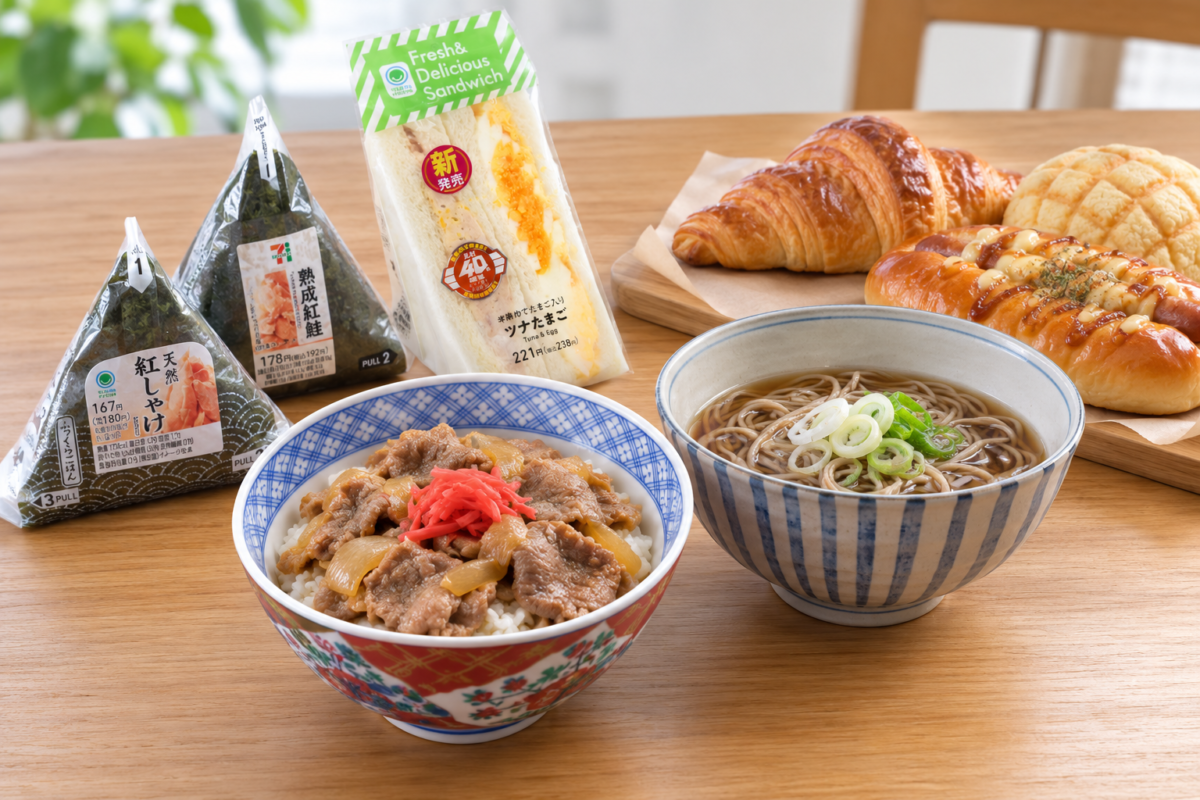
At the lowest price range, what you often encounter is something very ordinary: everyday Japanese food.
Typical examples include gyudon, standing soba or udon, convenience-store onigiri and side dishes, sandwiches, inexpensive curry, bakery bread, and takeaway bento.
At major gyudon chains, a basic bowl can still cost around ¥500. At a convenience store, it is also possible to put together a simple meal of rice balls, noodles, sandwiches, or prepared dishes for under ¥1,000.
But the value of this tier is not simply that it is cheap.
You might eat gyudon quickly during a workday, stop for soba at a station, buy bread from a neighborhood bakery in the morning, or choose an onigiri and bento before returning to your hotel.
For people living in Japan, none of these situations are particularly special.
That is exactly why they can be interesting to visitors.
They offer a look at a food culture that is close to ordinary life rather than something staged specifically for tourists.
You may also encounter systems that are part of everyday dining in Japan: ticket vending machines near the entrance, counter seating, self-service water, or tray-return areas after the meal.
Cashless payment is increasingly common, but smaller restaurants may still differ in what they accept, so it is worth checking at the entrance or register.
A low price does not mean that the experience is unimportant.
In some ways, C Tier may bring you closest to everyday life in Japan.
B Tier — Casual & Local Favorite: ¥1,000–¥3,000
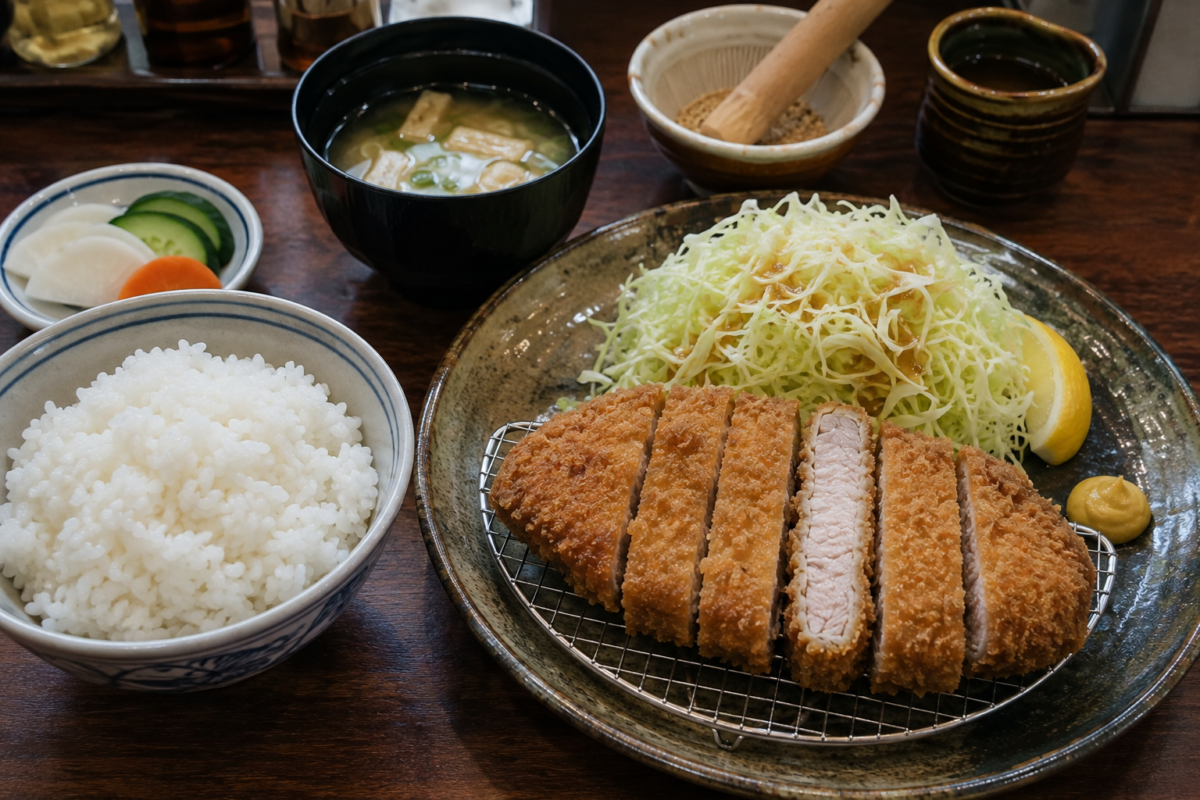
This is likely to be one of the price ranges travelers use most often in Japan.
Ramen, teishoku set meals, okonomiyaki, tonkatsu, conveyor-belt sushi, soba and udon restaurants, tendon, and casual seafood bowls all commonly fall somewhere around this range.
But these are not necessarily “special Japanese foods for tourists.”
They are also the kinds of meals local people eat in everyday life—ramen on a day off, a set meal after work, or conveyor-belt sushi with family.
Compared with C Tier, this price range makes the specialization and regional character of the food easier to see.
Take okonomiyaki.
In Osaka, the batter and ingredients are generally mixed together before cooking. In Hiroshima, a thin layer of batter is topped with cabbage, pork, noodles, egg, and other ingredients in separate layers.
Both are called okonomiyaki, yet the cooking method and texture can be quite different.
Ramen offers another example.
Beyond broad categories such as miso, shoyu, tonkotsu, and shio, differences in noodles, broth, oil, toppings, and local traditions give each shop its own character.
At this tier, the experience begins to feel less like simply “eating Japanese food” and more like encountering the food culture of a particular place.
A long line does not necessarily mean an expensive restaurant. In Japan, people may wait for a popular bowl of ramen or a set meal costing only around ¥1,000–¥2,000.
Popular restaurants may still use ticket machines, conveyor-belt sushi prices can vary by plate, and some restaurants charge very different prices at lunch and dinner.
For a closer look at regional differences, see our guide to Osaka and Hiroshima okonomiyaki.
A Tier — Special & Authentic: ¥5,000–¥15,000
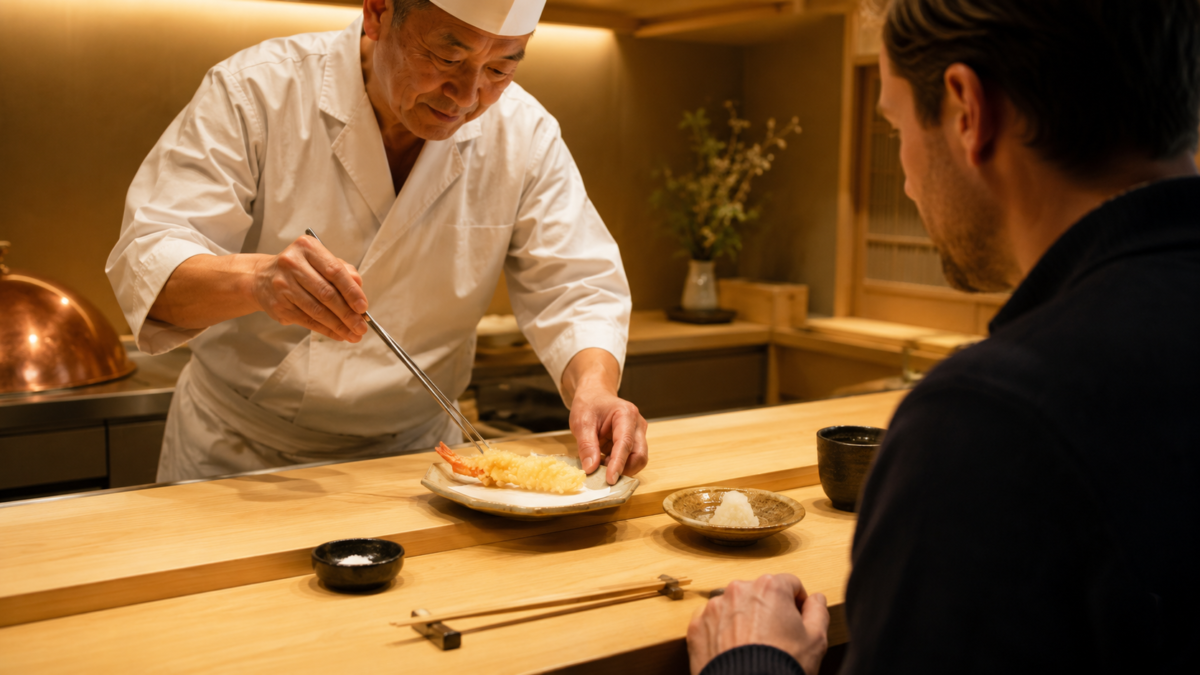
Once the price rises above roughly ¥5,000, the experience often begins to shift from simply eating a meal to spending time enjoying the meal itself.
Typical examples include unagi restaurants, sukiyaki, shabu-shabu, specialist tempura restaurants, yakiniku, somewhat higher-end sushi, izakaya courses, and wagyu dishes.
Of course, there are many excellent restaurants between ¥3,000 and ¥5,000 as well. These tiers are not strict boundaries.
What changes gradually is how much of the experience happens beyond the food itself.
At a specialist tempura restaurant, a chef may fry each item in front of you and serve it one by one.
With sukiyaki, the experience includes not only the meat but also the warishita sauce, vegetables, egg, and the way the meal progresses.
At an unagi restaurant, you may wait while the eel is prepared and grilled.
At a counter restaurant, simply watching the chef work can become part of the meal.
Seasonal ingredients, tableware, sake, and the flow of a course can also become more noticeable at this level.
But A Tier does not necessarily mean formal or quiet.
A ¥5,000–¥8,000 izakaya course can offer almost the opposite atmosphere: groups sharing dishes, drinking together, and enjoying a lively night out.
So rather than thinking of A Tier simply as “expensive food,” it may be more useful to think of it as the price range for a meal you want to spend time experiencing during your trip.
Popular restaurants are often worth reserving in advance. The final bill can also vary depending on whether you order a course or à la carte, how much you drink, and whether the restaurant charges a seating or service fee.
If wagyu is one of the meals you are considering, our guide to wagyu in Japan explains the food and its cultural context in more detail.
S Tier — Luxury, Craft & Culture: ¥20,000–¥50,000+
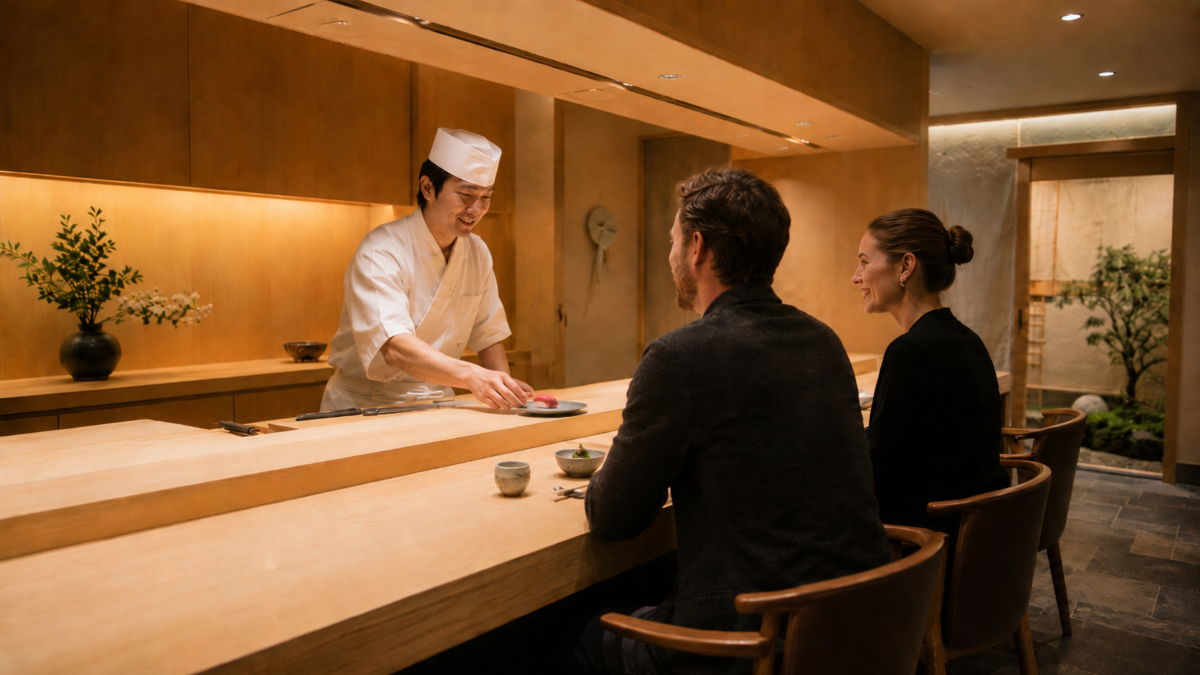
At S Tier, the price is no longer only about the food.
High-end omakase sushi, kappo, kaiseki, ryotei dining, luxury teppanyaki, and premium wagyu restaurants can combine ingredients, craftsmanship, tableware, space, service, and time into a single experience.
Consider high-end sushi.
The chef cuts the fish, forms the rice, and serves each piece directly across the counter.
Decisions about serving order, temperature, preparation, and timing all become part of the meal.
The counter itself is not simply a seat. It becomes part of the experience.
Kaiseki is somewhat different.
Rather than focusing on one luxurious dish, it expresses the season through a sequence of smaller courses.
Seasonal ingredients, tableware, presentation, the order of dishes, and sometimes even the garden or architecture can become part of the experience.
At a ryotei, private rooms, gardens, and service may add another layer.
But this does not mean that expensive restaurants are the only place to find “real Japanese food.”
Miso soup, teishoku, soba, home cooking, and convenience-store onigiri are also important parts of Japanese food culture.
S Tier is better understood as one particularly refined expression of that culture.
High-end restaurants may also have their own rules.
Some are reservation-only, some have strict cancellation policies, some sushi restaurants ask guests to avoid strong fragrances, and some restaurants have dress codes.
These are not universal rules for fine dining in Japan.
The safest approach is simply to check the restaurant’s own guidance when booking.
The Best Japan Food Budget Is a Mix of All Four
The most useful approach to food budgeting in Japan is not to choose the same price tier for every meal.
A mix of C → B → A, with perhaps one S Tier meal can give you a much broader view of Japanese food culture.
Sample Day 1 — Everyday Japan
Breakfast — Convenience store: around ¥500
Onigiri, sandwiches, yogurt, coffee, or something similar.
Lunch — Ramen or teishoku: around ¥1,200–¥1,500
Dinner — Okonomiyaki or izakaya: around ¥3,000–¥5,000
Even without any luxury dining, this one day can show you three different sides of everyday food in Japan: the convenience store, the specialist restaurant, and the evening dining scene.
High-end dining is not required to experience the range of Japanese food culture.
Sample Day 2 — Save by Day, Spend at Night
Breakfast — Convenience store: around ¥500
Lunch — Gyudon, soba, or ramen: around ¥1,000–¥1,500
Dinner — Sukiyaki, tempura, or sushi: around ¥8,000–¥15,000
This approach means you do not have to reserve famous restaurants for every meal.
Instead:
Save on some meals so you can spend on the meal that matters most to you.
What makes food in Japan interesting is not simply the wide range of prices.
At the inexpensive end, you find speed, routine, efficiency, and local habits.
At the expensive end, you find craftsmanship, seasonality, space, and time.
Neither one is more “real” than the other.
The best food trip in Japan may not be the most expensive one. It may be the one that lets you experience both the everyday and the exceptional.