When people outside Japan think of Japanese tea, matcha may be the first thing that comes to mind.
Matcha lattes, matcha cakes, matcha chocolates—the word “MATCHA” has become increasingly common in cafés and dessert shops around the world. Japan’s green tea exports have also grown in recent years, supported in part by overseas demand for matcha and other powdered teas. According to Japan’s Ministry of Agriculture, Forestry and Fisheries, the value of green tea exports reached ¥36.4 billion in 2024.
But everyday tea drinking in Japan looks a little different.
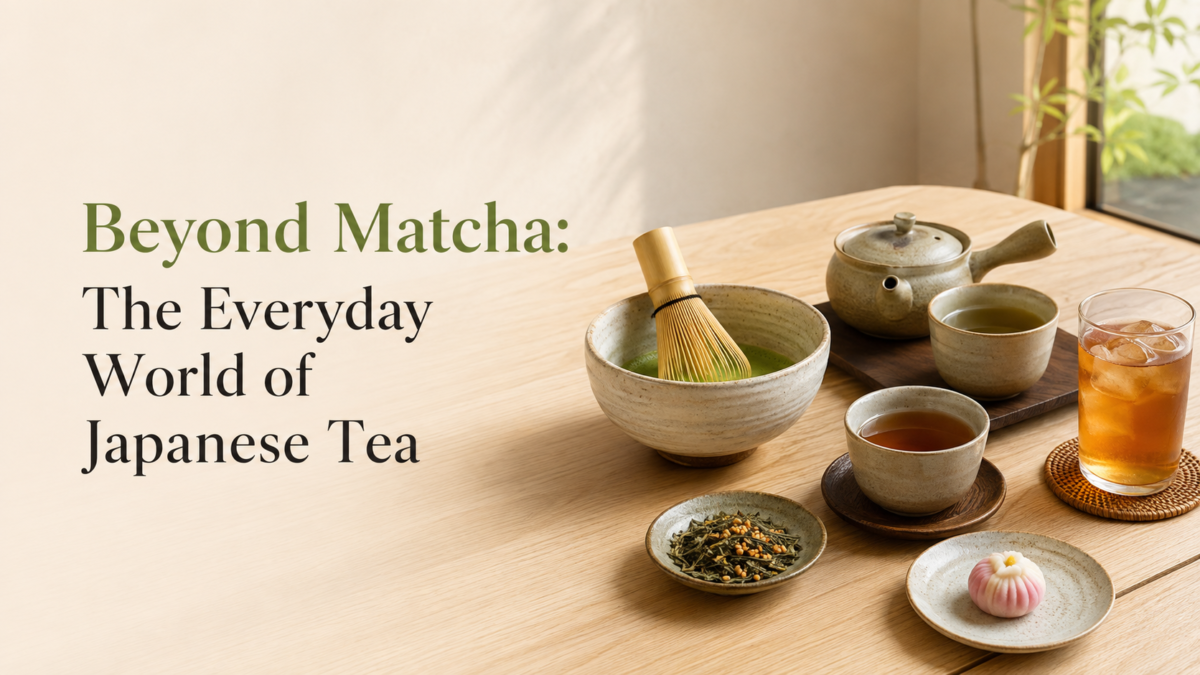
There is sencha brewed in a teapot.
Roasted and fragrant hojicha.
Genmaicha with the aroma of toasted rice.
Cold mugicha waiting in the refrigerator during summer.
And bottled green tea bought casually from convenience stores and vending machines.
Matcha is an important part of Japanese tea culture, but it is only one part of a much larger world.
This article starts with matcha, then looks at the quieter kinds of tea that are woven into everyday life in Japan.
Matcha Is Green Tea — But It Is Not Ordinary Green Tea
The first thing to understand is that matcha is not simply ordinary green tea ground into powder.
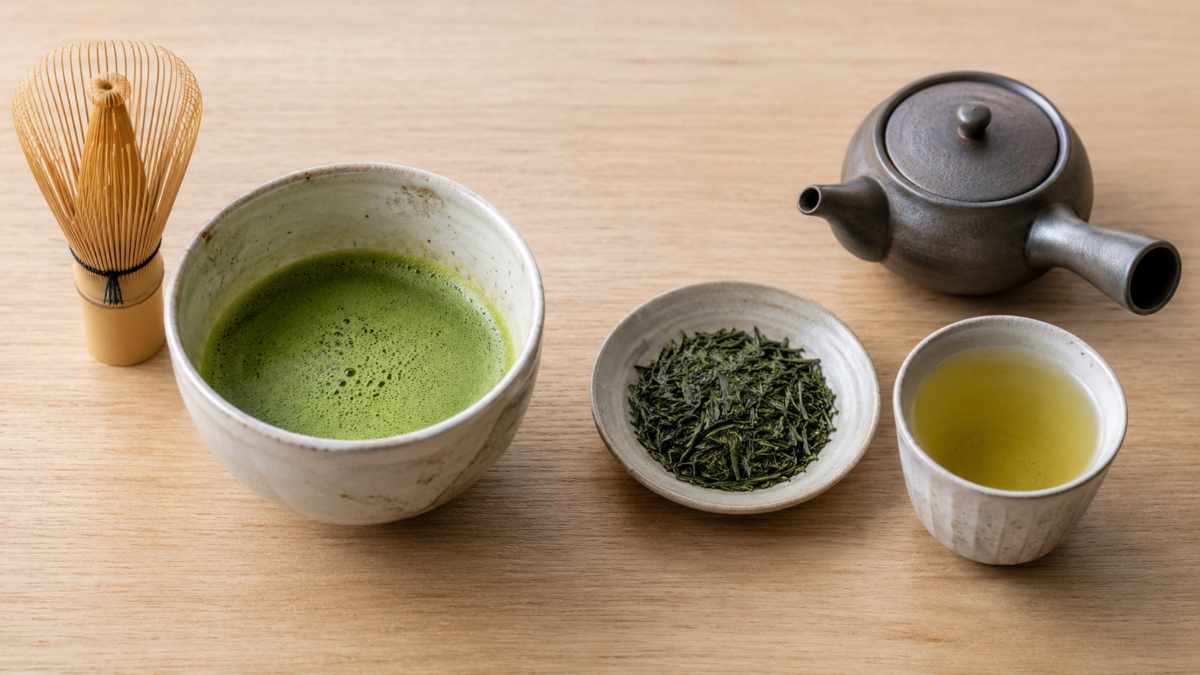
Sencha, the most familiar type of Japanese green tea, is generally made by steaming freshly picked tea leaves, then rolling and drying them.
Matcha begins differently.
Before harvest, the tea plants used for matcha are covered for a period of time to reduce direct sunlight. After harvesting, the leaves are steamed and dried without the rolling process used for sencha. The resulting tea is called tencha. Tencha is then ground into a fine powder to make matcha.
In very simple terms:
Sencha = tea leaves infused in hot water
Matcha = the tea leaves themselves, ground into powder
When you drink matcha, you are consuming the powdered leaf itself.
There is another useful distinction: not every powdered green tea is matcha.
Under Japanese labeling standards, matcha is defined as finely powdered tencha. Green tea made by grinding sencha or other types of tea is categorized differently.
Matcha is green tea, but green tea is much bigger than matcha.
That is a useful starting point for understanding Japanese tea.
The Tea Japanese People Actually Drink Every Day
So what kinds of tea do people in Japan actually drink in daily life?
The answer varies by household, region, and generation, but Japanese tea is certainly not one single drink.
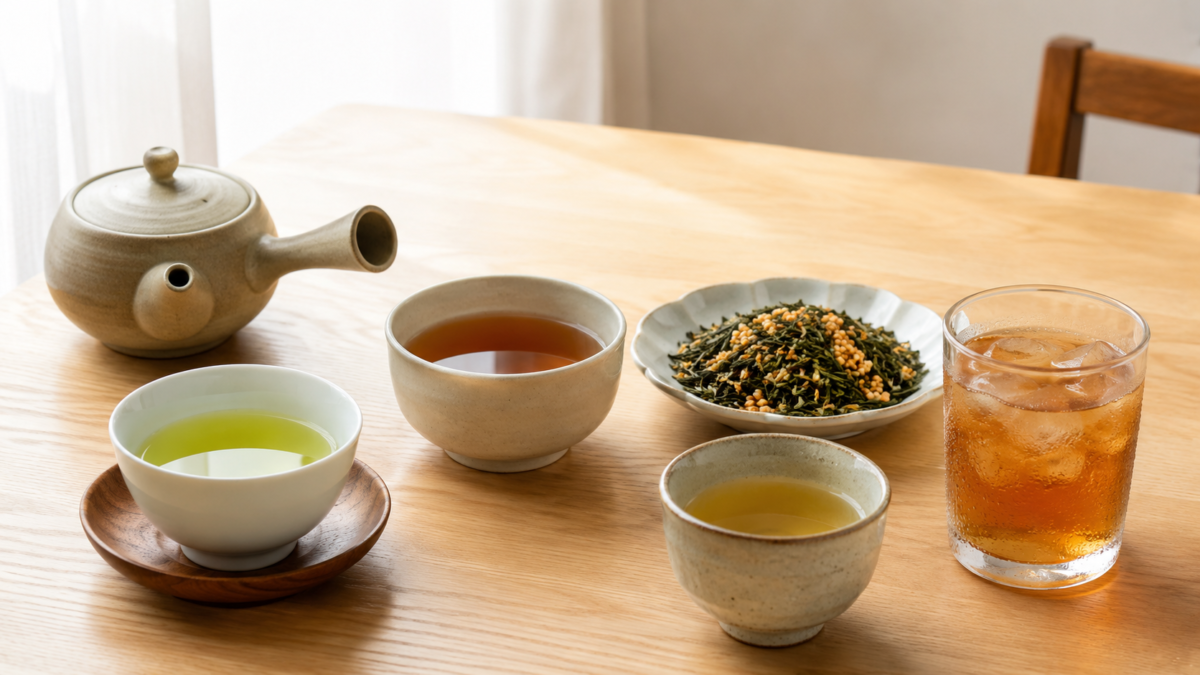
Sencha
Sencha is one of the most common forms of green tea in Japan.
If you imagine an everyday Japanese tea made by placing loose leaves in a teapot and adding hot water, sencha is probably close to what you have in mind.
It can be served with meals, offered to guests, or enjoyed during a quiet break.
Unlike matcha, it does not require special utensils, which makes it easier to fit into everyday routines.
Hojicha
Hojicha is made by roasting teas such as sencha or bancha.
Although it belongs to the broader world of green tea, its appearance is brown and its aroma is very different.
Where matcha and sencha tend to have fresh, vegetal notes, hojicha is known for its roasted fragrance.
For visitors who assume that “Japanese tea” must always be bright green, hojicha can be a pleasant surprise.
Genmaicha
Genmaicha combines green tea with roasted rice.
The aroma of the tea is joined by the warm, toasted scent of rice.
Despite the name, modern genmaicha may use steamed rice that has been roasted rather than only brown rice.
Its gentle, roasted character makes it easy to drink alongside food.
Mugicha
Mugicha is another drink that is hard to separate from summer in Japan.
It is made from roasted barley rather than tea leaves, so technically it is not tea from the Camellia sinensis plant.
Even so, in Japan it is commonly treated simply as “tea.”
During summer, it is not unusual for households to keep a large container of cold mugicha in the refrigerator.
For me, a glass of cold mugicha when the weather is hot is one of those small things that immediately feels like a Japanese summer.
Looking at these drinks together, “tea” in Japan is less about one specific flavor and more about choosing something that suits the season, the meal, or the moment.
Why Matcha Feels More Special
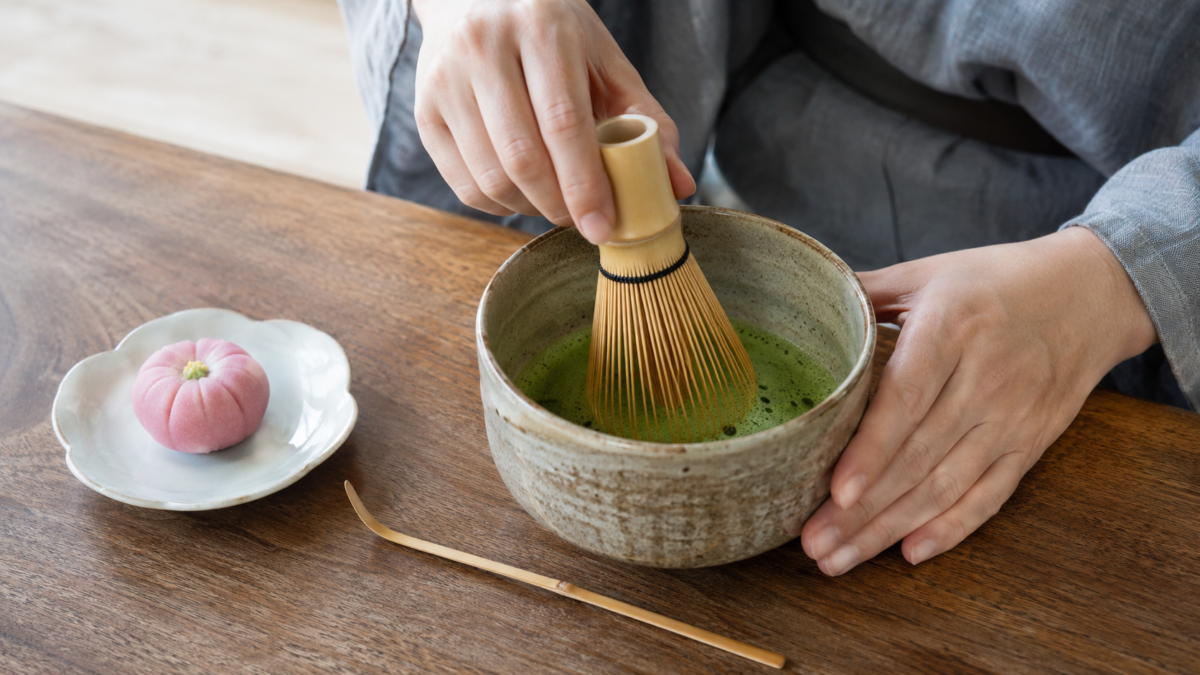
So why does matcha feel a little more special than these everyday teas?
Part of the reason begins before the leaves are even harvested.
Tea plants used to make tencha are shaded before harvest. Reducing the amount of sunlight affects the chemistry of the leaves and helps preserve compounds associated with umami while limiting the development of some bitter characteristics.
After steaming, the leaves are dried without being rolled, and stems and veins are removed before the tea is ground into a fine powder.
The way matcha is prepared is also distinctive.
Matcha powder is placed in a bowl, hot water is added, and the tea is whisked with a bamboo whisk called a chasen. Other traditional utensils include the tea bowl and the chashaku, a small bamboo scoop.
This method is closely connected with chanoyu, or the Japanese tea ceremony.
In Uji, Kyoto, matcha developed alongside shaded cultivation techniques and the refinement of tea ceremony culture.
But modern matcha does not exist only in tea rooms.
Today it also appears in matcha lattes, ice cream, cakes, chocolates, and many other sweets and drinks.
In other words, matcha occupies an interesting position.
It is both a traditional drink and a modern flavor.
What makes it special is not simply that it can be expensive.
Its production, preparation, and cultural role are all somewhat different from ordinary sencha.
Why Good Matcha Can Be Expensive
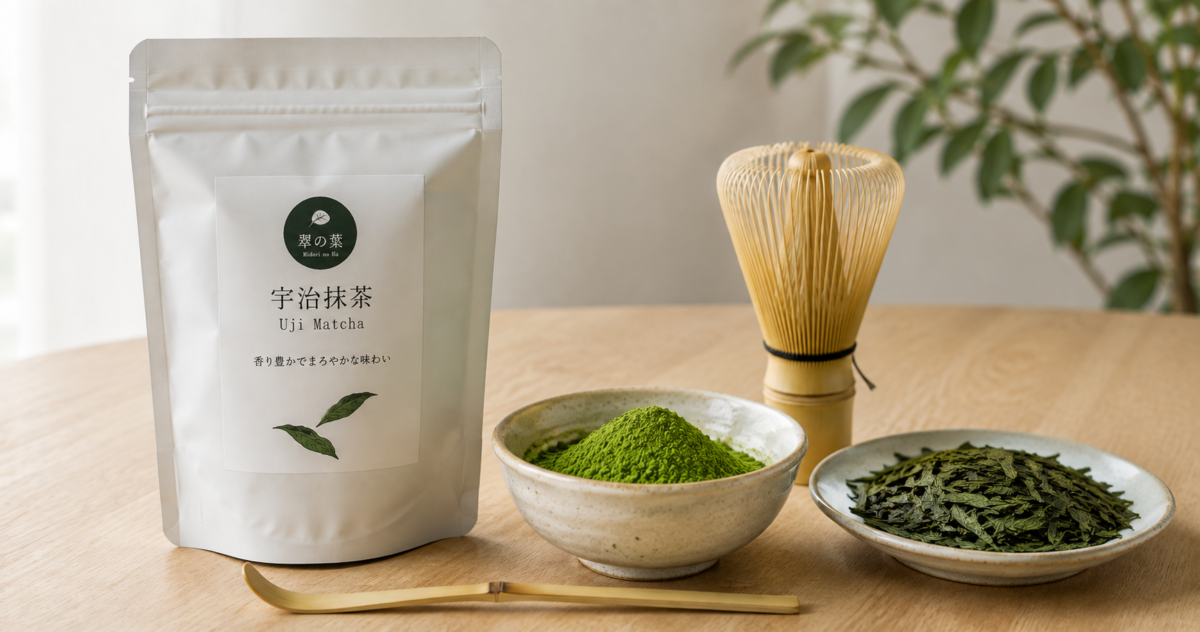
If you have ever shopped for matcha, you may have been surprised by how widely prices vary.
The powders may all look green, but the process behind them can be very different.
Tea plants for matcha require shading before harvest. The harvested leaves must then be processed into tencha and ground into a very fine powder.
For higher-quality matcha, the growing conditions, harvest timing, selection of raw leaves, processing, aroma, color, and flavor can all matter.
There is also a difference between matcha intended to be prepared as a drink and matcha intended mainly for confectionery or other processed foods.
So rather than assuming that the most expensive matcha is automatically the “best,” it is often more useful to ask:
What is this matcha intended for?
Matcha Made Outside Japan
As global interest in matcha has grown, products called “matcha” are increasingly being produced outside Japan as well.
That does not mean that foreign-grown matcha is automatically fake or poor quality.
At the same time, origin labels such as “Japanese matcha” or regional names can carry real meaning.
In July 2026, Nihoncha (Japanese Tea) received geographical indication protection in Japan. The Japan Tea Central Public Interest Incorporated Association has also pointed to concerns about foreign products being marketed overseas using Japanese regional tea names such as “Uji Matcha” or “Shizuoka Sencha.”
As the word “matcha” spreads globally, it becomes increasingly useful to look beyond the name itself.
Matcha and matcha-style powdered teas are also produced in countries including China, but the public information available does not support a simple claim that Chinese matcha is inherently lower quality than Japanese matcha.
Instead, it makes more sense to look at:
- Country of origin
- Raw material
- Production method
- Whether it is intended for drinking or food processing
If matcha quality matters to you, look beyond the green color and check where and how it was made.
There is often more behind the price than the word “matcha” alone suggests.
Tea Has Changed, but It Never Really Left Everyday Life
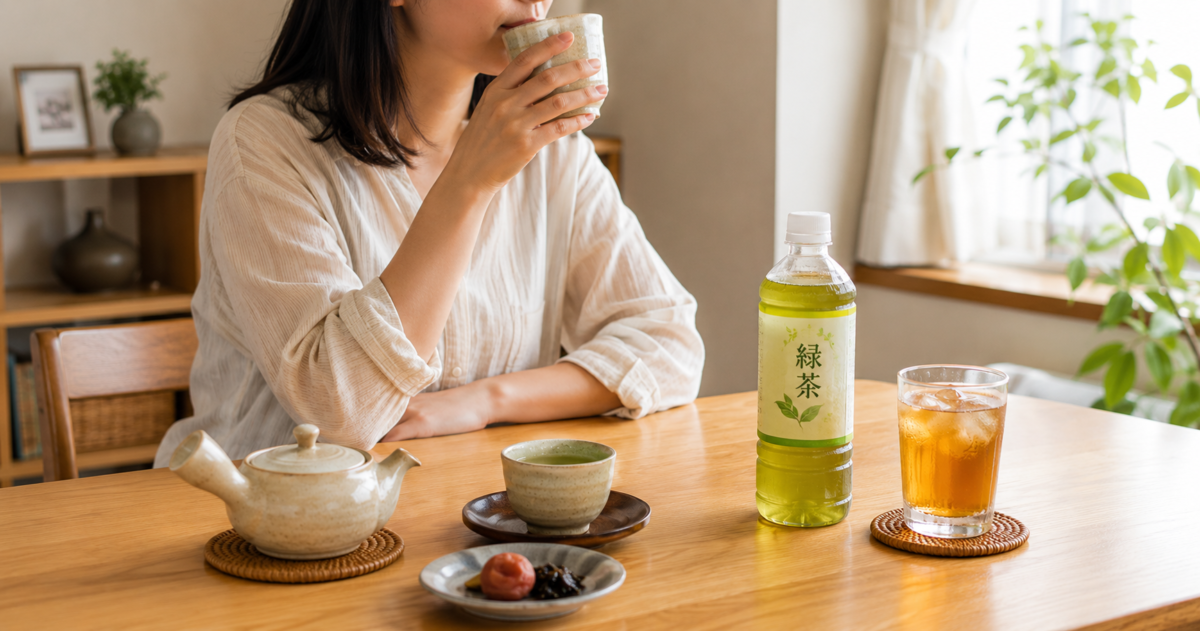
Traditional Japanese tea culture may bring to mind teapots and tea rooms.
Those are certainly part of the story.
But today, tea also exists in much more ordinary forms.
Walk into a convenience store or supermarket, or stop at a vending machine, and you will find bottled green tea and hojicha ready to drink.
Someone might drink warm sencha in the morning.
Hojicha might appear alongside a meal.
Cold mugicha might be waiting in the refrigerator during summer.
A bottled tea might be picked up while out for the day.
And a café might serve a matcha latte.
The form has changed, but tea itself never really disappeared from everyday Japanese life.
What is interesting is that traditional and modern ways of drinking tea continue to exist side by side.
Where to Experience Japanese Tea
If you want to explore Japanese tea more deeply while traveling, Uji in Kyoto is one of the easiest places to start.
Uji has Chazuna, a facility introducing the history of tea and the city, with experiences that can include making matcha using a tea mill.
The city-run Taiho-an tea room also offers opportunities to experience matcha or sencha preparation depending on the day. Kyoto has other tea shops and facilities where visitors can prepare matcha or compare different types of Uji tea. Opening days and reservation requirements can change, so checking official information before visiting is recommended.
Still, you do not need to visit a tea room to experience Japanese tea culture.
Buying a bottle of green tea from a convenience store is part of it.
Drinking cold mugicha on a hot summer day is part of it too.
From overseas, matcha may look like the face of Japanese tea.
But when you live in Japan, tea often feels much quieter than that.
It sits beside a meal.
It waits in the refrigerator.
It is picked up casually while you are out.
If matcha is what first made you interested in Japanese tea, try sencha, hojicha, genmaicha, and mugicha next.
Beyond the “special Japan” represented by matcha, you may begin to see something else:
everyday Japan.