
Have you ever watched a Japanese anime and wondered:
“Does this place actually exist in Japan?”
Many anime series feature scenery inspired by real streets, stations, bridges, shrines, and other locations. Some fans go a step further and visit these places in person, hoping to see with their own eyes the landscapes they first encountered on screen.
In Japan, this is commonly known as seichi junrei (聖地巡礼), or “pilgrimage to sacred sites.”
But an anime “sacred site” is not always a famous tourist attraction.
A station platform. A railway crossing. A bridge. A riverside path. A shopping street. A residential neighborhood. A slope leading toward a school.
Places that an ordinary traveler might simply walk past can attract anime fans from Japan and overseas.
So how does an ordinary piece of everyday Japan become a special place for fans?
What Does “Seichi Junrei” Mean?
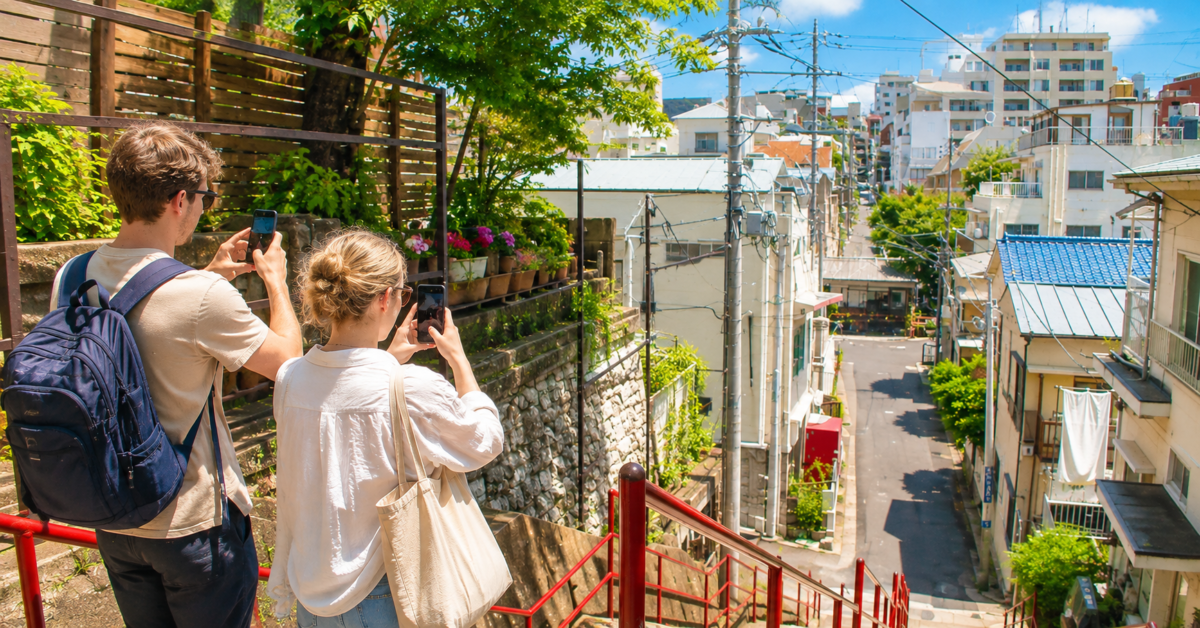
The term seichi junrei originally refers to visiting places of religious importance, such as sacred sites and temples.
Within Japanese anime and manga fan culture, however, the expression has taken on another meaning.
Fans also use it to describe visiting places that served as settings or inspirations for a work, or locations that have become strongly associated with a particular story.
The word seichi, meaning “sacred place,” is not meant to suggest that these anime locations are literally the same as religious sacred sites.
It is better understood as an affectionate metaphor used by fans:
“This place is special because of that story.”
In English, the practice is often described as anime pilgrimage or anime tourism, while the destinations themselves may be called real-life anime locations.
Today, seichi junrei is no longer only a private hobby among dedicated fans.
The Anime Tourism Association, founded in 2016, works to connect anime locations with local communities and has selected destinations through its annual “88 Anime Spots” project. The 2026 edition also introduces anime-related locations across Japan.
Anime pilgrimage has gradually become one of the ways in which Japanese anime culture and travel overlap.
Why Do Ordinary Places Become “Sacred”?
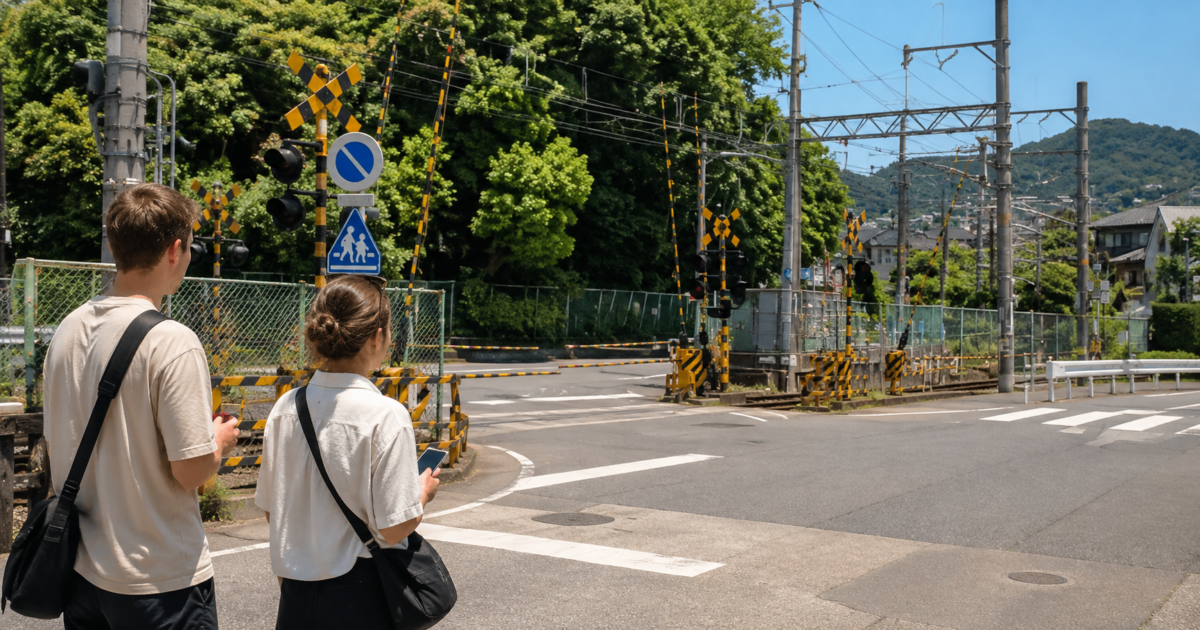
One of the most interesting things about anime pilgrimage is that the destinations are not always famous landmarks.
Bridges, stations, railway crossings, riversides, shopping streets, shrines, and areas around schools may all become meaningful places.
To someone unfamiliar with the story, they may look like ordinary pieces of everyday Japan.
To a fan, however, the same place can mean something very different:
“This is where that character stood.”
“This is the place that inspired that important scene.”
Some Japanese anime incorporate details from real streets and buildings into their backgrounds. Of course, anime scenery is not always an exact copy of reality. Several locations may be combined, or details may be changed to suit the story.
Even so, visiting the real place can sometimes produce an unmistakable moment of recognition:
“Yes, this is it.”
I have experienced that feeling myself.
When a landscape I had previously seen only on a screen appears in front of me in real life, it can feel slightly strange—as if I have stepped a little closer into the world of the anime.
That is why I think the appeal of seichi junrei goes beyond simply taking a photo from the same angle.
For a moment, the fictional world and the real Japan overlap.
A completely ordinary place can look different once you know the story connected to it.
That, to me, is one of the most interesting parts of anime pilgrimage.
From Fans to Towns: How Anime Pilgrimage Became Part of Local Culture
Anime pilgrimage does not always begin with a destination that a local tourism office has deliberately created.
Fans may first watch a scene and wonder:
“Could that be this station?”
“Doesn’t that bridge look familiar?”
They search for the place, visit it, take photographs, and share what they found through blogs or social media.
Other fans then follow.
Over time, a location may gradually become known as a “sacred site.”
As visitor numbers grow, some local communities begin welcoming anime fans in their own ways.
This can include character panels, stamp rallies, tourism maps, temporary events, or collaborations with local products.
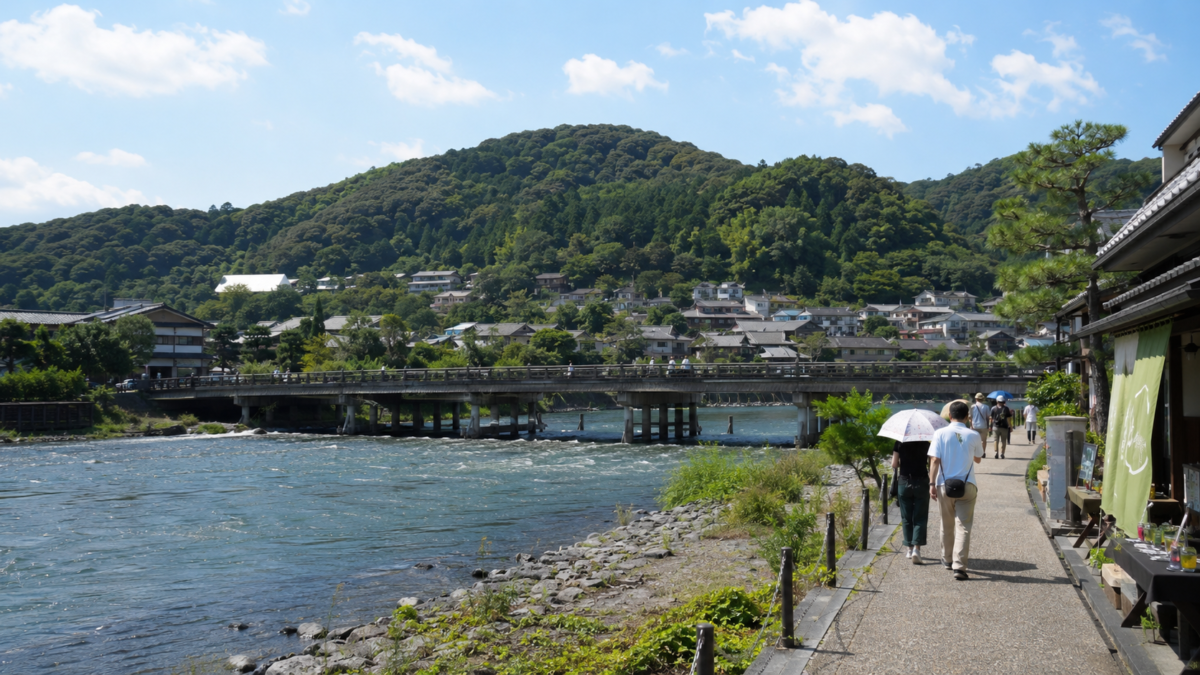
One clear example is Uji City in Kyoto Prefecture and Sound! Euphonium.
Uji officially introduces the series as a work set in the city, and visitors can find real landscapes that appear in the anime. The city has also collaborated with Kyoto Animation.
What is particularly interesting is that an interest in the anime can gradually become an interest in the town itself.
A visitor who comes to Uji for Sound! Euphonium may also discover the scenery along the Uji River, the historic streets, Uji tea, and traditional Japanese sweets.
Anime may be the reason for making the trip, but the experience can lead to another side of Japan.
That may be one reason anime pilgrimage feels slightly different from ordinary sightseeing.
Learn more about the everyday world of Japanese tea.
Anime Locations I Have Visited Around Kansai
Because I live in Osaka, it is relatively easy for me to visit anime- and manga-related locations around the Kansai region.
I have been to places such as Osaka Castle and Tsutenkaku many times.
Osaka Castle has also appeared in Detective Conan stories set in Osaka, where the castle itself becomes part of the setting.
These are already major Osaka landmarks, so many people visit them without any connection to anime.
But after seeing a familiar place in a story, even a landmark you have visited many times can feel slightly different.
You may find yourself thinking:
“So this is the place connected to that world.”
Kyoto also has many historical landscapes, including Kiyomizu-dera, that have appeared in various works.
For me, however, Uji is one of the clearest places to understand the idea of anime pilgrimage.
After watching Sound! Euphonium, walking through Uji makes the distance between the fictional world and the real town feel surprisingly small.
But Uji has much more to offer than anime locations.
Walking along the Uji River is enjoyable in itself, and you can also try Uji tea, dango, and other Japanese sweets.
I think it would be a little unfortunate to visit a sacred site, confirm the location, and immediately leave.
Trying the local food or taking a small detour through the town can make the pilgrimage itself much more memorable.
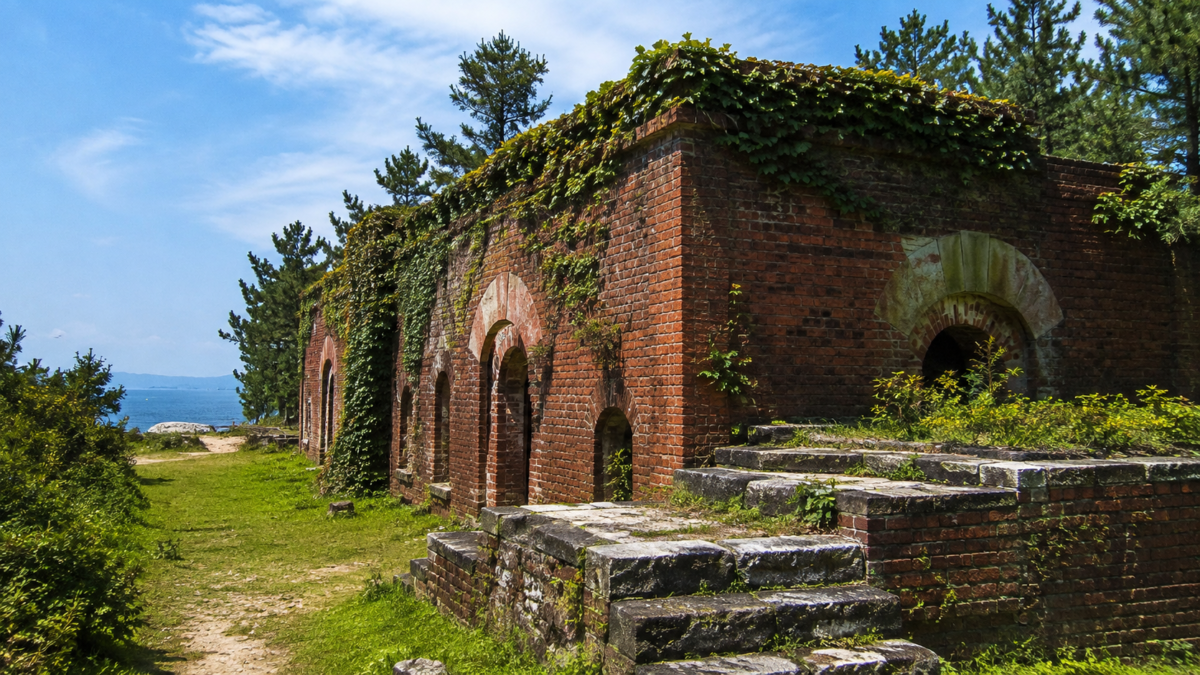
I have also visited somewhere a little more unusual: Tomogashima in Wakayama Prefecture.
The islands served as inspiration for the fictional Hitogashima in Summer Time Rendering, and official tourism information from Wakayama also introduces Tomogashima in connection with the series.
The real Tomogashima has not only sea and forest scenery but also the remains of military batteries built during the Meiji period.
I walked around the island, explored some of the old fortress ruins, and spent time surrounded by nature.
You may arrive looking for the world of an anime, only to find yourself becoming interested in the history and landscape of the island itself.
That is another part of what makes anime pilgrimage interesting.
A “Sacred Site” Is Still Someone’s Everyday Place
There is one important thing to remember about anime pilgrimage.
A place may be special to fans, but at the same time it is still an ordinary place where someone lives, works, studies, or travels every day.
Anime locations may include not only tourist attractions but also:
- Residential neighborhoods
- Areas around schools
- Stations
- Railway crossings
- Shops
- Places near private property
Blocking a road to take photographs, entering private property, or photographing residents without permission can cause real problems for the people who live there.
At stations and railway crossings, visitors should also avoid taking photographs in unsafe locations.
The Anime Tourism Association itself provides guidance on appropriate manners when visiting anime sacred sites.
As anime pilgrimage becomes more popular, maintaining a good relationship between fans and local communities becomes even more important.
The place may be sacred to fans, but it is still part of someone else’s everyday life.
And if you do visit an anime location, I recommend exploring more than just the scene from the story.
Kansai has an extensive railway network, making it possible to visit several locations in a day in some areas. One-day passes are available on some railway networks, although the details can change, so it is best to check the latest information before traveling.
Japan’s transportation IC cards can also make everyday travel easier.
If you visit Uji, try Uji tea or dango.
In Osaka, there is takoyaki, kushikatsu, and okonomiyaki.
In Kyoto, you can enjoy wagashi and matcha.
Even if anime is what first brings you to a town, walking its streets, eating its food, and seeing a little of everyday local life can make the journey much richer.
Seeing the location from a story is only part of the experience. Enjoying the place itself is part of anime pilgrimage too.