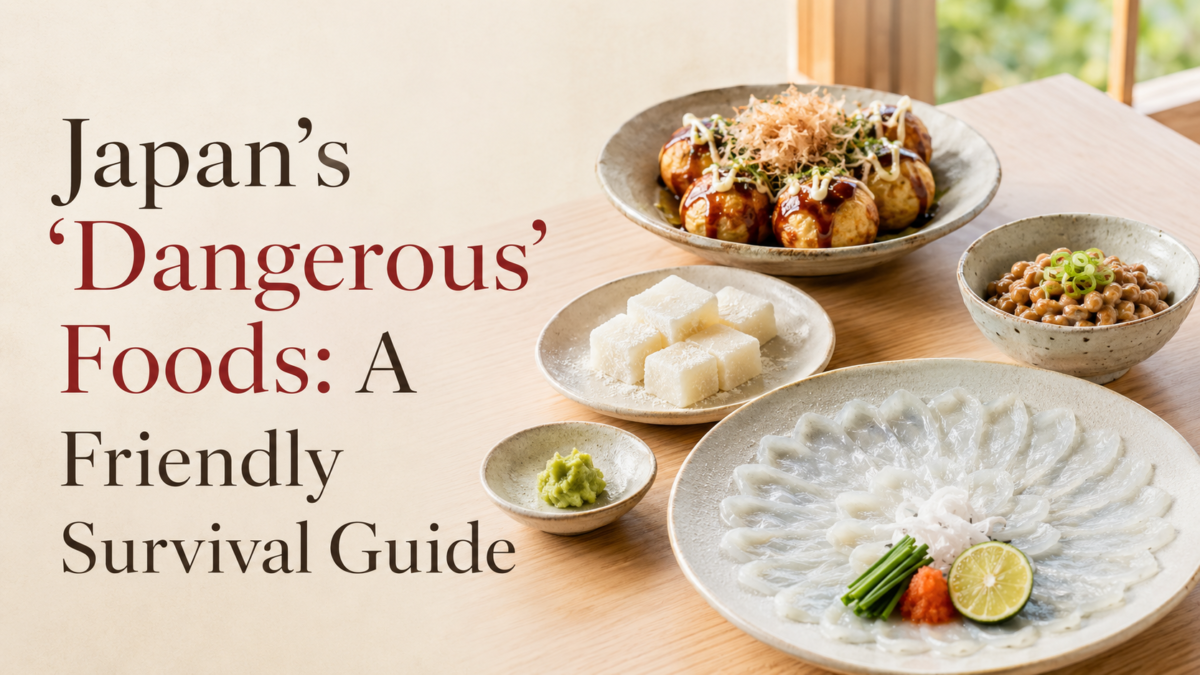
Japan is an easy place to enjoy eating out and trying new foods, but every now and then, there are a few small “traps” waiting on the table.
When you hear the phrase “dangerous Japanese food,” fugu may be the first thing that comes to mind. But in everyday life, some of the more immediate surprises have nothing to do with poison.
You might burn your mouth by eating freshly cooked takoyaki in one bite, bring tears to your eyes with too much wasabi, or find yourself staring silently at natto’s smell and sticky strings for the first time.
Not all of these dangers are jokes, though. Mochi can be a choking hazard, while raw or undercooked chicken can cause food poisoning.
So rather than ranking Japanese foods by how “dangerous” they are, this guide looks at what kind of caution each one deserves.
This is not meant to scare you.
Know the risk, know how to eat it, and enjoy the experience.
Think of it as a small survival guide for enjoying food in Japan with a little more confidence.
The Real Risks: Mochi, Fugu, and Raw Chicken
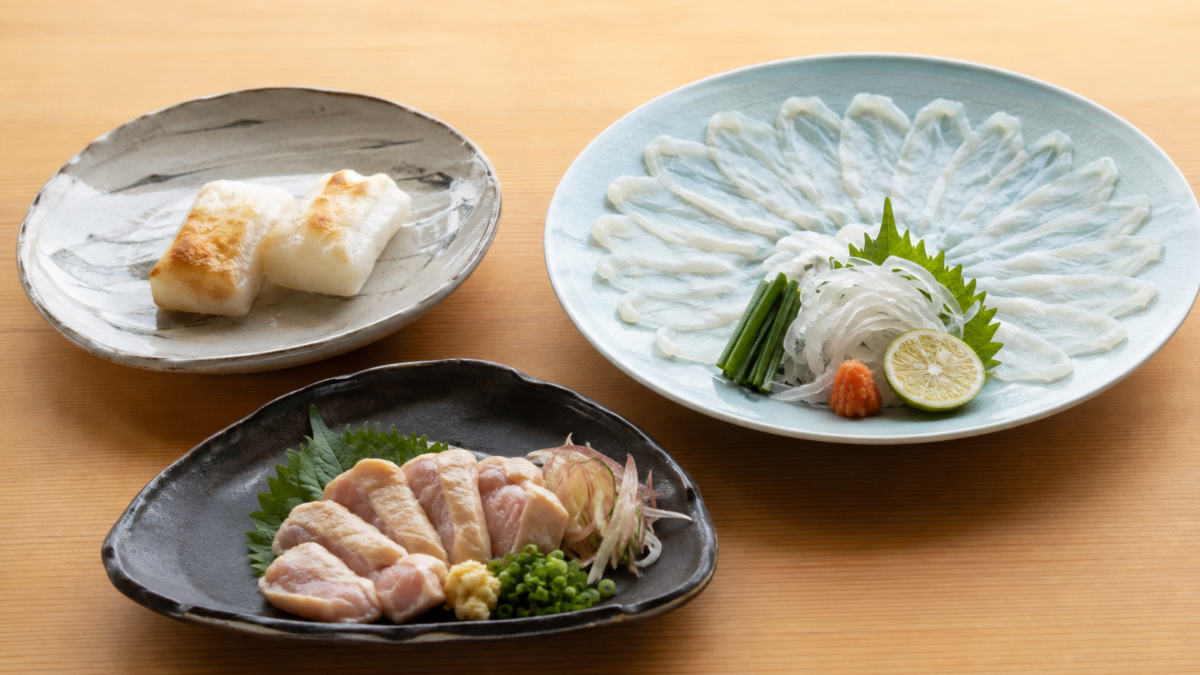
Let’s begin with the foods that deserve genuine caution.
Mochi — The Sticky One
Mochi is a traditional Japanese food made from glutinous rice. Its soft, stretchy texture is part of its appeal, but that same stickiness can also create a choking risk.
Older people are at particularly high risk, and Japan’s Consumer Affairs Agency advises cutting mochi into manageable pieces, avoiding large mouthfuls, and chewing slowly and thoroughly.
If you are not used to eating mochi, it is even more important to take small bites. Having a drink nearby is also a good idea.
Personally, I would not recommend walking around while eating mochi either. It is better enjoyed while sitting down and taking your time.
Survival tip:
Small bites. Chew well. Don’t rush.
Fugu — The Famous One
When people think of dangerous Japanese food, fugu is probably the most famous example.
Pufferfish can contain tetrodotoxin, and depending on the species and body part, some portions cannot be eaten safely. In Japan, edible species and parts are regulated, and poisonous parts must be removed by people recognized by local authorities as qualified fugu handlers.
Personally, I have never heard of anyone around me being poisoned after eating fugu served at a restaurant.
I have, however, seen news reports about people becoming seriously ill after preparing fugu they caught themselves. Japan’s Ministry of Health, Labour and Welfare also warns people not to prepare caught pufferfish on their own.
So the real danger is not simply “fugu.”
It is fugu that has not been properly prepared.
Survival tip:
Eat properly prepared fugu. Never cook a pufferfish you caught yourself.
Torisashi / Rare Chicken — The One to Take Seriously
This one may surprise visitors.
At some izakaya and chicken restaurants in Japan, you may come across torisashi, chicken tataki, or other dishes made with raw or lightly cooked chicken.
However, raw or undercooked chicken can cause Campylobacter food poisoning. Freshness does not automatically make it safe.
I occasionally hear stories from people I know who became ill after eating torisashi at restaurants.
And it is not only torisashi. Yakitori that is still undercooked in the center also deserves caution.
This is one food where it is better not to assume that something is completely safe simply because it is being served in Japan.
The Seafood Risks You Can’t Always See
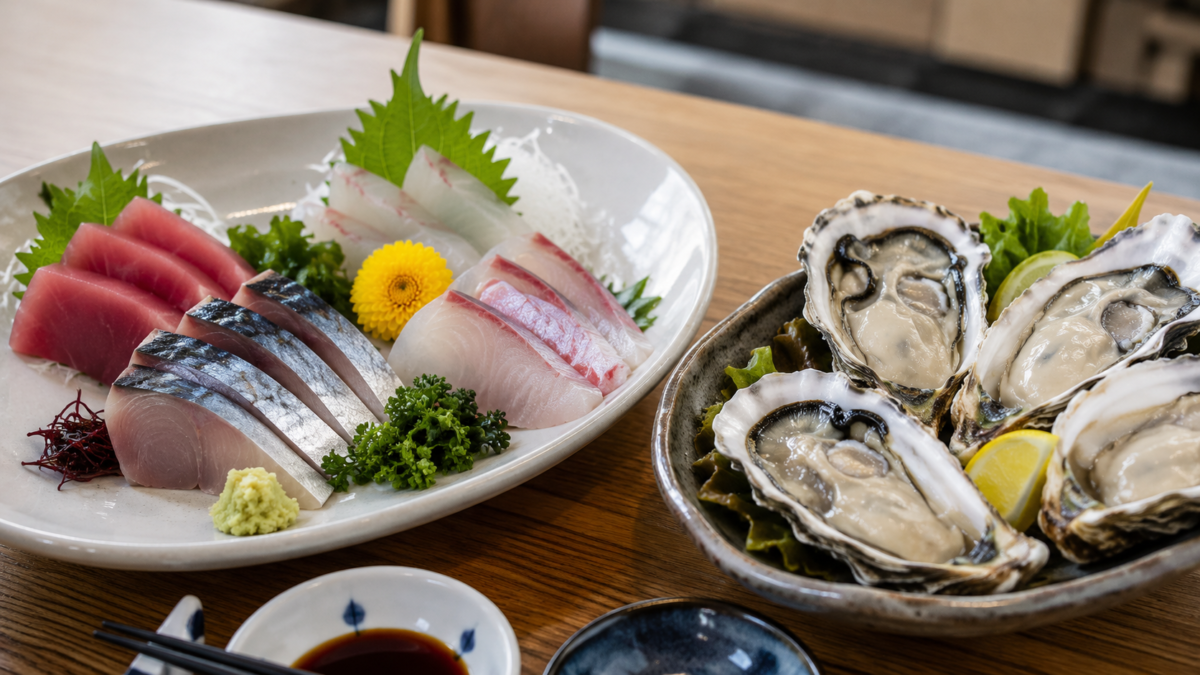
Sushi and sashimi are central parts of Japanese food culture, but that does not mean that all raw seafood is automatically risk-free.
Most of the time, people enjoy it without problems. Still, raw food always comes with some level of risk.
Sashimi — The Anisakis Surprise
One word you may occasionally hear in connection with sashimi is Anisakis.
Anisakis larvae can be found in seafood such as mackerel, horse mackerel, saury, bonito, and squid. If infected seafood is eaten raw, or without sufficient freezing or heating, it can cause severe abdominal pain.
One of my friends experienced this after eating mackerel at an izakaya. The pain became so intense that he went to hospital, where the Anisakis larva was removed.
That does not mean sashimi itself should be considered dangerous.
It is better simply to remember that eating raw seafood never means the risk is absolutely zero.
If you develop severe abdominal pain after eating raw seafood, do not simply wait it out.
Raw Oysters — Delicious, but Not Zero-Risk
Raw oysters are similar.
This is not something unique to Japan, but raw oysters can carry a risk of food poisoning, including norovirus.
Japan has hygiene standards for oysters sold for raw consumption, but “for raw consumption” does not mean that the risk is completely eliminated.
Raw oysters can be wonderful, but wherever you eat them, there is a simple rule worth remembering:
“Raw” always comes with a little more risk than “cooked.”
You could say that there is always a small element of luck involved.
The Foods That Fight Back: Takoyaki and Wasabi
Now we can move on to a much lighter kind of “danger.”
No poison. No parasites.
But if you are careless, they can still hurt.
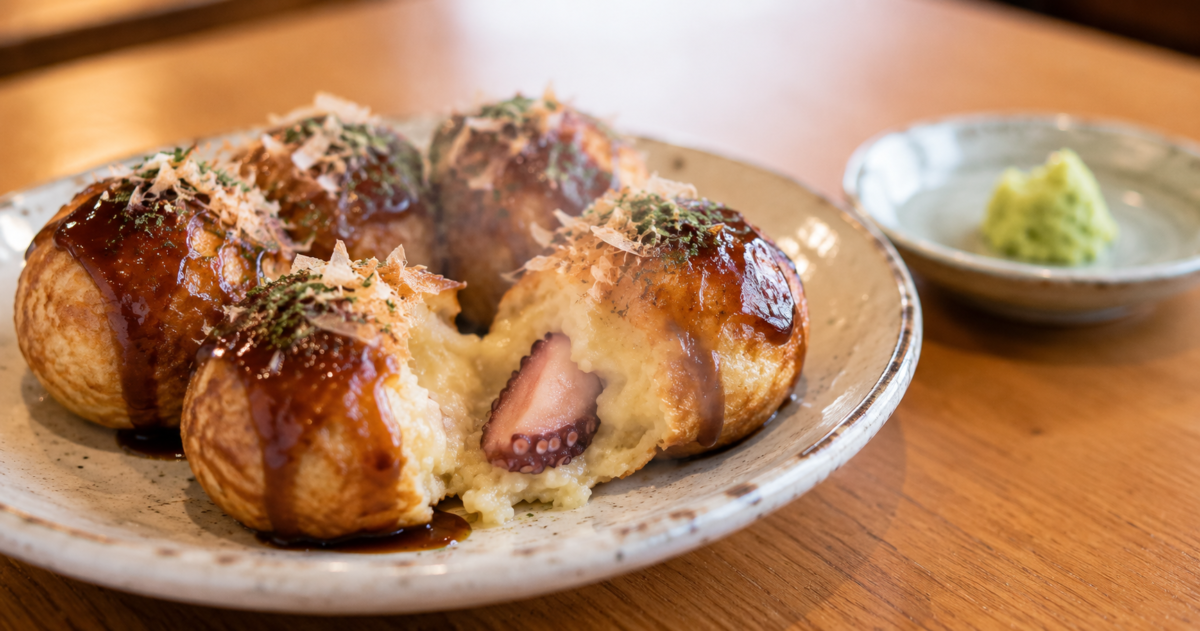
Takoyaki — The Lava Inside
I live in Osaka, so I feel qualified to say this very clearly:
Do not put a freshly cooked takoyaki straight into your mouth in one bite.
Takoyaki looks small and harmless, but the batter inside can be much hotter than you expect.
The outside may look ready to eat.
The inside may have other plans.
The lava is inside.
If they have just come off the grill, break one open first, let the steam escape, and give it a little time to cool.
I also like to keep a cold drink nearby.
Osaka’s takoyaki is not going anywhere. You can wait a few seconds.
Survival tip:
Break it open. Let it cool. Then enjoy.
Wasabi — The Nose Attack
Wasabi is not a dangerous food in the usual sense.
But eat too much at once, and you may briefly discover another dimension.
Its heat is different from chili pepper. Instead of lingering on the tongue, the sharp sensation rises quickly into the nose.
There is no need to pile on a huge amount simply because you are in Japan.
If it is your first time, a small amount is enough.
Survival tip:
Start small. Very small.
The Cultural Shock Foods: Smells, Textures, and Surprises
Not every food on this list is dangerous in the usual sense.
Sometimes the real challenge is the smell. Sometimes it is the texture. Sometimes it is simply finding out what you are actually eating.
Natto — The Smell and Sticky Strings
Natto is not dangerous.
Your expectations may be.
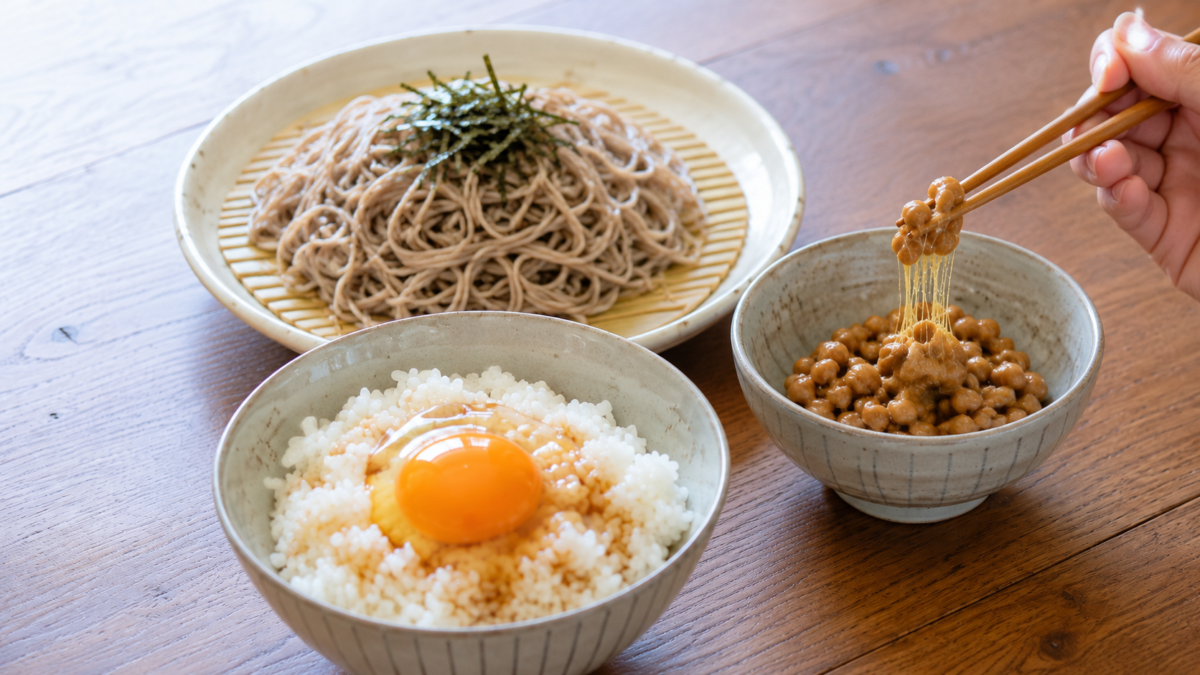
Open the container and you are immediately greeted by its distinct fermented smell. Lift it with chopsticks, and the sticky strands seem to stretch forever.
It is easy to understand why first-time visitors can be surprised.
Many foreign visitors dislike natto at first, but if you enjoy fermented foods such as strong cheeses, it may still be worth trying.
Start with a small amount over rice.
Danger level: Your expectations.
Shirako — The Anatomy Surprise
Shirako looks surprisingly delicate.
It is soft, creamy, and often served in winter at Japanese restaurants.
Then someone tells you what it is.
Shirako is the milt, or sperm-producing organ, of male fish, most commonly cod.
For many first-time visitors, the biggest challenge is not the taste at all. It is the moment they learn what they have just eaten.
The flavor itself is mild and creamy, which makes the contrast even more surprising.
Survival tip:
Maybe taste it before asking too many questions.
Umeboshi — The Sour Shock
Umeboshi looks small and harmless.
Do not underestimate it.
These pickled Japanese plums can be intensely sour and salty, especially if you eat one by itself.
For Japanese people, umeboshi is a familiar companion to rice and is often found inside onigiri or bento. But for someone trying it for the first time, the first bite can be quite an experience.
Survival tip:
Small fruit. Big flavor.
Ika no Shiokara — The Smell Challenge
Ika no shiokara is made from squid fermented with salt and its own internal organs.
That description alone may already tell you this is not the gentlest introduction to Japanese food.
It has a strong ocean-like aroma, a salty flavor, and a soft texture that can be challenging for people who are not used to fermented seafood.
For people who enjoy strong flavors, however, it can be surprisingly addictive.
Danger level: Your nose may decide first.
Tororo & Mozuku — The Slippery Texture Test
Japanese food has no shortage of slippery textures.
Tororo is grated Japanese yam with a thick, sticky consistency, while mozuku is a type of seaweed usually served with a slippery texture and a light vinegar dressing.
Neither is dangerous.
But if you grew up thinking food should never be this slippery, the texture can take some getting used to.
In Japan, however, this kind of neba-neba texture is completely normal and appears in many everyday dishes.
Survival tip:
Don’t fight the texture. Just go with it.
Raw Egg — The Psychological Barrier
Raw egg can feel like a much bigger challenge for visitors from countries where eating eggs uncooked is uncommon.
In Japan, raw egg is eaten over rice as tamago kake gohan, and it is also common to dip hot sukiyaki into beaten raw egg.
Egg production and distribution in Japan include systems designed around the possibility of raw consumption. The best-before date on packaged eggs is generally used as a guide for the period during which they can be eaten raw. After that, thorough cooking is recommended.
At least in my own experience, I rarely hear of people around me becoming sick from eating raw eggs.
That does not mean Japanese eggs are absolutely risk-free. Storage conditions and the printed date still matter.
If you are comfortable trying it, sukiyaki or tamago kake gohan can be a good introduction to this everyday Japanese way of eating eggs.
For another everyday example of how eggs appear in Japanese food culture, see Why Are Japanese Egg Sandwiches So Cheap and Delicious?.
Soba — The Allergy Visitors May Not Expect
Soba may look like just another Japanese noodle dish, similar to udon or ramen.
But buckwheat, the main ingredient in soba, can cause food allergies.
In Japan, buckwheat is one of the allergens that must be clearly indicated on packaged foods.
My own mother has a buckwheat allergy and develops hives if she eats soba.
Of course, soba itself is not a dangerous food. The issue is the allergy.
If you try soba for the first time and develop hives, breathing difficulties, or other unusual symptoms, seek medical attention rather than ignoring them.
Soba is an everyday food in Japan. That is exactly why travelers with a buckwheat allergy should remember what it is made from.
You can also read more about soba and other seasonal noodle dishes in Beyond Hot Ramen: Japanese Cold Noodles You Must Try in Summer.
The Most Dangerous Food Might Be the One You Pick Yourself
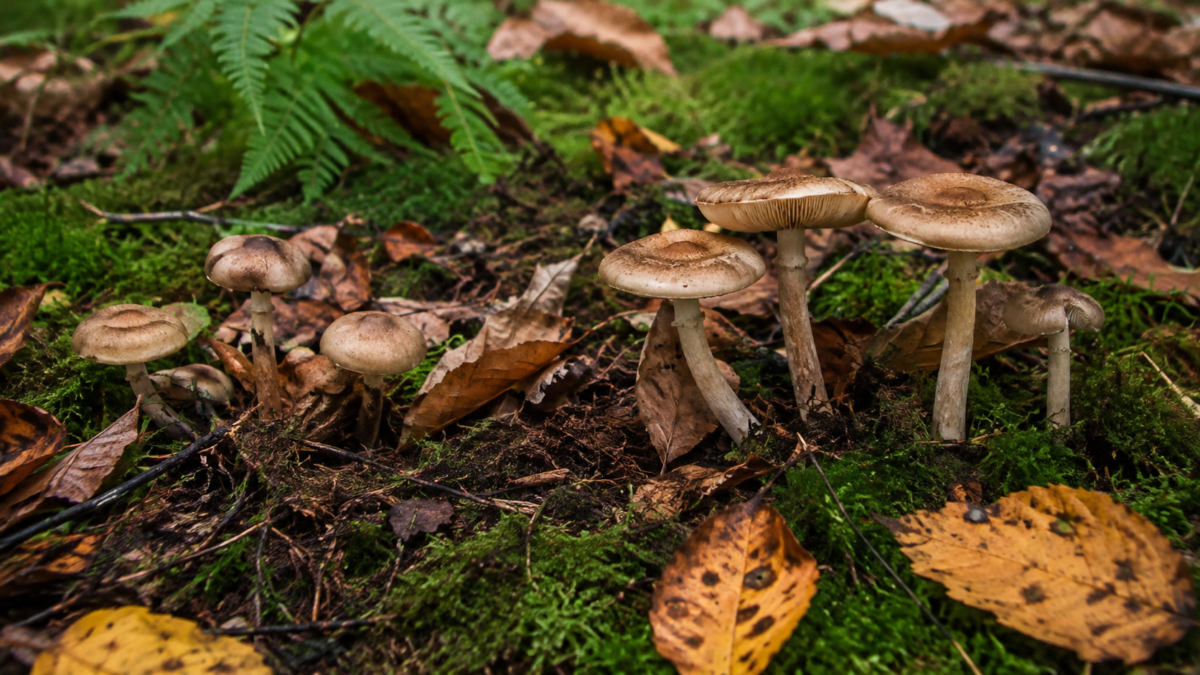
The final food on this list is found less often in restaurants and more often in the mountains.
Mushrooms such as shiitake, shimeji, maitake, and enoki are widely used in everyday Japanese cooking.
There is no reason to worry about ordinary edible mushrooms sold in supermarkets or served in restaurants.
The problem begins when you see a mushroom growing outdoors and think:
“That looks edible.”
Japan has poisonous wild mushrooms that can be mistaken for edible varieties. Authorities warn people not to pick, eat, sell, or give away wild mushrooms unless they can be identified with certainty.
Japanese mushrooms are wonderful in hot pots, rice dishes, pasta, and many other foods.
Enjoy them.
Just leave the mystery mushrooms in the forest alone.
Japan is the country that gave the world Super Mario, but:
The mystery mushroom you found on a mountain trail is not a power-up.
Japanese food is not unusually dangerous compared with food elsewhere.
And the “dangers” in this article are not all the same.
Chew mochi carefully.
Let takoyaki cool.
Pay attention to how well chicken is cooked.
Remember food allergies.
Do not eat mystery mushrooms you found outdoors.
And with wasabi, perhaps do not start with a mountain-sized portion.
A little knowledge makes eating in Japan easier and more enjoyable.
The best survival strategy is simple: know what you’re eating, take your time, and enjoy it.