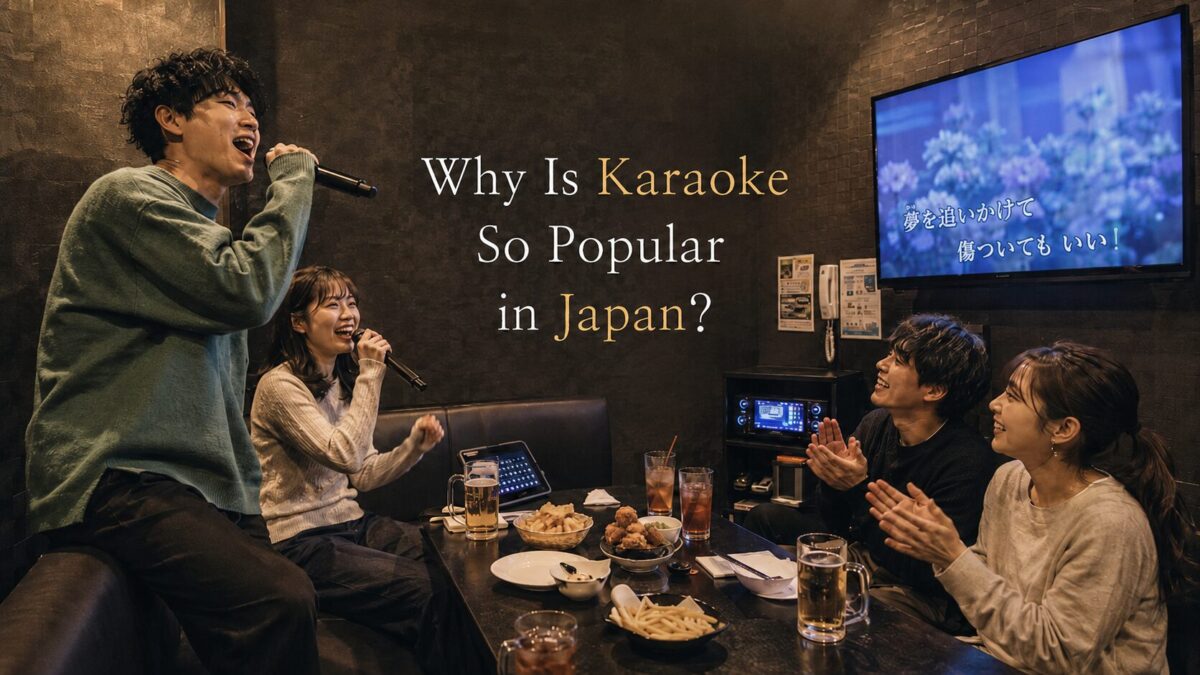
Karaoke in Japan is not simply a place where people show off their singing.
It is a familiar form of entertainment where friends and coworkers can have fun together, or where someone can sing loudly alone and relieve stress. Food, drinks, video, lighting, and scoring systems are all combined inside a small private room, creating a complete entertainment space.
In some countries, karaoke often means standing on a stage in a pub or bar and singing in front of a room full of strangers.
In Japan, however, “going to karaoke” usually means visiting a karaoke box.
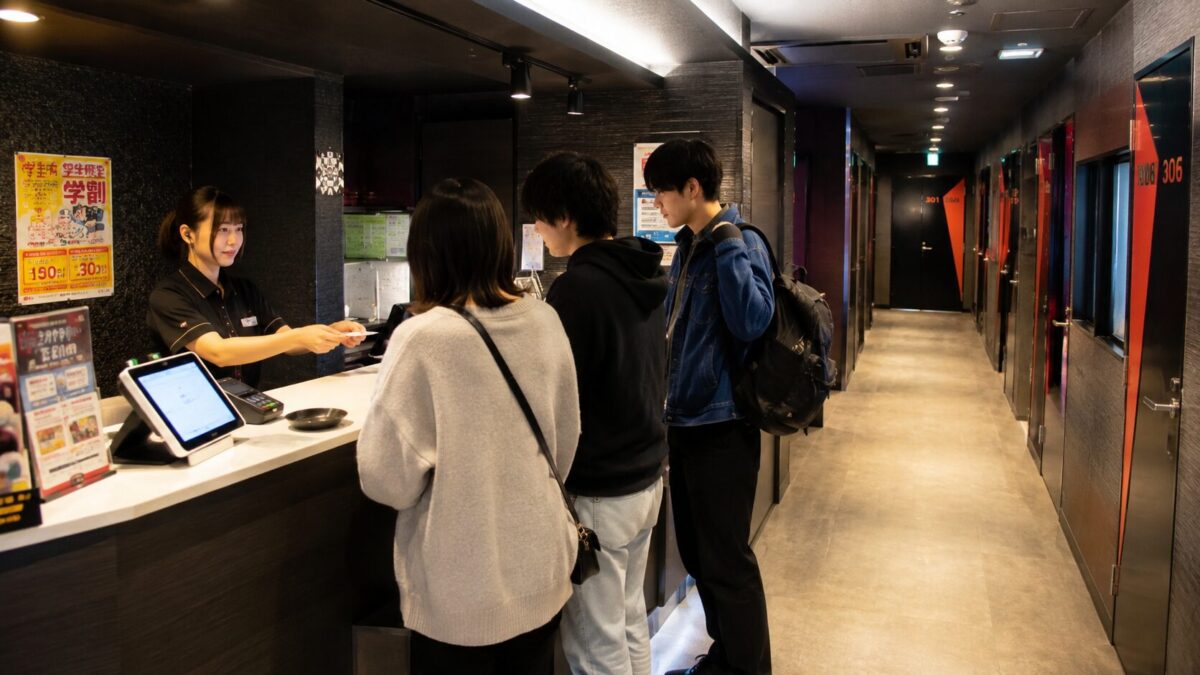
After checking in at reception, you enter a private room with friends, family members, coworkers, or even by yourself. You choose songs using a touchscreen and spend a few hours singing while enjoying food and drinks.
The popularity of karaoke in Japan is not only about the music.
Its appeal also comes from the privacy of the room, the way people create a shared atmosphere together, and the technology and services that have developed around it over many years.
- From Bar Entertainment to Private-Room Karaoke
- Why Is Japanese Karaoke Held in Private Rooms?
- Creating a Shared Mood Matters More Than Singing Perfectly
- Food and Technology Create a Complete Entertainment Space
- For Japanese People, Karaoke Is Part of Everyday Life
- Japanese Karaoke Is About More Than Singing
From Bar Entertainment to Private-Room Karaoke
The Japanese word *karaoke* combines *kara*, meaning “empty,” with *oke*, an abbreviation of “orchestra.”
There were several early inventors and different stages in the development of karaoke equipment. According to the All-Japan Karaoke Industrialist Association, machines that allowed people to sing along with recorded accompaniment appeared in the late 1960s, and karaoke began spreading commercially through bars and other nightlife venues during the 1970s.
Early karaoke was not enjoyed in private rooms.
Instead, music was played inside a snack bar or small drinking establishment, and customers sang in front of everyone else in the room. They often followed printed lyrics while the entire bar listened to one person’s performance.
During the 1980s, video karaoke systems began displaying lyrics and background footage on screens. Remote controls also made it easier for customers to choose songs.
As the technology improved, karaoke became easier and more accessible.
From the late 1980s into the 1990s, karaoke boxes with private rooms spread across Japan.
What had once been entertainment inside a bar became a separate activity that friends and families could enjoy in their own room.
This shift toward private rooms transformed Japanese karaoke culture.
Why Is Japanese Karaoke Held in Private Rooms?
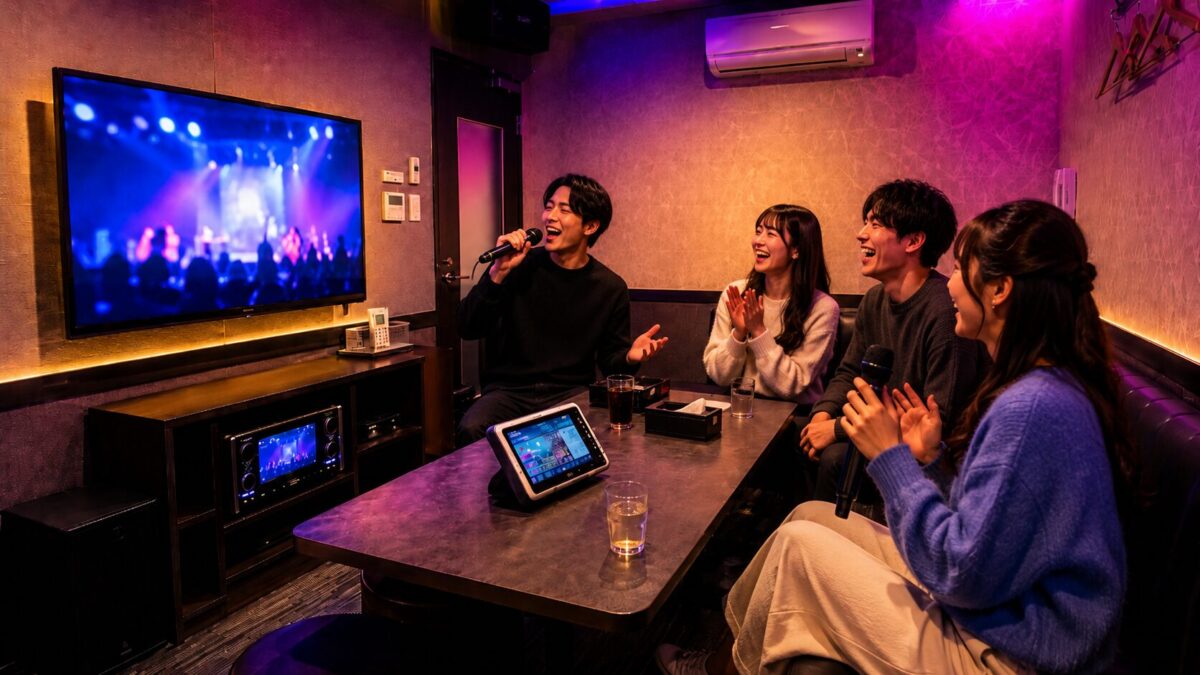
At a karaoke box, you do not have to stand in front of a crowd of strangers.
You sing only in front of the friends, relatives, or coworkers who came with you. This makes karaoke easier to try, even for people who are uncomfortable singing in public.
You do not need to start singing immediately.
You can drink something, listen to the others, and pick up the microphone after you begin to feel more relaxed. If you miss a note or forget the lyrics, it rarely feels like a serious mistake when you are surrounded only by people you know.
A karaoke room is located in a public business, but for a limited time, it becomes a private space belonging only to your group.
You can raise your voice without worrying about the people outside and reveal a side of yourself that may not usually appear in everyday life.
You also do not need to visit with anyone else.
Going to karaoke alone is known as *hitori karaoke*, often shortened to *hitokara*. It is now a familiar way to use karaoke in Japan.
When you are alone, you do not need to wait for your turn. You can sing the same song repeatedly and use the room purely for practice.
Some people go to enjoy singing without performing for anyone. Others want to release stress by singing loudly or simply spend time alone without interruption.
A Japanese karaoke box can therefore be a place for social connection and a place for solitude at the same time.
Creating a Shared Mood Matters More Than Singing Perfectly
Some people enjoy competing for high scores or trying to improve their singing technique.
However, when friends or coworkers go to karaoke together, technical skill is not always the most important part of the experience.
Someone chooses a song everyone knows. The group joins in during the chorus. An old favorite begins playing, and everyone suddenly becomes excited. A quiet friend selects an unexpectedly dramatic song, surprising the entire room.
Through these small moments, the group creates the atmosphere together.
Karaoke is less like a formal recital and more like a communication tool that creates empathy and a sense of togetherness.
Students visit after school or on weekends. Families enjoy songs from different generations in the same room.
After a company drinking party, coworkers may continue the evening at karaoke.
A colleague who seems serious and reserved at work may suddenly sing an energetic rock song with complete confidence. Seeing this unexpected side of someone can make the relationship feel less formal.
Of course, some people feel uncomfortable when they are pressured to sing.
It is perfectly acceptable to listen, talk, eat, or simply enjoy the room. Respecting different ways of participating is also part of creating a pleasant karaoke experience.
Food and Technology Create a Complete Entertainment Space
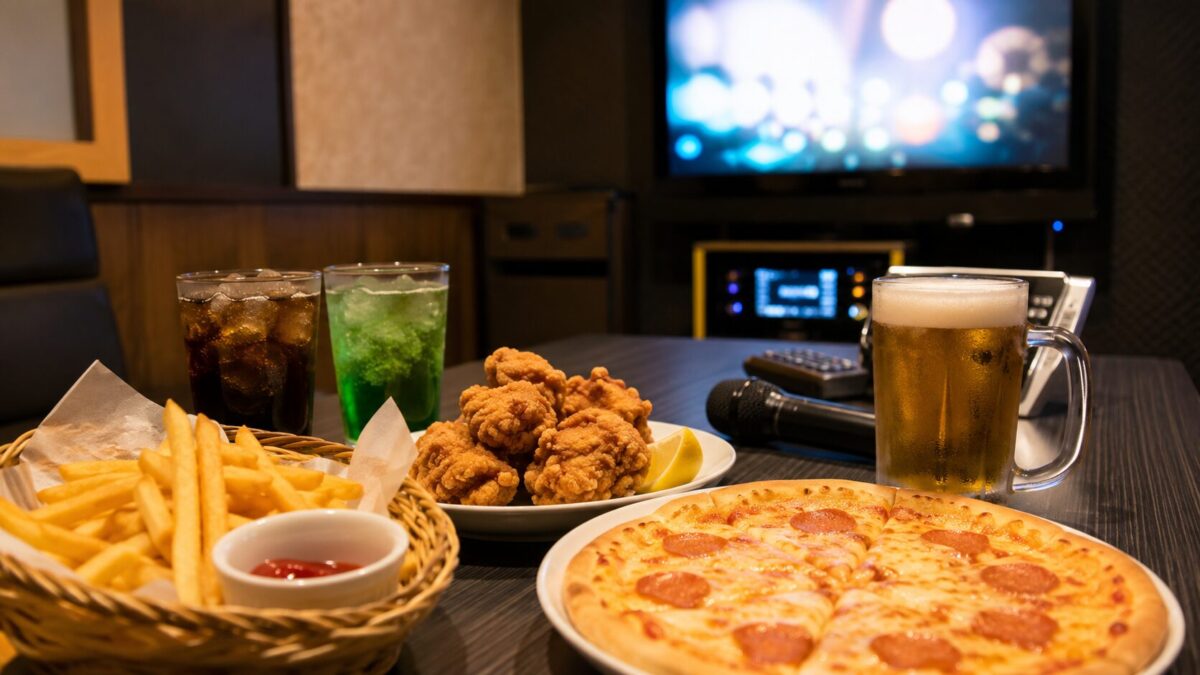
A Japanese karaoke room contains more than microphones and a television screen.
Many locations serve soft drinks, alcoholic beverages, snacks, noodles, rice dishes, and desserts.
French fries, karaage fried chicken, and pizza are especially popular because they are easy to share. Some businesses offer self-service drink bars or all-you-can-drink plans.
For this reason, karaoke is not merely a music facility.
The room brings together elements of a restaurant, an izakaya, a lounge, a music studio, and an entertainment venue.
Major karaoke chains such as Big Echo promote rooms where customers can sing while ordering food and drinks. Some locations also offer karaoke systems with interfaces or songs designed to be more accessible to visitors from overseas.
The technology has also changed dramatically.
Today, customers normally search for music using a touchscreen device. Songs can be found by title, artist, release period, musical genre, or anime series.
The lyrics appear on the main screen, and the text changes color in time with the music.
Detailed scoring systems evaluate pitch, rhythm, vocal stability, and expression. Some songs include official music videos featuring the original singer, while others use scenes from anime or other visual material.
Depending on the location, rooms may include enhanced sound systems, special lighting, multiple large screens, or facilities designed for families with children.
Some karaoke rooms also provide Wi-Fi and electrical outlets, allowing them to be used for meetings, remote work, or study.
Restaurants, bars, studios, lounges, and entertainment venues are all compressed into one small private room.
For Japanese People, Karaoke Is Part of Everyday Life
Karaoke in Japan is not reserved for birthdays or large celebrations.
People visit when they are looking for somewhere to spend time with friends, after a drinking party, between appointments, or simply when they feel like singing alone.
Major chains such as Big Echo, Karaoke Kan, and Karaoke Manekineko operate many locations near railway stations and entertainment districts.
Depending on the branch, there may be rooms for solo customers, family-friendly spaces, meal services, or other specialized options.
The All-Japan Karaoke Industrialist Association also operates the “JAPAN=KARAOKE” project to help international visitors find welcoming karaoke businesses. Participating locations display stickers, and the project provides information about how to use karaoke in Japan.
Even without speaking much Japanese, karaoke can be relatively easy to try when the store or machine provides a foreign-language interface.
At reception, you usually provide the number of people in your group and choose how long you would like to stay. Once inside the room, you use the touchscreen to select songs and order food or drinks. When your time is almost over, you return to reception and pay.
The basic process is not especially complicated.
I first went to karaoke when I was in high school.
Five friends and I visited a karaoke box and sang the rock and pop songs that were popular at the time. It was my first experience singing in front of other people, so I remember feeling extremely embarrassed at first.
After going a few more times, however, I became completely hooked on the feeling of singing loudly without holding back.
I even practiced new songs while watching YouTube so that I could increase my karaoke repertoire.
As an adult, karaoke became even more enjoyable because I could sing while having a drink.
Sometimes a quiet friend or coworker suddenly begins singing intense rock music after a few drinks. The difference between their usual personality and the person holding the microphone can be genuinely surprising.
Regardless of singing ability, people laugh, listen, and raise their voices together inside the same room.
For me, karaoke is one of the best ways to become closer to friends and coworkers.
When you visit Japan, consider preparing one familiar song and experiencing a Japanese karaoke box for yourself.
You do not need to be confident about your voice.
At Japanese karaoke, singing perfectly matters less than enjoying the time you spend together inside that small private room.
Japanese Karaoke Is About More Than Singing
Karaoke became deeply rooted in Japanese life for more than one reason.
People can enjoy themselves in a private room instead of performing in front of strangers.
They can create a shared atmosphere with friends and coworkers rather than concentrating only on singing ability.
Food, drinks, video, sound, lighting, and scoring systems are all available in the same space.
And the rooms can be used with other people or alone.
Together, these qualities have turned karaoke into a familiar part of everyday life in Japan.
Japanese karaoke is not simply a stage for displaying your voice. It is a small private room where people can grow closer to others—or briefly free themselves from their usual everyday selves.