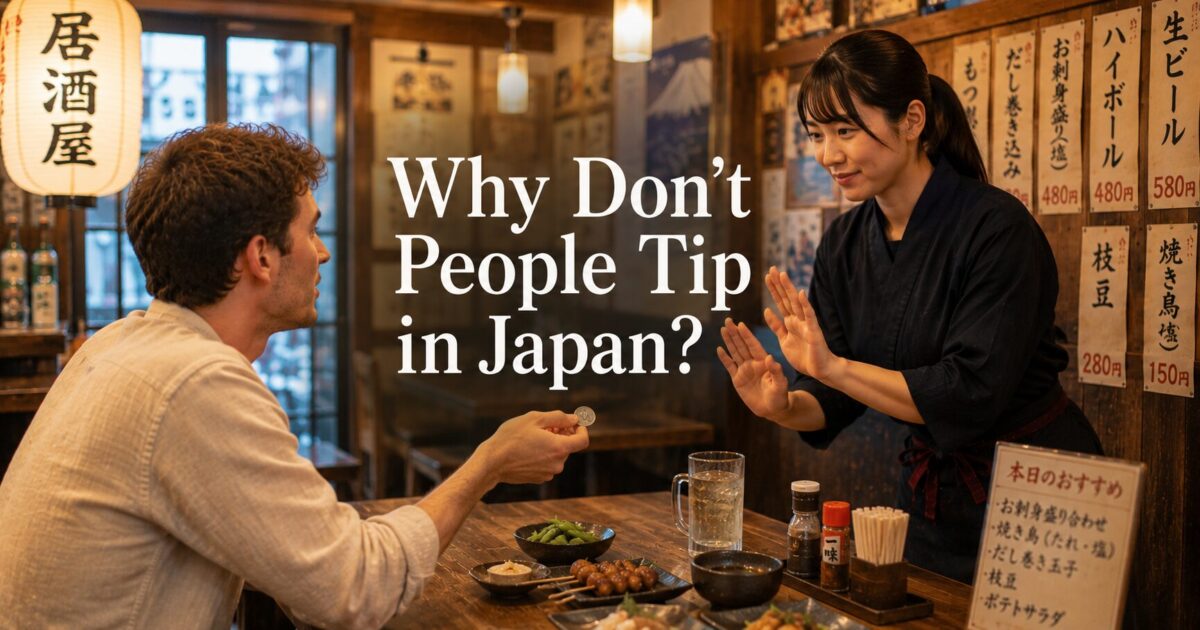
“After finishing my meal at a restaurant, I left a tip on the table and walked out. Then a member of staff ran after me to return the money.”
This is a story often shared by international travelers who visit Japan.
In many countries, tipping is a way to show appreciation for good service. In Japan, however, it can be interpreted differently. A staff member may assume that you forgot the money or made a mistake when paying and hurry to return it.
So why is tipping so uncommon in Japan?
The answer is connected to the way prices, customer service, and employment are structured in Japanese society.
Service Is Already Included in the Price
In Japan, customer service is generally considered part of the product in restaurants, cafés, hotels, taxis, and many other service industries.
In other words, the price shown on a menu or rate sheet covers not only the food, product, or transportation, but also the service provided by the staff.
There is therefore no need to pay extra after receiving good service. Customers are expected to pay the stated amount, while businesses are expected to provide a reasonable standard of service within that price.
Most service workers in Japan receive their wages directly from their employer rather than depending on tips from customers.
Their income is determined by their employment contract and the company’s pay system, not by the amount of money individual customers choose to leave behind.
Of course, wages differ depending on the industry and employer. However, it is not common in Japan to use tips to supplement a worker’s income according to the perceived quality of their service.
To learn more about Japanese customer service culture, see our article, “Why Is Customer Service in Japan So Different?”
Good Service Is Provided as Part of the Job
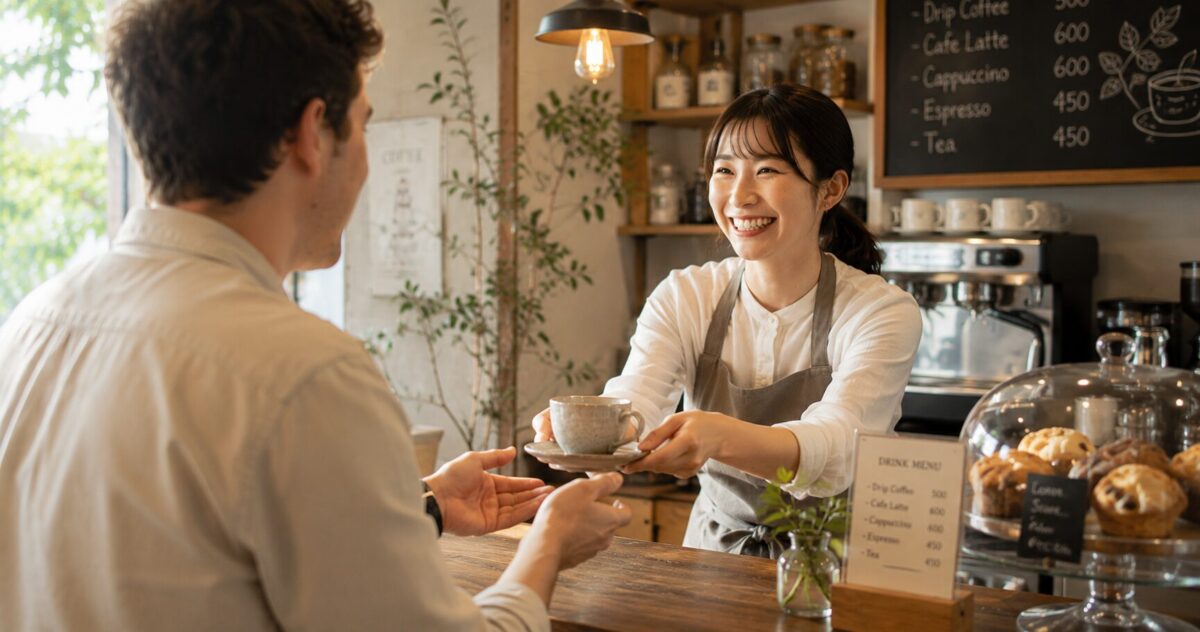
Many Japanese companies train employees in basic customer-service practices, including how to bow, use polite language, and hand over products or change carefully.
This kind of service is not limited to luxury hotels. Courteous interactions are also common in convenience stores, supermarkets, fast-food restaurants, and drugstores.
Naturally, every employee has their own personality and style. Even so, good service is generally seen not as something provided in the hope of receiving a tip, but as part of the expected quality of the job.
For this reason, businesses often aim to provide a consistent level of service to every customer rather than changing the quality of service according to who might pay extra.
Why a Tip Can Put Staff in a Difficult Position
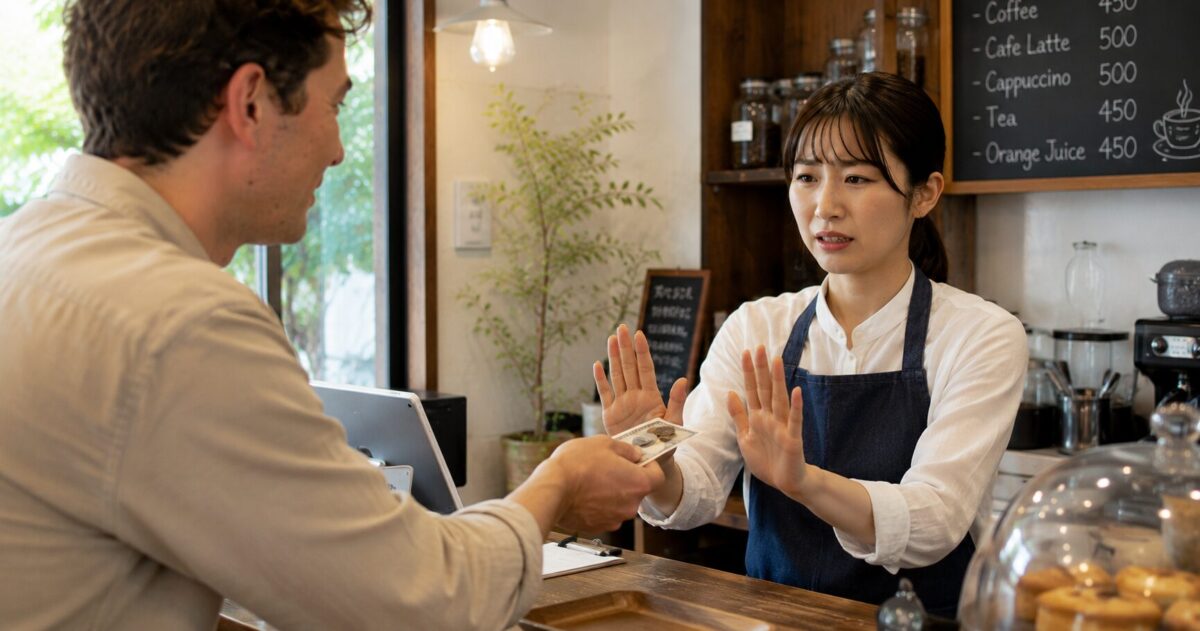
In some countries, it is normal to leave cash on the table when departing. In Japan, that money may be treated as something the customer accidentally left behind.
Many businesses also manage their registers and daily cash totals down to the last yen. Unexplained extra money can create an accounting problem for the staff.
In addition, some companies prohibit employees from personally accepting cash from customers. As a result, even a well-intentioned tip may have to be refused or returned.
Omotenashi Is Not the Same as Tipping
The word often used when discussing Japanese customer service is *omotenashi*.
However, *omotenashi* does not simply mean providing special services for free.
It refers more broadly to the attitude of anticipating a guest’s needs, avoiding unnecessary inconvenience, and preparing an environment in which the customer can feel comfortable.
It is also not something reserved only for people who offer extra money. The underlying idea is to provide a similar standard of care to everyone, whether they are visiting for the first time or are a regular customer.
For that reason, the absence of tipping in Japan cannot be explained simply by saying that Japanese people are kind. It has developed through a combination of pricing systems, employee training, workplace rules, and broader ideas about what service should include.
Service Charges and Seating Fees Are Not Tips
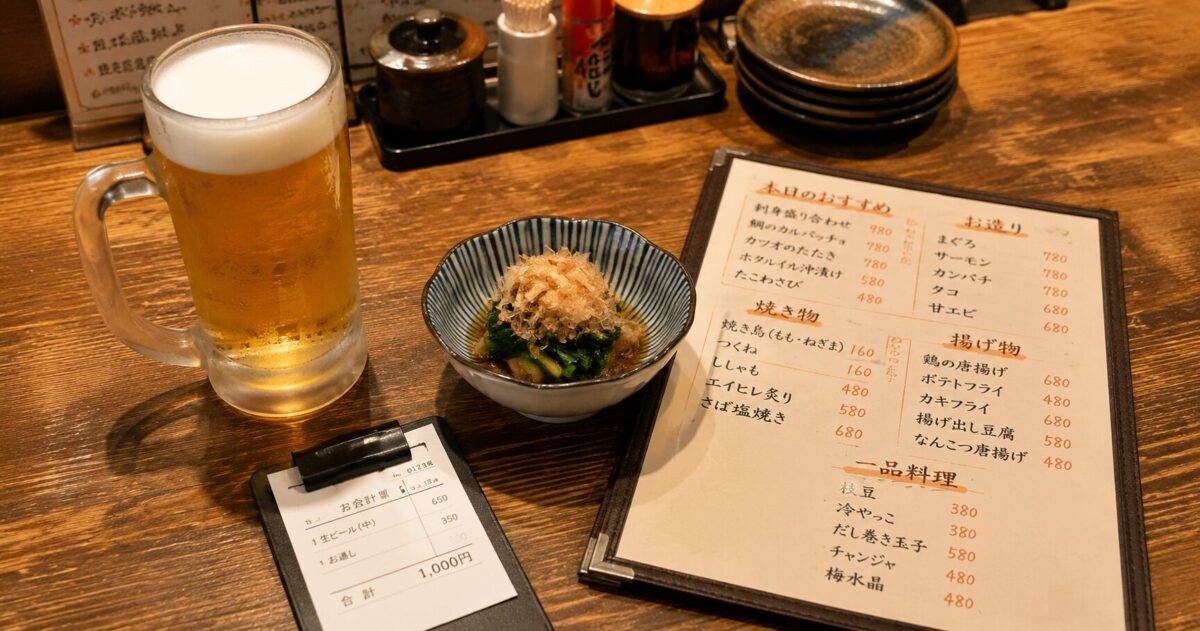
The absence of tipping does not mean that additional charges never appear on a bill.
For example, some luxury hotels and upscale restaurants add a service charge to the final amount.
At an *izakaya*, customers may also be charged a seating fee or for an *otoshi*—a small appetizer that is served automatically when they sit down and is usually added to the bill.
These charges are not tips.
They are predetermined parts of the business’s pricing system, rather than optional payments given directly to an individual staff member.
Words Are a More Natural Way to Show Appreciation
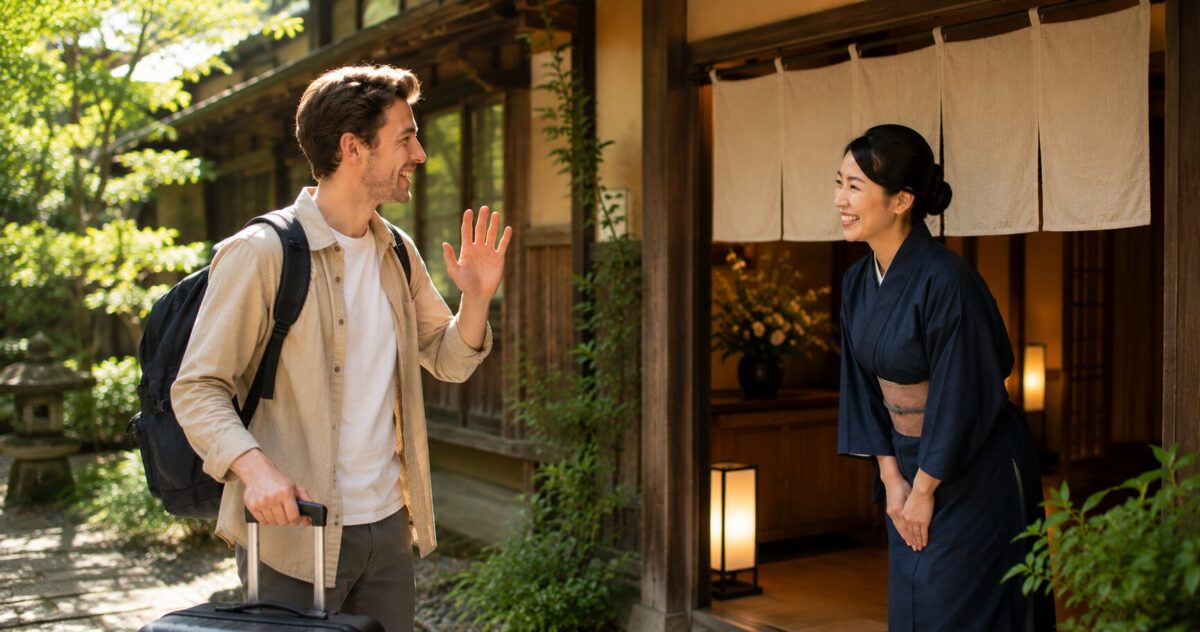
In Japan, expressing gratitude with words is usually more natural than offering extra money.
When leaving a shop or restaurant, you can simply say:
“Arigatou gozaimashita” — Thank you very much.
After a meal, you can also say:
“Gochisousama deshita” — Thank you for the meal.
A smile and a small bow are also simple and effective ways to show your appreciation.
Writing a positive review on Google Maps or Tripadvisor after your trip can be especially helpful to a business. Reviews from international visitors may encourage future travelers and can be a meaningful source of support for the staff.
**Travel Tip:** If you enjoyed a restaurant or received especially thoughtful service, take a photo of the receipt or the shop’s sign before leaving. This will make it much easier to find the correct business on Google Maps later and leave a positive review after you return home. For the restaurant, a kind review from an overseas visitor can be far more useful than a tip.
When you receive good service in Japan, try expressing your appreciation directly. A sincere word of thanks may be the most welcome gesture of all.