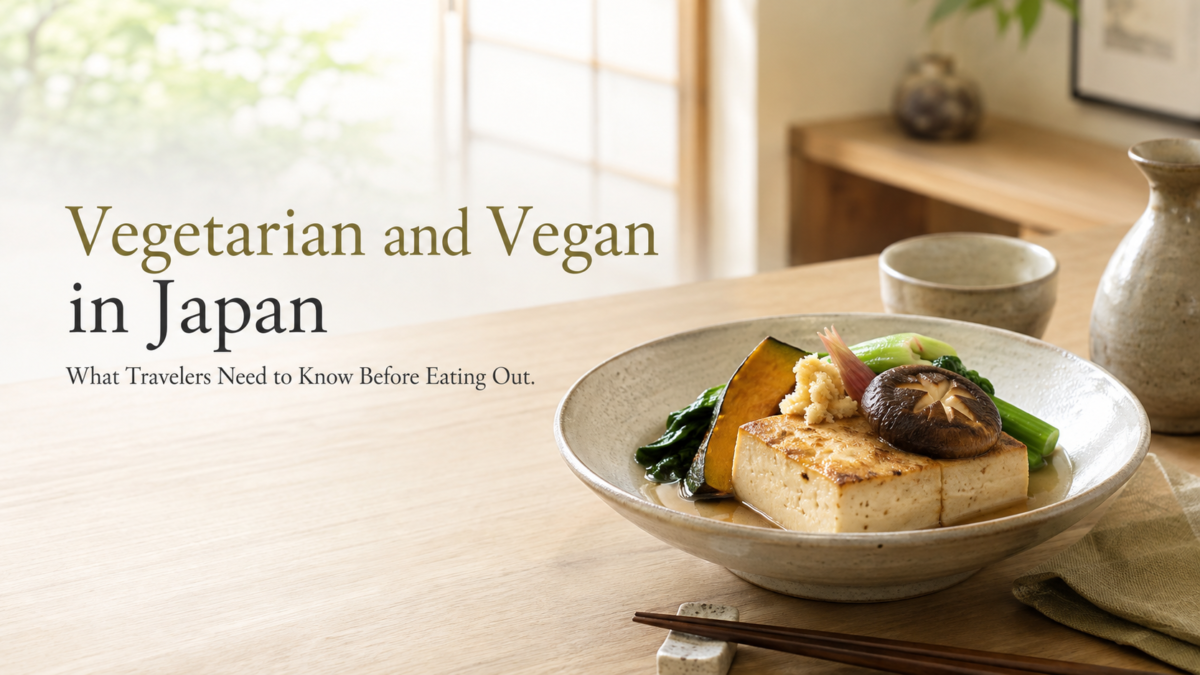
Japanese food uses plenty of plant-based ingredients: tofu, vegetables, rice, seaweed, mushrooms, and pickles are all common parts of everyday meals.
At first glance, that can make Japan seem relatively easy for vegetarian and vegan travelers.
And in some ways, it is. Plant-based ingredients themselves are everywhere.
The difficult part is often not what you can see on the plate, but what is hidden in the dashi, broth, sauce, or seasoning.
A bowl of miso soup may contain nothing more visible than tofu and wakame, yet the dashi may have been made with bonito flakes. A vegetable simmered dish may also use fish-based stock.
So when choosing vegetarian or vegan food in Japan, it helps to think beyond the visible ingredients.
Understanding a few basics about how Japanese food is prepared can make eating during your trip much easier.
- The Biggest Surprise: Dashi Can Be Hidden Almost Everywhere
- “Vegetarian” May Not Mean Exactly What You Expect
- Japanese Foods That Can Be Vegetarian or Vegan — But Need Checking
- Shojin Ryori: Japan Has Its Own Long Plant-Based Tradition
- Eating Out Is Getting Easier — Especially in Major Cities
- A Little Preparation Makes Eating in Japan Much Easier
The Biggest Surprise: Dashi Can Be Hidden Almost Everywhere
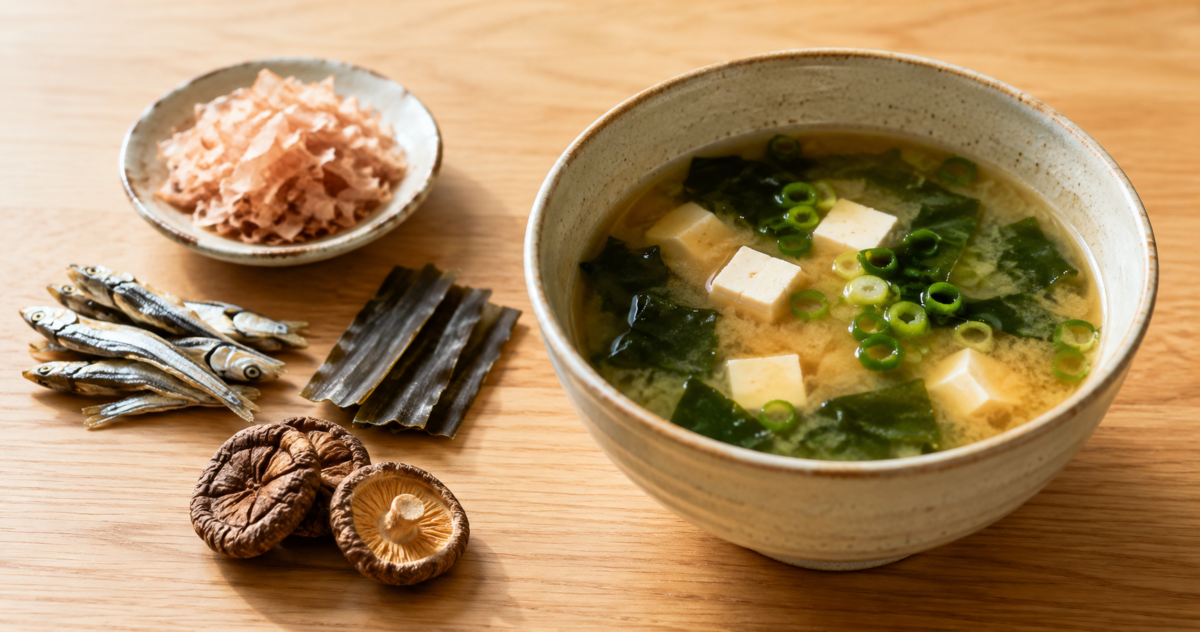
One of the first things vegetarian and vegan travelers should understand about Japanese food is dashi.
Dashi is not simply a soup served on its own. It is one of the foundations of Japanese cooking and can appear in miso soup, soba and udon broth, simmered dishes, hot pots, sauces, and other seasonings.
Common ingredients used to make dashi include:
- bonito flakes
- dried sardines
- kombu
- dried shiitake mushrooms
Plant-based dashi made with kombu or shiitake exists, but that does not mean the dashi used in an ordinary restaurant is automatically vegetarian or vegan.
This is why some dishes can be difficult to judge by appearance alone.
Miso soup
Even if the visible ingredients are only tofu, wakame, and green onion, the broth may contain fish-based dashi.
Soba and udon
The noodles themselves may not be the main issue. The dipping sauce or hot broth may contain fish-based dashi.
Simmered vegetables
A dish that looks entirely vegetable-based may still have been cooked in dashi.
This does not simply mean that Japanese food has few vegetarian options.
Rather, Japanese cooking often combines plant-based ingredients with fish-based umami, making the final dish harder to identify from appearance alone.
That is why asking:
Does this contain fish stock or dashi?
can sometimes be more useful than asking only whether a dish looks vegetarian.
“Vegetarian” May Not Mean Exactly What You Expect

Another source of confusion is the meaning of the word “vegetarian.”
The terms vegetarian and vegan have become more familiar in Japan, but not every restaurant understands them in exactly the same way.
For example, being told that a dish contains “no meat” does not necessarily mean it contains no fish, bonito flakes, dried sardines, or fish-based dashi.
Someone may understand vegetarian simply as avoiding beef, pork, and chicken without automatically including fish stock.
For vegetarian travelers, it can therefore help to ask specifically about:
- meat
- fish
- seafood
- fish stock or dashi
For vegan travelers, it may also be necessary to confirm:
- egg
- dairy
When dietary requirements are strict, a dietary requirement card written in Japanese can also be useful.
But this does not mean every restaurant will be able to modify its food.
Small Japanese restaurants often prepare broths and sauces in advance or use the same base ingredients across several dishes. Changing one component after an order is placed may simply not be practical.
Rather than assuming a restaurant can adjust any dish, it is often easier for both sides to find suitable places in advance.
Japanese Foods That Can Be Vegetarian or Vegan — But Need Checking
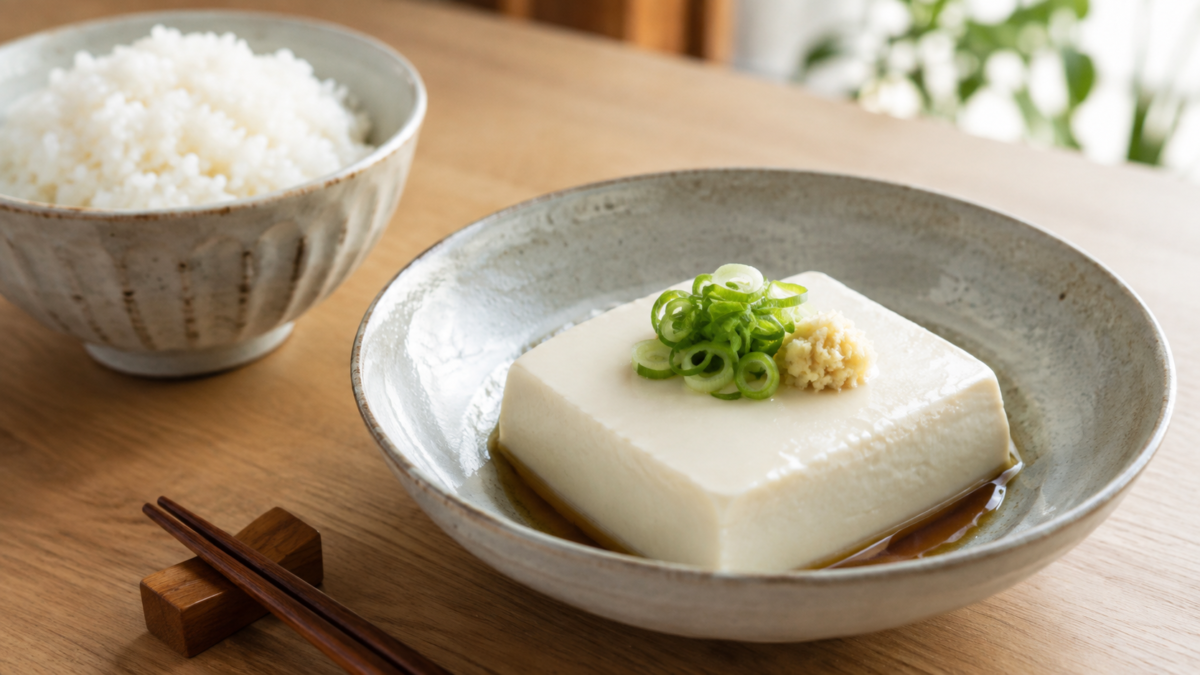
There are many Japanese foods that can work for vegetarian or vegan travelers.
The important word, however, is can.
A familiar dish name alone does not guarantee that every version is suitable.
Tofu
Tofu itself is plant-based.
But the sauce served with chilled tofu, the broth used for yudofu, or the dashi poured over agedashi tofu may contain fish-based ingredients.
A tofu dish is not automatically vegan.
Onigiri
Rice balls can come with plant-based fillings such as umeboshi or kombu.
But seasonings vary from product to product, so packaged versions should still be checked individually.
Soba and Udon
With soba and udon, the broth is often more important than the noodles.
Both dipping sauces and hot noodle soups commonly use dashi, so the ingredients need to be confirmed.
Vegetable Tempura
Vegetable tempura may appear vegetarian-friendly, but travelers with stricter requirements may want to ask about:
- the batter
- the dipping sauce
- whether frying oil is shared with other foods
Sushi
Japanese sushi can include plant-based options such as cucumber, pickled vegetables, or natto.
However, preparation, seasonings, and toppings differ between restaurants.
Rice, Natto, and Pickles
Plain rice, natto, and pickles are among the simpler plant-based foods found in everyday Japanese meals.
Even here, sauces and seasonings can vary, so packaged products should still be checked.
Japanese cuisine therefore contains many plant-based building blocks.
What matters is what happens to those ingredients by the time they become a finished dish.
Once you understand that, Japanese food can become much easier to navigate.
Shojin Ryori: Japan Has Its Own Long Plant-Based Tradition
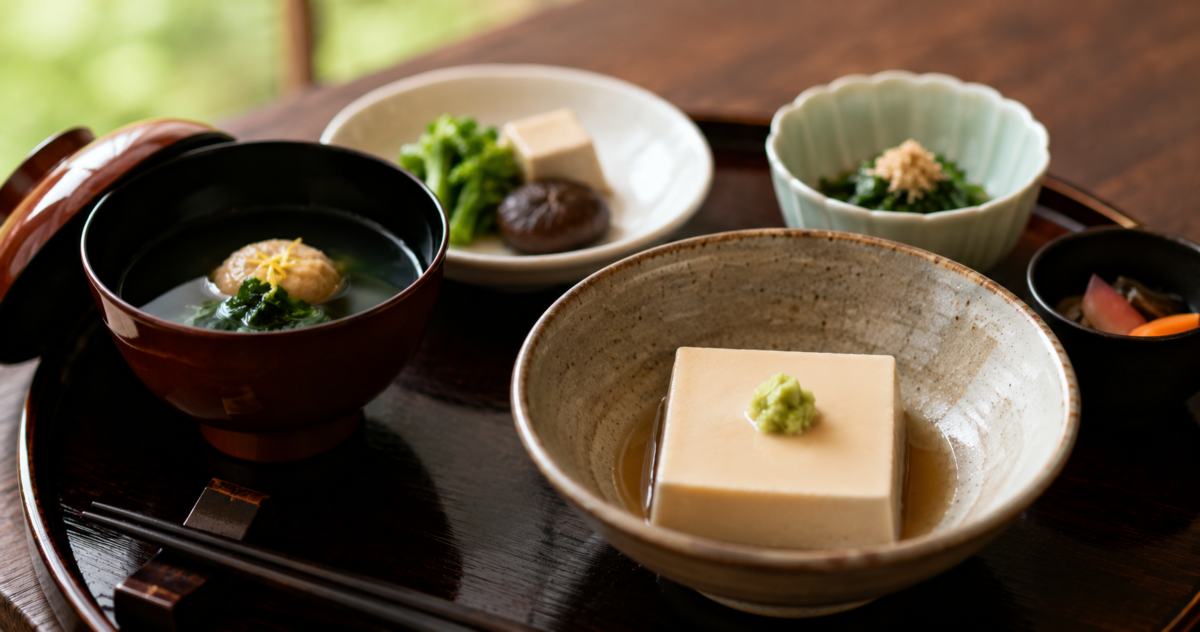
The words vegetarian and vegan may feel relatively modern in Japan, but plant-based cooking itself has a much longer history.
One important example is shojin ryori, the cuisine associated with Japanese Buddhist traditions.
Shojin ryori avoids meat and fish and makes use of ingredients such as:
- tofu
- vegetables
- mushrooms
- mountain vegetables
- sesame
It also places importance on seasonality and making careful use of available ingredients.
Temple lodgings in places such as Koyasan are among the settings where travelers can experience this style of food.
What makes shojin ryori interesting is that it is not simply a modern substitute for meat.
It developed from a different cultural and religious background, with its own approach to ingredients, texture, seasonality, and avoiding waste.
That means Japan’s history of plant-based cooking is much older than the modern popularity of vegetarian and vegan travel.
Still, travelers with strict requirements should not assume that every modern restaurant using the words “shojin ryori” will always meet the same definition of vegan.
It is still worth checking with the restaurant.
Eating Out Is Getting Easier — Especially in Major Cities
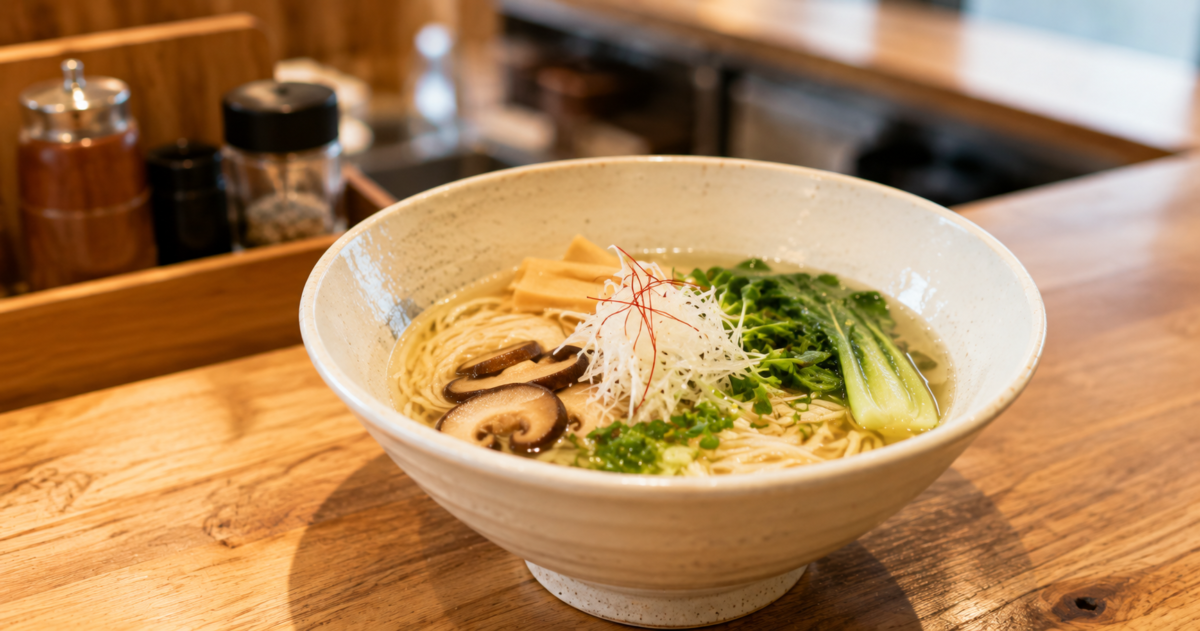
Compared with the past, finding vegetarian and vegan food in Japan has become much easier.
Large cities such as:
- Tokyo
- Osaka
- Kyoto
now have more restaurants that clearly identify vegetarian or vegan options.
Plant-based cafés, vegan ramen, curries, and specialist restaurants are also easier to find than they once were.
Online maps and specialist search services make it possible to save suitable restaurants before your trip.
Outside major cities, however, the situation can be different.
You may encounter:
- fewer English menus
- fewer vegan labels
- fewer specialist restaurants
- staff who are less familiar with vegetarian or vegan definitions
That does not mean plant-based food does not exist outside major cities.
Rice, tofu, vegetables, mushrooms, and pickles are ordinary ingredients throughout Japan.
The challenge is often confirming the dashi and seasonings used in the final dish.
For regional travel, a little extra preparation can help:
- research restaurants in advance
- ask your accommodation for advice
- explain dietary requirements when making a reservation
- carry a dietary card
The amount of planning you need can vary considerably depending on where you travel.
A Little Preparation Makes Eating in Japan Much Easier

Traveling in Japan as a vegetarian or vegan may require some preparation.
Dashi in particular can be difficult to recognize if you are unfamiliar with Japanese cooking.
But Japanese food also makes everyday use of many plant-based ingredients:
- tofu
- rice
- vegetables
- seaweed
- mushrooms
- fermented foods
And restaurants that clearly cater to vegetarian and vegan diners are becoming easier to find.
Before traveling, it can help to:
- save a few suitable restaurants
- know how to explain what you do not eat
- ask about dashi
- check packaged-food ingredient labels
- contact restaurants in advance if your requirements are strict
The goal is not only to search for special “vegetarian food.”
Understanding how ordinary Japanese food is made can be just as useful.
Once you know where animal-based ingredients are likely to appear, everyday foods such as tofu, vegetables, rice, mushrooms, and fermented foods can also become easier to understand.
For vegetarian and vegan travelers, eating well in Japan is often less about finding special food and more about understanding how ordinary Japanese food is made.