Have you ever heard someone try Japanese food for the first time and say, *”Why is this so delicious?”* or *”There’s something so comforting about this flavor.”*?
Whether it’s sushi, miso soup, udon, simmered dishes, or hot pots, many Japanese meals have a gentle yet deeply satisfying taste that is hard to describe.
One of the biggest reasons is **dashi**.
Although these dishes look completely different, many of them are built on the same foundation. Rather than relying on butter, cream, or strong spices, Japanese cuisine has developed around dashi, which enhances the natural flavor of each ingredient.
You could even say that dashi is one of the foundations of Japanese food.
What Is Dashi? The Foundation of Japanese Cooking
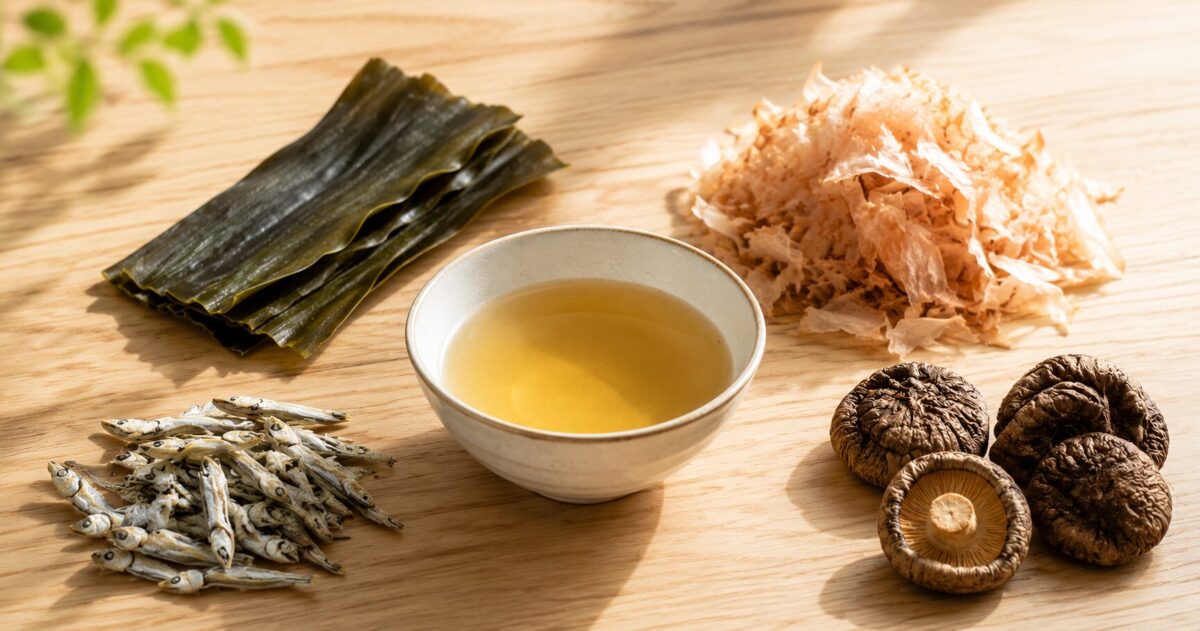
Dashi is a flavorful broth made by extracting umami from ingredients such as kombu (kelp), bonito flakes, dried sardines, or dried shiitake mushrooms.
Although it is sometimes translated as “broth” or “stock,” dashi is different from soups that are meant to be enjoyed on their own. Instead, it serves as the foundation of countless Japanese dishes.
From miso soup and udon to simmered vegetables and hot pots, dashi quietly supports the flavors of Japanese cuisine.
It rarely takes center stage, but it is the invisible ingredient that makes many dishes taste complete.
A Tradition Built Over Centuries
Dashi did not appear overnight. The cooking method evolved gradually over hundreds of years and eventually became the foundation of Japanese cuisine.
Its history is believed to have developed along the following timeline:
Jomon Period (around 14,000–300 BCE): People likely discovered that simmering fish and plants created flavorful cooking liquids.
Nara and Heian Periods (710–1185): Kombu and dried bonito began appearing as valuable foods offered to the imperial court.
Kamakura Period (1185–1333): Historical records such as Chuji Ruiki mention broth made by simmering kombu and shiitake mushrooms, using the word tashi-jiru, an early form of today’s “dashi.”
Muromachi Period (1336–1573): Bonito flakes became widely used, and dashi bags similar to modern versions began to appear.
Edo Period (1603–1868): Combining kombu and bonito flakes became common, creating awase dashi (“combined dashi”), the style that forms the basis of modern Japanese cooking today.
Centuries of refinement turned dashi into one of the defining characteristics of Japanese cuisine.
The Perfect Pair: Kombu and Bonito Flakes
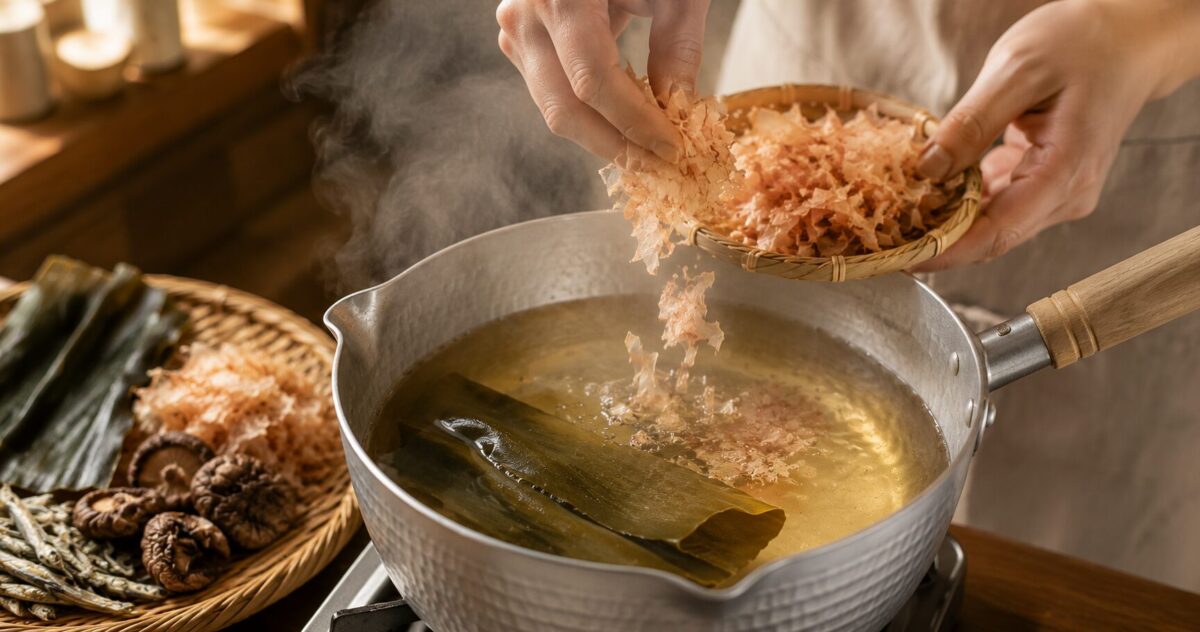
The most iconic type of dashi is made by combining **kombu** (kelp) and **katsuobushi** (bonito flakes).
Kombu is rich in **glutamate**, while bonito flakes contain **inosinate**. When these two natural umami compounds are combined, they create a much stronger savory taste than either ingredient alone. This is known as the **synergistic effect of umami**.
Because of this, Japanese cooking can achieve remarkable depth of flavor without using large amounts of salt, fat, or spices.
It is a simple combination, yet it has supported the flavors of Japanese cuisine for centuries.
Dashi Is Everywhere in Japanese Cooking
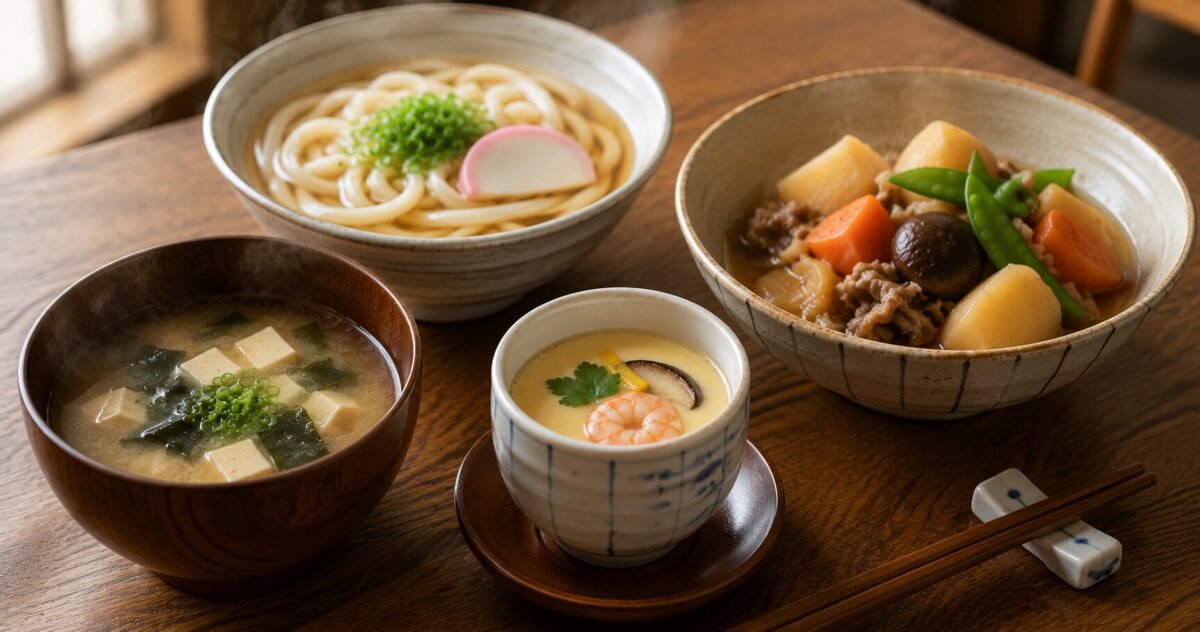
Dashi is not reserved for special occasions or traditional restaurants.
It is part of everyday cooking in Japan.
You’ll find it in dishes such as:
* Miso soup
* Udon and soba noodles
* Chawanmushi (savory steamed egg custard)
* Simmered dishes (nimono)
* Oden
* Takikomi gohan (seasoned rice cooked with ingredients)
* Rice bowls such as oyakodon
Many visitors associate Japanese food with sushi or tempura, but dashi is just as important in the everyday meals people eat at home.
An Everyday Ingredient in Japanese Homes
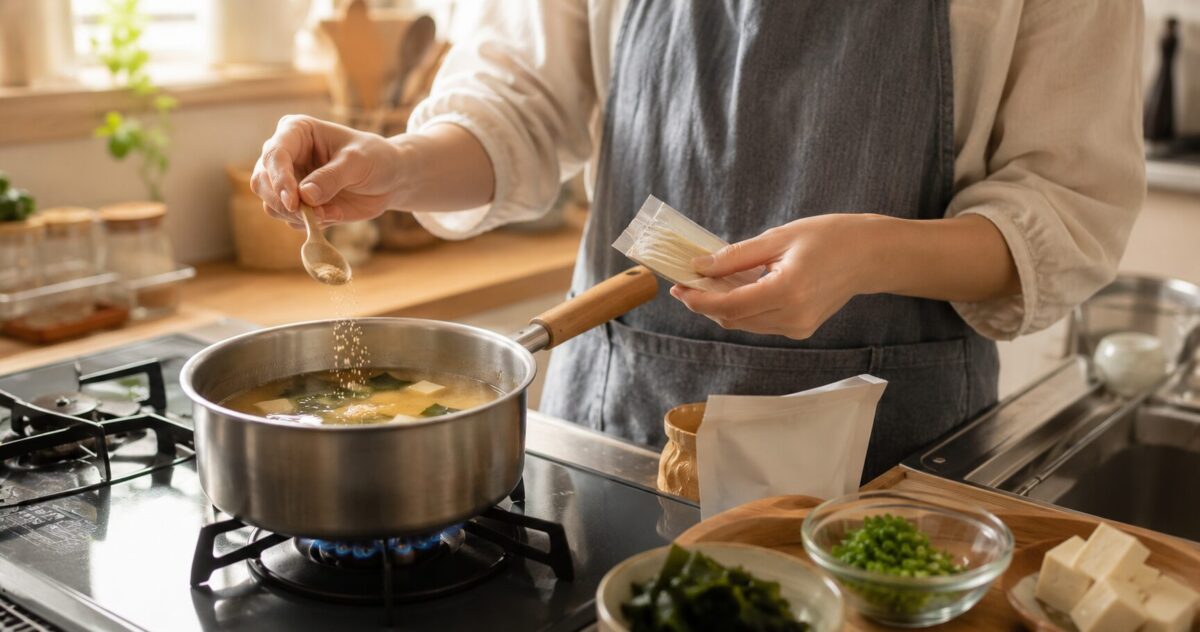
In the past, many families prepared dashi by slowly steeping kombu in water before adding bonito flakes.
That traditional method is still appreciated today, but modern life has made convenience more important. Many households now use **dashi packets** or **instant dashi powder**, making it easy to prepare flavorful meals in just a few minutes.
In my own kitchen, I usually use instant dashi when making miso soup, udon, or nikujaga (Japanese meat and potato stew).
During winter, however, I often prepare dashi from kombu and bonito flakes before making a hot pot in a traditional clay pot.
Instant dashi is delicious and convenient, but freshly made dashi has a depth and aroma that make it especially memorable.
How “Umami” Became a Global Word
Today, **umami** has become an international culinary term.
Recognized as the fifth basic taste alongside sweet, sour, salty, and bitter, it was first identified by Japanese scientists and is now widely used by chefs and food researchers around the world.
Dashi is one of the easiest ways to experience umami in its purest form.
Its influence has spread far beyond Japan, inspiring restaurants and home cooks across many different cuisines.
Take the Taste of Japan Home

If you’re visiting Japan, **dashi packets** or **instant dashi powder** make excellent souvenirs.
They’re lightweight, easy to pack, and can be found in almost every supermarket as well as many airport shops.
Back home, you can simply add them to hot water to recreate the foundation of Japanese cooking.
They’re perfect for making miso soup, udon, noodle broths, or simmered dishes, allowing you to enjoy the comforting flavors of Japan long after your trip.
Keep in mind that some products contain bonito, fish extracts, or other animal-based ingredients, so it’s worth checking the ingredient list and your country’s import regulations before bringing them home.
The Invisible Flavor Behind Japanese Cuisine
Dashi is rarely the star of the meal.
Yet it forms the foundation of countless Japanese dishes.
The delicate umami created by kombu and bonito flakes enhances the natural flavors of ingredients and has supported everyday Japanese cooking for generations.
It may not be the most visible part of Japanese cuisine, but it is one of its most essential.
The next time you enjoy Japanese food and wonder why it feels so comforting, there’s a good chance that the answer is **dashi**.